
The Man Who Survived Two Atomic Bombs: The Remarkable Story of Tsutomu Yamaguchi
How One Man Endured the Horror of Hiroshima and Nagasaki—and Lived to Tell the World
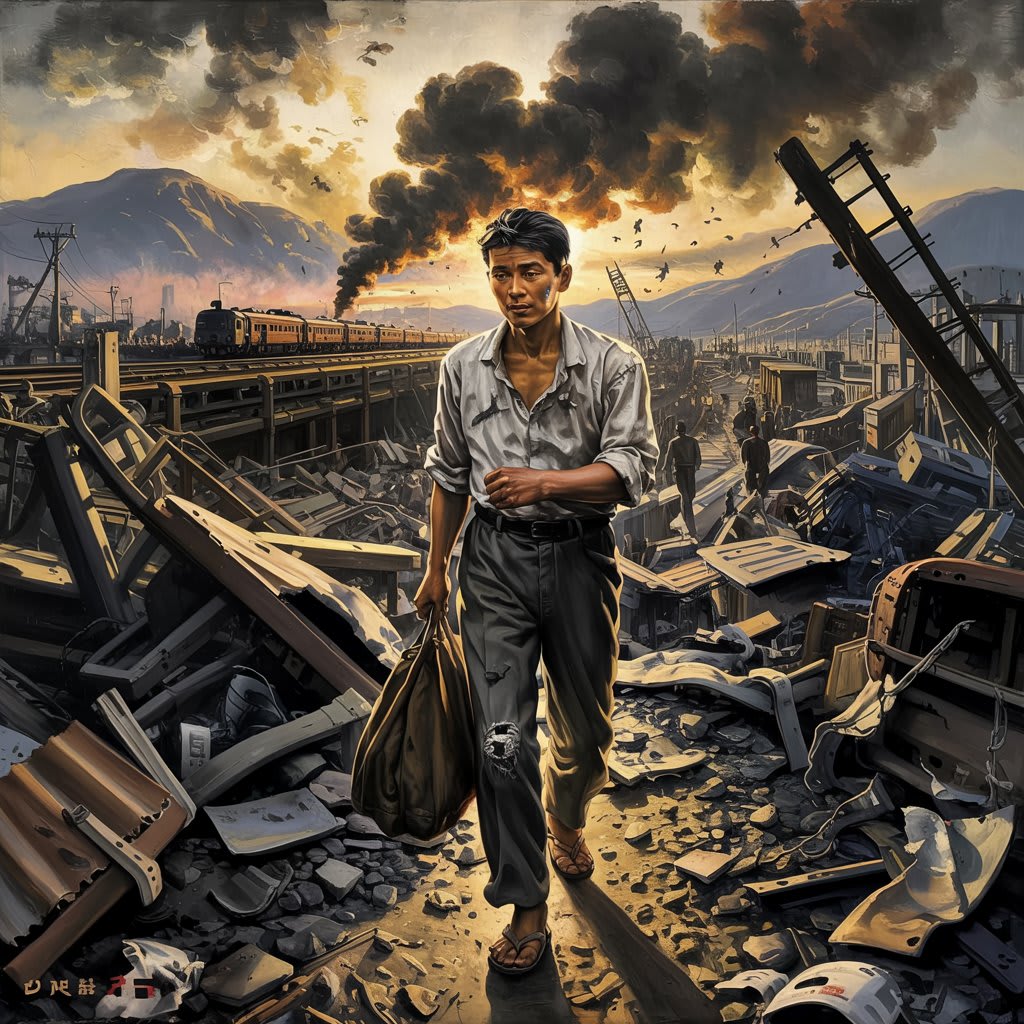
In the final months of World War II, a man named Tsutomu Yamaguchi found himself caught in the eye of history’s most devastating storm — not once, but twice. His story is so unbelievable that it reads like fiction, yet every word is true. He is the only person officially recognized by the Japanese government as a survivor of both atomic bombings: Hiroshima and Nagasaki.
Tsutomu Yamaguchi was a 29-year-old engineer working for Mitsubishi Heavy Industries. On August 6, 1945, he was in Hiroshima on a temporary assignment, helping to design a new oil tanker. It was supposed to be his last day in the city before returning home to Nagasaki. That morning, he was walking to the shipyard with two colleagues when he heard the sound of a plane overhead — a sound that would change the course of history.
At precisely 8:15 a.m., the American bomber Enola Gay dropped the first atomic bomb ever used in warfare — codenamed “Little Boy.” Yamaguchi was only three kilometers from the bomb’s epicenter. He remembered seeing a blinding white flash in the sky, “like the magnesium flare of a camera,” before he was lifted into the air and slammed into a nearby field.
When he awoke, the world around him had been obliterated. Buildings were flattened, people were burned beyond recognition, and fires raged across the city. Yamaguchi had suffered serious burns across his upper body, damage to his eardrums, and temporary blindness. He staggered through the ruins, trying to find his way back to the company’s air raid shelter. Along the way, he witnessed horrors beyond imagination: charred corpses, people with melted skin hanging from their bodies, and a city reduced to ash.
Somehow, he survived the night. And the next day, he managed to board a train — yes, a functioning train — back to his hometown of Nagasaki. It seems impossible, but the rail lines out of Hiroshima had partially resumed service just a day after the bombing.
Despite his injuries, Yamaguchi arrived in Nagasaki on August 8, exhausted and in pain, but grateful to be alive. He reunited with his wife and young son and checked into a hospital. The very next day — August 9 — he reported to work at Mitsubishi to explain what had happened in Hiroshima.
As he was recounting the horror to his skeptical boss, another flash of blinding light lit up the sky. This time, it was “Fat Man,” the second atomic bomb, dropped by the U.S. on Nagasaki. Once again, Yamaguchi was about three kilometers from ground zero. And once again, he survived.
The second explosion destroyed much of Nagasaki, killing an estimated 70,000 people. Yamaguchi’s home was destroyed, and he and his family took refuge in a bomb shelter. His wife and child, who had been out buying burn ointment when the bomb hit, also survived — miraculously shielded by a tunnel. Had they been just a few minutes earlier or later, they might not have made it.
Yamaguchi spent the following weeks and months battling radiation sickness. His hair fell out, he ran a dangerously high fever, and he vomited constantly. But he recovered.
In the years that followed, he kept mostly quiet about his experiences. Like many survivors — known in Japan as hibakusha — he faced social stigma and discrimination. But later in life, he decided to speak out, becoming an advocate for nuclear disarmament. In interviews, he expressed the pain and sorrow of witnessing two cities destroyed, and he dedicated his voice to making sure such horror would never happen again.
In 2009, the Japanese government officially recognized Tsutomu Yamaguchi as the only known person to survive both atomic bombings. He passed away from stomach cancer on January 4, 2010, at the age of 93.
His story is not just one of survival, but of resilience, courage, and the will to live through the most unthinkable events in human history. Tsutomu Yamaguchi saw the worst of mankind — and yet lived long enough to speak for peace.
About the Creator
Reader insights
Outstanding
Excellent work. Looking forward to reading more!
Top insight
Heartfelt and relatable
The story invoked strong personal emotions
Keep reading
More stories from muhammadzahid and writers in Humans and other communities.
The Last Bus Home
Chapter 1: Stranded in the City It was the last week of December, and Lahore was wrapped in a blanket of cold fog. The streets shimmered under dim yellow lights, and the air carried a bitter chill that went straight to the bones. I had just finished a long day of job hunting. With no success and a near-empty wallet, I found myself at the city bus terminal, hoping to catch the last bus back to my village — a small place about 20 kilometers away.
By muhammadzahid10 months ago in Motivation
Alex Honnold and the Quiet Fear Behind Free Solo Climbing
Fear usually keeps people alive. It tells us to slow down, to step back, to hold on. Alex Honnold built his life by walking straight toward that fear, without ropes, without safety nets, and without noise. To many, he looks unreal. A man climbing massive rock walls alone, thousands of feet above the ground, calm and focused. But the real story of Alex Honnold is not about being fearless. It is about understanding fear so deeply that it no longer controls you. His life is not just a climbing story. It is a human story about discipline, risk, loneliness, and the quiet cost of choosing an extreme path.
By Muqadas khan6 days ago in Humans
🅼🅸🅳🅽🅸🅶🅷🆃 🆂🅽🅰🅲🅺🆂
"It's 10 in Tuscon! We all know what that means... It's Time for Midnight Snacks with your man, Gerald Gee! Ready to spend the night together? Me too! I'm full of snacks and can't wait to regurgitate them all back into your hungry ears. Crack a brew! Pop some corn! Anything to get ready for one hell of a show where the talk maybe cheap but the words cut deep...
By Lamar Wiggins8 days ago in Fiction



Comments
There are no comments for this story
Be the first to respond and start the conversation.