
Alex Honnold and the Quiet Fear Behind Free Solo Climbing
Fear usually keeps people alive. It tells us to slow down, to step back, to hold on.

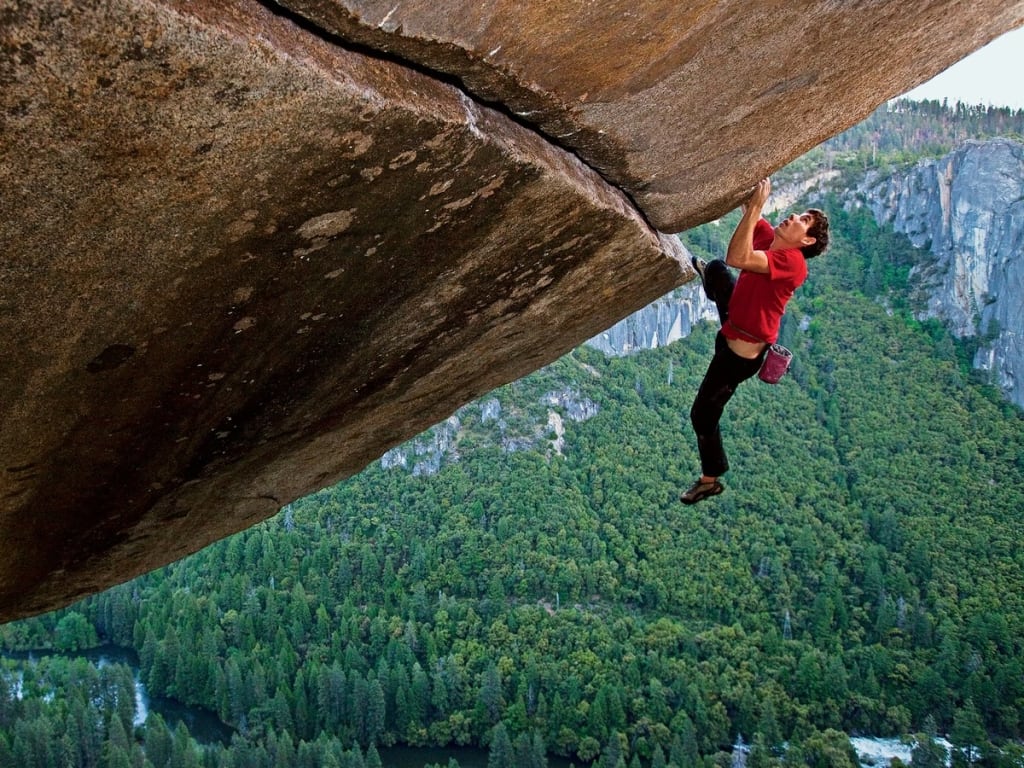
Fear usually keeps people alive. It tells us to slow down, to step back, to hold on. Alex Honnold built his life by walking straight toward that fear, without ropes, without safety nets, and without noise. To many, he looks unreal. A man climbing massive rock walls alone, thousands of feet above the ground, calm and focused. But the real story of Alex Honnold is not about being fearless. It is about understanding fear so deeply that it no longer controls you. His life is not just a climbing story. It is a human story about discipline, risk, loneliness, and the quiet cost of choosing an extreme path.
Who Alex Honnold Is
Alex Honnold is known as one of the most famous rock climbers in the world. He is especially known for free solo climbing, where a climber ascends without ropes or protective gear.
One mistake in free solo climbing means death. There is no backup plan.
Alex Honnold became widely known after climbing El Capitan in Yosemite National Park without ropes. That climb changed how many people saw human limits.
Early Life and a Reserved Personality
Alex Honnold grew up in California. He was quiet, reserved, and independent from a young age.
He did well in school but struggled with structure. Traditional paths never fully fit him.
Climbing gave him something clear. A problem. A solution. Immediate consequences.
While others chased excitement, Alex Honnold chased control. Each movement on the rock had to be precise.
That mindset shaped the rest of his life.
Discovering Climbing as Purpose
Climbing was not just a hobby for Alex Honnold. It became his way of understanding the world.
Rock walls offered honesty. Gravity never lies.
There was no room for excuses or distractions.
When he climbed, everything else disappeared. Bills, social pressure, expectations.
This clarity became addictive in a quiet way.
Living With Very Little
For many years, Alex Honnold lived out of a van. He owned very little.
This was not a statement. It was practical.
A simple life made climbing easier. Fewer responsibilities meant more focus.
While others saw sacrifice, he saw freedom.
This lifestyle also shaped his mental discipline. Comfort was never a priority.
What Free Solo Climbing Really Means
Free solo climbing is often misunderstood.
It is not reckless improvisation. It is careful preparation taken to an extreme.
Alex Honnold studies routes obsessively. He memorizes every hold, every movement.
By the time he climbs without ropes, the route feels familiar.
The danger is still real. But the unknown is reduced as much as possible.
Fear and the Brain
Many people believe Alex Honnold does not feel fear.
That is not true.
Studies of his brain showed reduced activity in areas linked to fear response.
This does not mean he is careless. It means his fear works differently.
He still understands risk. He just does not panic.
This allows him to stay calm where others freeze.
Training the Mind as Much as the Body
Physical strength alone is not enough for free solo climbing.
Mental stability is everything.
Alex Honnold trains his mind to stay present. One move at a time.
He avoids thinking about the fall. He focuses on the next grip.
This mental approach is something many people find inspiring, even outside climbing.
Alex Honnold and El Capitan
The free solo climb of El Capitan became the defining moment of Alex Honnold’s career.
El Capitan is a massive granite wall rising over 3,000 feet.
Climbers usually take days with ropes and safety systems.
Alex Honnold climbed it alone in under four hours.
The climb was quiet, controlled, and nearly flawless.
The Emotional Weight of That Climb
After finishing El Capitan, Alex Honnold did not celebrate wildly.
He sat down.
The relief was visible.
Years of preparation, pressure, and fear released at once.
That moment showed the emotional cost of carrying such risk alone.
Fame After Free Solo
After El Capitan, Alex Honnold became globally famous.
Attention followed him everywhere.
Interviews, cameras, expectations.
This was unfamiliar territory for someone who valued solitude.
Fame added a new kind of pressure to his climbing.
Now mistakes would not just affect him. They would affect others watching.
The Conflict Between Risk and Responsibility
As Alex Honnold became more visible, people began asking harder questions.
What responsibility does he have as a public figure?
What message does free solo climbing send to young climbers?
These questions did not have easy answers.
He continued to emphasize preparation and personal limits.
But the debate never fully disappeared.
Relationships and Emotional Growth
For a long time, Alex Honnold lived a very isolated life.
Climbing came first.
Over time, relationships became more important to him.
Partnership brought new emotional awareness.
It also added another layer to decision-making.
Risk now affected more than just himself.
How Love Changes Risk
Being emotionally connected changes how danger feels.
Alex Honnold has spoken about how relationships made him more aware of consequences.
This did not stop him from climbing.
But it influenced how he evaluated risk.
Free solo climbing became more selective.
The Alex Honnold Foundation
Alex Honnold eventually started a foundation focused on environmental and community issues.
This reflected a shift from personal challenge to shared responsibility.
Climbing had given him a platform.
He chose to use it in a way that aligned with his values.
This step showed growth beyond individual achievement.
Criticism and Ethical Questions
Not everyone supports Alex Honnold’s choices.
Some believe free solo climbing should not be celebrated.
They argue it normalizes extreme risk.
Others see it as a personal choice rooted in discipline and respect for limits.
This debate highlights broader questions about freedom and influence.
The Difference Between Skill and Recklessness
Alex Honnold is often mistaken for a thrill-seeker.
In reality, thrill is not his motivation.
He avoids uncertainty.
He avoids routes he is not fully confident in.
Recklessness involves ignoring risk. His approach involves understanding it deeply.
Aging and Physical Limits
No athlete escapes aging.
Alex Honnold is aware that strength, reaction time, and recovery change over time.
This awareness affects his decisions.
Climbing careers are fragile.
Accepting limits becomes part of maturity.
The Mental Cost of Always Being Precise
Living at such a high level of focus has a cost.
Mistakes are not allowed.
This creates constant mental pressure.
Recovery requires distance from climbing.
Rest is not just physical. It is emotional.
What Alex Honnold Represents to Others
To some, Alex Honnold represents courage.
To others, control.
To some, danger.
People project their own fears and desires onto him.
That is why his story resonates beyond climbing.
Lessons People Take From Alex Honnold
Many readers and viewers take lessons from his life without climbing at all.
Preparation matters.
Fear can be studied.
Simplicity can create focus.
These lessons apply to everyday life in subtle ways.
The Misunderstanding of Fearlessness
Calling Alex Honnold fearless misses the point.
He respects fear.
He listens to it.
He just refuses to let it decide everything.
This distinction is important.
Solitude and Self-Knowledge
Free solo climbing is a deeply solitary activity.
There is no one to rely on.
This solitude forces deep self-knowledge.
Alex Honnold understands his limits because he has tested them honestly.
That honesty is rare.
Media and Myth-Making
Media often turns people into symbols.
Alex Honnold has been turned into a myth.
That myth can erase the human side of the story.
The doubt. The preparation. The restraint.
Understanding him requires looking past the image.
Why Alex Honnold Still Matters
Alex Honnold matters because he challenges how people think about fear and control.
He shows that calm is not the absence of fear.
It is the management of it.
His life invites reflection, not imitation.
The Line Between Inspiration and Imitation
Alex Honnold often warns against copying his climbs.
He understands that not everyone has the same limits.
Inspiration should not lead to danger.
Knowing where your limits are is part of wisdom.
Final Reflection
Alex Honnold’s story is not about conquering nature.
It is about understanding oneself.
His climbs reveal what discipline, patience, and self-awareness can achieve.
They also reveal the cost of walking alone at the edge.
He is not a symbol of fearlessness.
He is a symbol of clarity.
And that quiet clarity is what makes his journey so compelling.
About the Creator
Muqadas khan
Hi! Welcome to my Vocal page. I’ll be sharing fresh articles every day covering stories, ideas, and a bit of inspiration to brighten your feed. Thanks for reading and supporting daily writing! 📖💫
Keep reading
More stories from Muqadas khan and writers in Humans and other communities.
Kevin Johnson and the Heavy Cost of Fame, Power, and Choice
Kevin Johnson is a name that still stirs strong feelings. For some, it brings back memories of speed, grit, and electric nights on a basketball court. For others, it raises questions about power, responsibility, and trust. His life has played out in front of the public for decades, shifting from sports glory to political authority, and then into controversy that refuses to fade. Kevin Johnson’s story is not easy to sit with. It asks us to think about how talent can lift someone up, and how influence can complicate everything that follows. This is a story about success and scrutiny, about ambition and consequence, and about how one person can be remembered in very different ways at the same time.
By Muqadas khanabout 3 hours ago in Humans
The CEO of Everything
They say "jack of all trades, master of none," but they forgot to mention the part where the jack of all trades is also the camera woman, the makeup artist, and the person currently yelling at a tangled Wii microphone cable in a her own bathroom while recording herself singing and trying to make it look realistic and professional. (As professional as you can make it with nothing but a cell phone camera and a mic that doesn't work)
By Sara Wilson7 days ago in Humans
Air Sign Twin Flames Rise or Fall Through Words.
Air sign twin flames live in the mind first. Gemini, Libra, and Aquarius connect through thought, language, and perception. Conversation sparks attraction. Ideas create intimacy. Silence creates distance. Astrology shows one clear truth. Communication style determines whether these twin flames separate or reunite.
By Wilson Igbasi2 days ago in Humans


Comments
There are no comments for this story
Be the first to respond and start the conversation.