
"The Man Who Refused to Fall"
The Story of a Man Who Stood Tall Even When the World Tried to Bring Him Down.

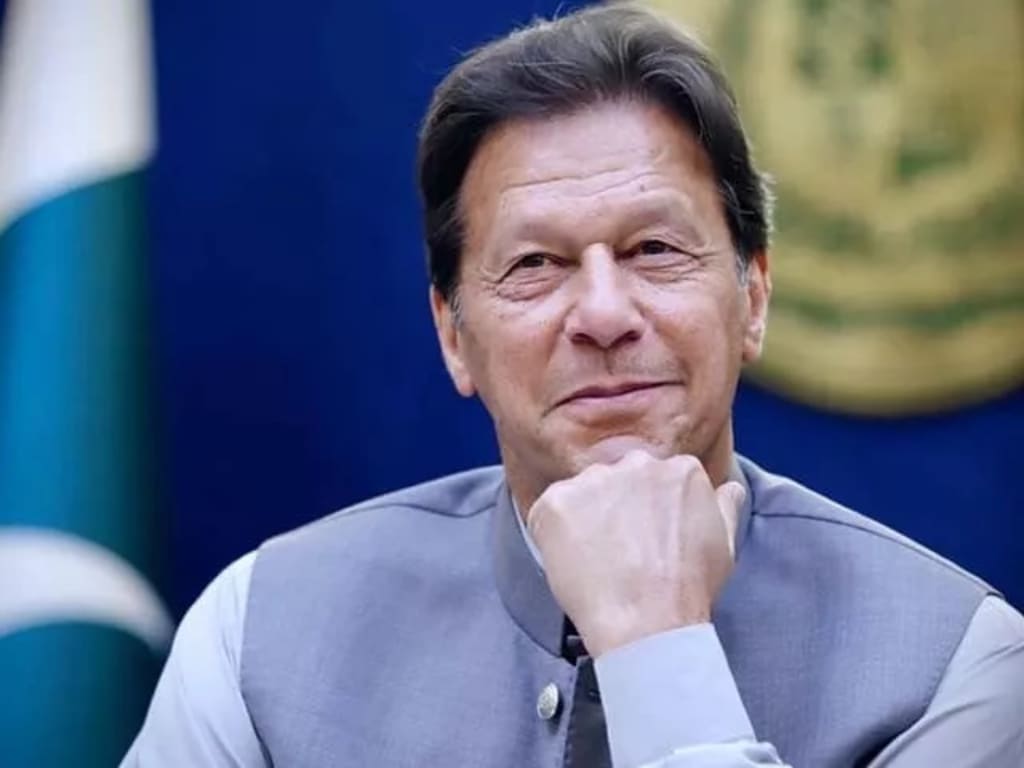
🌱 A Boy from Lahore
In the heart of Lahore, 1952, a boy named Imran Ahmed Khan Niazi was born into a modest, educated Pathan family. He wasn’t loud, flashy, or attention-seeking. He was quiet, polite, and observant. But there was something rare about him — a fire in the eyes, even as a child.
Imran grew up surrounded by stories of faith, dignity, and discipline. His mother taught him compassion. His father, a civil engineer, taught him strength. From early on, young Imran was deeply affected by injustice — especially against the weak.
But it was in cricket that his journey would begin.
🏏 The Game That Made Him
By the time he reached Aitchison College, then Oxford University, Imran’s focus sharpened. He trained with determination, studied hard, and practiced even harder. Cricket wasn’t just a sport — it became his first battleground.
He joined the Pakistani national team in 1971 — but it wasn’t easy. He was mocked for his posh English accent. Some called him soft, not a “typical” Pakistani cricketer.
But slowly, he proved them wrong — not with words, but with performance.
- By the late 1970s, he became one of the fastest bowlers in the world.
- In the 1980s, he became captain — and turned a scattered team into warriors.
- He led with fire, dignity, and example.
He wasn’t just a cricketer anymore — he became a symbol of hope, discipline, and pride for Pakistan. Then came 1992.
🏆 The Miracle of Melbourne
The 1992 Cricket World Cup was Imran’s last chance. He was injured. The team was doubted. Even fans had little hope.
But Imran told his team:
“Play like cornered tigers. Because when we’re backed against the wall — we fight.”
And they did.
Against all odds, Pakistan won the World Cup. The final in Melbourne became more than a match — it became a memory carved into every Pakistani heart. Imran lifted the trophy — not just as a captain, but as a national hero. For most, that would’ve been the end. For Imran, it was just the beginning.
🏥 A Hospital Built on Grief
Shortly after his cricket glory, Imran faced a personal tragedy: his mother, Shaukat Khanum, died of cancer.
She died in pain — without access to proper treatment in Pakistan.
Imran could’ve walked away. He had fame, money, and comfort.
Instead, he took her pain and turned it into purpose.
He started the Shaukat Khanum Memorial Cancer Hospital — Pakistan’s first modern cancer facility for the public. He faced mockery, doubt, and rejection. People said:
- “He’s a cricketer, not a builder.”
- “He’s chasing fame.”
- “This can’t happen here.”
- But Imran traveled city to city, knocking on doors, collecting money, delivering speeches, even asking children for donations. It took years. But he built it.
And he didn’t stop at one — later, he built another hospital in Peshawar, and then in Karachi. He had become something more than a hero.
He had become a servant of the people.
🏛 The Man Who Entered Politics Alone
In 1996, he launched Pakistan Tehreek-e-Insaf (PTI) — a new political party based on justice, dignity, and anti-corruption.
He was mocked endlessly. He won no major seats for years.
People laughed:
- A cricketer can’t run a country.”
- “He has no political family.”
- “He doesn’t understand real power.”
But what they didn’t understand was:
Imran wasn’t after comfort. He was after change.
Year after year, he spoke at rallies. Marched in the streets. Lost elections — and came back stronger. His voice reached the poor, the ignored, the young. A generation grew up watching him fight.
And by 2018, the impossible happened.
He became Prime Minister of Pakistan.
The Chair That Shook
Power, for Imran, was never the goal — it was a test.
- And the tests came fast.
- Economic crisis
- Inflation
- COVID-19 pandemic
- Global diplomacy pressure
- Opposition from within the system
Every mistake was amplified. Every effort was slowed by resistance. But Imran kept pushing:
- “We will not beg.”
- “We will build with dignity.”
- “This is not about politics. It’s about our children’s future.”
Yet in April 2022, after only 3.5 years, Imran Khan was removed from power by a vote of no-confidence.
But something happened that no one expected.
He didn’t vanish.
He didn’t surrender.
He rose higher in the hearts of the people.
🚶♂️ The Leader Without a Chair
After his removal, Imran began a historic series of public gatherings. From Multan to Peshawar, from Lahore to Rawalpindi — millions filled the streets.
Not for power. Not for money. For belief.
He had become more than a politician.
He had become a voice — for justice, for independence, for courage.
But then came violence. Court cases. Threats. Media bans.
In 2023, Imran survived an assassination attempt. A bullet hit his leg.
Still, he stood up and said:
“Even if I die, don’t stop fighting for your freedom.”
His words, from a wheelchair, were stronger than many standing men.
And in 2024–2025, Imran Khan — once the golden boy of cricket, the builder, the dreamer — was arrested and jailed.
✊The Man Who Still Stands
Today, Imran Khan is behind bars.
But his voice lives on — in silence, in slogans, in the hearts of millions.
He is not perfect. He made mistakes. He has critics.
But one thing no one can deny:
He never gave up.
From cricket grounds to hospitals, from speeches to jail cells — he stayed true to his cause:
A Pakistan that stands tall, walks free, and serves all.
💬 The Power of One Man’s Belief
You may love Imran Khan.
You may question him. But you cannot ignore what he proved:
- That a cricketer can change politics.
- That a man without a dynasty can build hospitals.
- That a leader can lead even when silenced.
- That dignity, if held tightly, cannot be stolen.
This is not just his story.
This is a reminder to every person who feels alone, doubted, or defeated:
You don’t need perfect circumstances.
You need belief. And you must never stop walking — even when they try to make you fall.
About the Creator
DR. Allama iqbal
Pharmacist with 6 years of experience, passionate about writing. I share real-life stories, health tips, and thoughtful articles that aim to inspire, inform, and connect with readers from all walks of life.
Keep reading
More stories from DR. Allama iqbal and writers in Humans and other communities.
When Structures Rise Without Listening
The Tower I was not born in defiance. I was born in longing. They gathered at my base with dust on their feet and stars in their eyes. Their hands trembled not from arrogance, but from memory — a faint remembering that they once touched something vast.
By Flower InBloom7 days ago in Humans
I was in a Toxic Relationship, with my Workplace
“You got that?” My ex yelled. His hands were balled into fists at his side. At six foot three, he towered over me. A normal person would have been afraid, but I looked up a video of George Lopez repeatedly saying, “I got this,” and showed it to him. I had grown used to this treatment, so much so that I didn’t blink when he ripped the phone from my hand and threw it across the room.
By Jade M.5 days ago in Confessions




Comments
There are no comments for this story
Be the first to respond and start the conversation.