
The Man on the Park Bench: A Stranger Who Saved My Life at 72
How a quiet stranger on a park bench helped me find purpose, healing, and a reason to live again at 72.

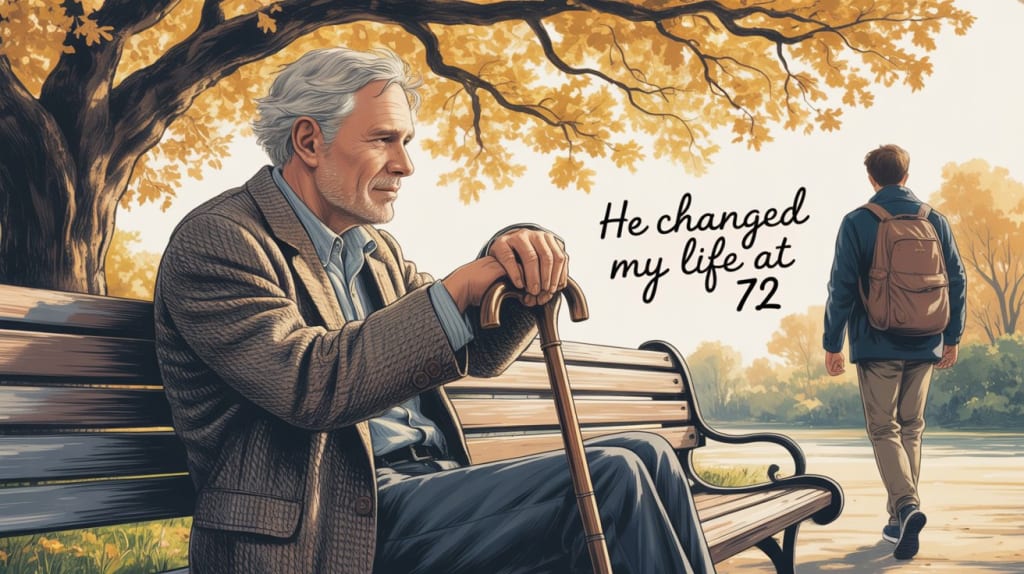
I was 72 when I finally admitted I was lonely.
Not the kind of loneliness you mention in passing or write off as boredom. The kind that sinks into your bones. The kind that makes time feel like it’s folding in on itself. The days got quieter after my wife Elaine passed. The mornings were too still. Breakfast felt like chewing cardboard. And the silence after sunset? It was deafening.
I lived alone in a modest apartment in a quiet corner of the city. My children called when they could. I wasn’t bitter — life is busy. But that didn’t stop the creeping sense that I had quietly become invisible.
Every afternoon, I walked to a nearby park. It gave me something to do. I’d sit on the same bench, under the same oak tree, and feed the birds. Pigeons, mostly. Fat and ungrateful, but they were company.
Then one Tuesday, everything changed.
He sat at the far end of my bench — a stranger — thin, maybe in his mid-30s, with a backpack and tired eyes. He looked like life had kicked him too many times.
I didn’t speak to him. He didn’t speak to me.
But he came back the next day. And the day after that.
Always the same bench. Always the same silence.
By the fifth day, I was annoyed. It wasn’t his bench. It was mine. So I finally turned to him and said, "You’re either a creature of habit, or you’ve got nowhere better to be."
He smiled, just barely.
"Both."
That was it. That’s how it started.
His name was Leo. 34. He’d lost his job in the pandemic. Lost his apartment. Had no family to turn to. For a while, he lived in his car. Then not even that. The bench, he said, was the only place he felt safe.
He didn't beg. He didn't complain. He just sat. Quietly. Like he was waiting for his life to restart.
And somehow, over the next few weeks, we became… something.
Not quite friends. Not quite strangers. Something in between.
We didn’t talk every day. But when we did, it felt like the first real conversation I’d had in months. We talked about things you don’t bring up in polite company. Like death. Like regret. Like how it feels to be forgotten by the world.
One day, he asked, "Do you ever feel like you’ve already lived the best part of your life?"
I paused. Then answered, "I used to. But lately, I’m not so sure."
He raised an eyebrow. "Why not?"
I looked at him. "Because you’re here."
I started bringing an extra sandwich with me. Told him not to get used to it. He said he wouldn’t. But he did.
He told me once that just knowing someone would sit next to him made the mornings easier.
One rainy afternoon, he didn’t show up.
I waited an hour.
The next day, still no sign.
By the third day, I felt sick. Not because of worry — but because of how much I worried. What if something happened? What if I never saw him again?
On the fourth day, I did something I hadn’t done in years: I prayed. Not for me. For Leo.
The next morning, he was back.
His face was bruised. His arm in a makeshift sling.
I didn’t ask. He didn’t explain.
He just said, "I didn’t know anyone would miss me."
That’s when I realized: neither of us was really living before we met. We were both just... existing. And somehow, two broken pieces had become a whole.
That winter, I spoke to the local shelter. I donated some money anonymously and asked if they had a position — any position. I said I knew someone who needed work. They offered janitorial help for 3 nights a week and a place to sleep.
I handed Leo the address on a piece of paper. He stared at it.
"You didn’t have to do this," he said.
"I know," I replied. "But someone should have done it for you a long time ago."
He didn’t cry. But I did — later, when I got home.
Months passed. Leo got the job. Then a small room. Then part-time work helping seniors with their phones and tech. Fitting, I thought, since he helped reboot my life too.
He visited me every Sunday. We talked, watched old movies, or sat in silence — but it was a warm silence now, not the kind that swallowed you whole.
One day he brought me a small potted plant.
"It's nothing," he said. "Just figured your bench could use a little green."
Now, I’m 75.
I’ve joined a community group for widowed seniors. I help others with grief. I even started writing a bit — stories, memories, and lessons I wish I’d shared sooner.
And Leo? He’s thriving. He teaches digital skills at a local center now. Says it’s ironic — he used to think his life was over before 40. Turns out, it was just beginning.
Sometimes, the person who saves your life doesn’t wear a uniform or come charging in. Sometimes, he just sits quietly beside you… and listens.
That park bench?
It’s no longer my bench.
It’s ours.
The End.
About the Creator
Ali
I write true stories that stir emotion, spark curiosity, and stay with you long after the last word. If you love raw moments, unexpected twists, and powerful life lessons — you’re in the right place.
The Power of Daily Discipline
In a crowded city where ambition filled the air like dust, lived a man named Elias. He was not poor, yet never comfortable. Not unsuccessful, yet far from fulfilled. Like many others, Elias carried dreams quietly inside him—dreams of becoming skilled, respected, and at peace with himself. But his daily life told a different story. His mornings began late, his nights ended later, and his days slipped away in distractions that offered comfort but no progress.
By The best writer 4 days ago in Humans
Wild Card Weekend Recap: What Happens Now?
I think I figured out why I love Wild Card Weekend so much. It's because it's the first playoff anything of the calendar year. The NFL season starts in the fall, and once upon a time, the champion was crowned either on or slightly before New Year's. The evolution of the NFL schedule has resulted in the playoffs starting just into the New Year, and currently, the final week of the season falls on the first weekend of the New Year, with Wild Card Weekend coming a week after that. So yes, chronologically, the NFL's Wild Card Weekend serves as the first playoff anything of the calendar year.
By Clyde E. Dawkins5 days ago in Unbalanced



Comments
There are no comments for this story
Be the first to respond and start the conversation.