
The Making of the Banarais Sari
A look into the world of the traditional sari.
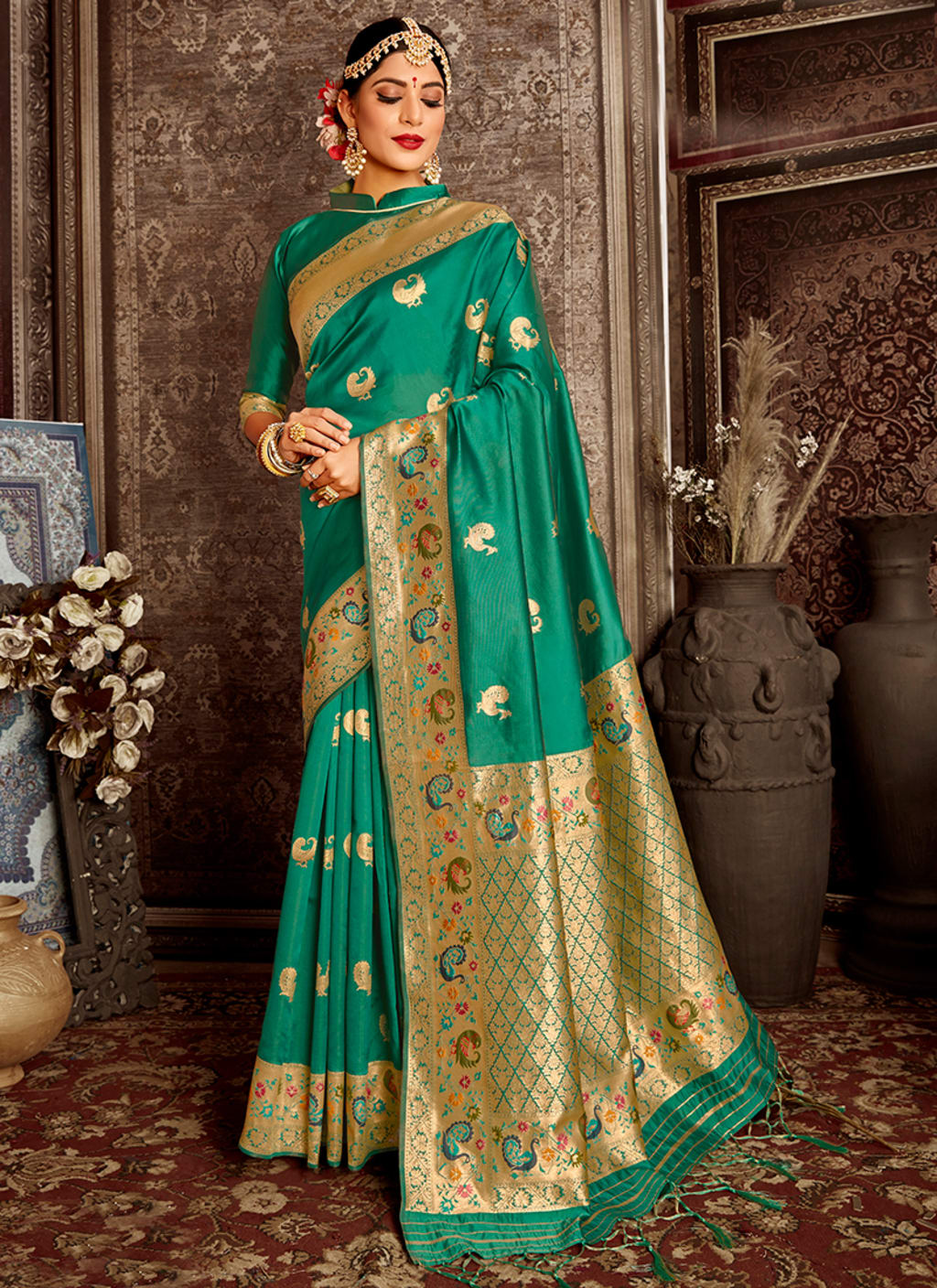
THE MAKING OF THE BANARASI SARI
By Shantol Edwards
The original method of producing banarasi silk has always been exclusive to the Indian town of Varanasi, where the skill originated.
The patterns, which contain gold and silver threads, can be quite basic or incredibly intricate. Because of their complex patterns, they were once exclusively available to the richest households. However, in recent years, cheaper imitations have been made, leading the market for original banarasi saris to deteriorate and traditional weavers to lose business.
So the question is, how is it that this tradition is still being kept alive?
Well to answer that question the finest silk must first be acquired, washed, and colored before being turned into tiny silk threads by the weaver in order to start creating the sari. White threads are wrapped around steel rods and dipped into hot soapy water to color the silk. The dyer then rubs the threads with their hands till a soft texture is obtained. It is then given a second and final wash before being hung up to dry over steel rods. The next step is to combine colored dyes with warm water, acid, and caustic soda. To ensure that the threads are coated uniformly, the threads are then submerged in the mixture for two to three hours.
Muhammad Absal Ansari, a professional weaver, has been working with this silk since he was 15 years old. He has preserved ancient methods of weaving banarasi saris, such as the use of the khadi, a 200-year-old wooden loom. His designs are based on punched patterns on cardboard cards. These cardboard designs are made in the same way as stencils are, with a hammer and his tools used to poke holes in them.
The illustrations combine Mogul Persian and Chinese elements. Likhai painters apply classic designs or develop their own creative touches to the sculptures.
Most banarasi saris are six yards long and need five thousand threads to weave and might take up to two days to be attached.
Zari, or golden silk threads, are what give banarasi saris their unique appearance; the threads are put in smaller spindles to produce the iconic banarasi. The shuttle is thrown from one end of the loom to the other to form the design, which is a time-consuming technique that takes years to perfect. Silk became famous in Varanasi between the 16th and 18th centuries, when the Mughal Empire governed India.
They were known for their extravagant preferences in architecture, food, and clothes, therefore weavers attempted to appeal to their demands by weaving genuine gold and silver threads into their silk outfits, which could only be afforded by India's wealthiest and most powerful families.
These ancient textiles are so festive that they are only worn by brides on special occasions in some communities. The lightest sari takes about a week to weave, heavier ones take about a month, and more intricate designs can take six months to complete. Detailed and complicated designs can sell for thousands of dollars, but fake banarasi saris have flooded the market since the mid 1980s, and they can sell for as little as 2500 Indian rupees.
The Indian government established a geographical indicator for banarasi brocade bansaris in 2009, which indicates that only hand-loomed sarees created in varanasi and a few other districts may be labeled authentically, however this did not prevent the fabrication of imitations.
The future of the hand-loomed cloth weavers is unknown, but they remain optimistic that customers who understand the value of real banarasi saris will continue to buy them for years to come.
About the Creator
Keep reading
More stories from Shantol Edwards and writers in Humans and other communities.
Was i dumb? Part 1
This relationship has always been doomed, I don't know why i was surprised when it ended the way that it did. How in God’s name could there have been so many red flags without me seeing any of them. I thought I had enough sense to spot out faults in relationships , i do it all the time when my friends are with guys I know are no good for them. So why wasn’t I able to do it for myself? I guess its because of Theo’s nature so charming and good looking and funny and caring and blah blah-blah. He sucks that’s for sure, we are both nurses, fresh graduates from college and you know the dream is to finish college ,meet some really good guy, get married, the dream house the cute kids and start a family you tube channel . So the first guy that's interested in me after college that looks as if he has his life together got me head over heels .
By Shantol Edwards3 years ago in Humans
The CEO of Everything
They say "jack of all trades, master of none," but they forgot to mention the part where the jack of all trades is also the camera woman, the makeup artist, and the person currently yelling at a tangled Wii microphone cable in a her own bathroom while recording herself singing and trying to make it look realistic and professional. (As professional as you can make it with nothing but a cell phone camera and a mic that doesn't work)
By Sara Wilson6 days ago in Humans
📢 Raise Your Voice Thread: 01/22/2026
Our “Raise Your Voice Threads” are hosted most alternating Thursdays at 12PM ET to offer creators more avenues to uncover exceptional stories on Vocal. As we are continuously searching for fresh creators and inspiring stories, this thread provides an opportunity to exchange and discuss the stories that have moved and motivated us on Vocal.
By Raise Your Voice by Vocala day ago in Resources



Comments
There are no comments for this story
Be the first to respond and start the conversation.