
The Long Way Back to Breakfast
From diagnosis to daylight

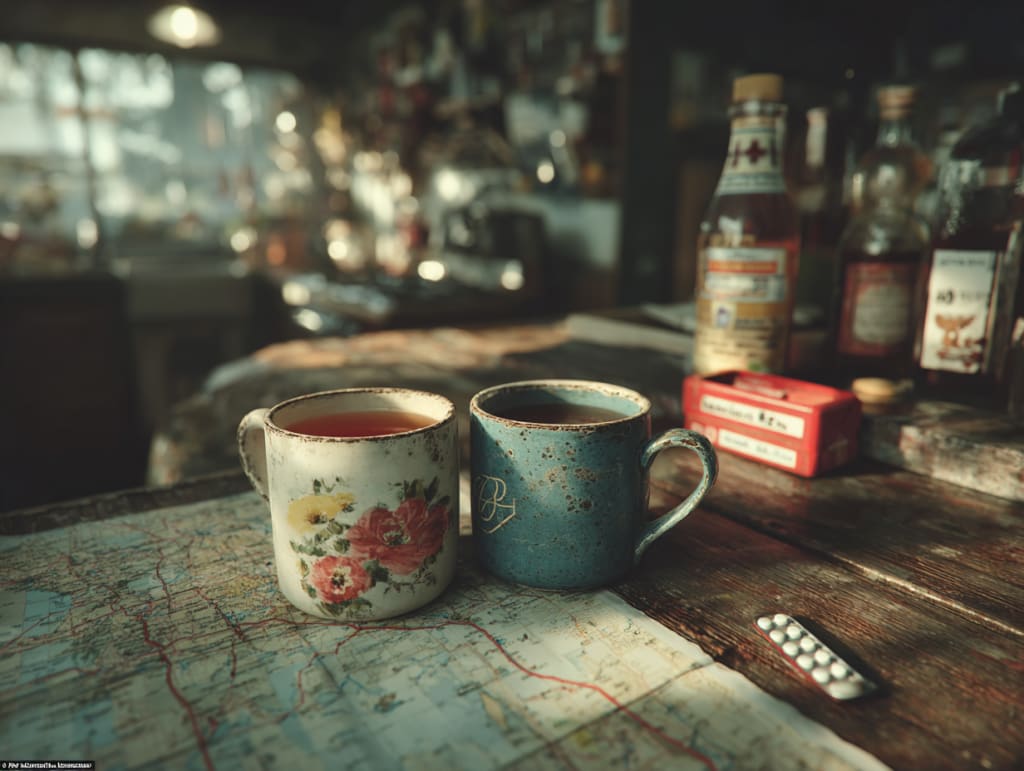
I didn’t know I was drawing a map until I looked back and saw the lines.
Three years ago, the first mark was a pin in a place I never wanted to visit: the clinic where the word cancer slid into the room and sat with us like an uninvited guest who wouldn’t leave. After that, the world rearranged itself. Geography shrank to corridors, waiting rooms, and the route from the car park to the ward. Time bent around scan dates. The old map with its trips and dinner plans and casual weekends curled at the edges and disappeared. In its place, a new one started to form out of practical things: which lift actually stops at Level 7, which café opens at 6 a.m., and the nurse who smiles even when the news is complicated. I drew it because I had to.
There were seasons on this map. Some were measured in treatment cycles, others by the rhythm of blood tests and phone calls. I learned the speech of numbers and acronyms, the sharp sound of good news, and the low hum of “we’ll keep an eye on it.” I made a habit of carrying a notebook that wasn’t a notebook exactly, more a container for days that had started to run together. I wrote down the names of medications and the times we took them, the tiny observations that proved he was still here in the way he always was: how he still teased the kettle for being slow, how he lined up his slippers after brushing his teeth.
The hardest stretch was the land called waiting. On the map, it looks blank, but that’s a trick. Waiting has many landmarks: the frayed chair by the window, the calendar with hopeful circles drawn in pencil, the way ordinary sounds turn loud and then far away. It has weather too. Some days it rains from the inside, and you mop it up by making lists. Some days, you find a thin band of sunlight and you sit in it like a cat, trying to thaw.
We made the route small so it felt navigable. Mornings had a pattern: tea, check the pill box, take a walk that was not ambitious but mattered. Afternoons were for calls and emails and holding each other’s gaze long enough to believe the ground wouldn’t tilt. Evenings were the soft part of the day, when we pretended to be normal by watching nonsense television and arguing gently about who’d hidden the remote. That little argument is a dot I love on this map. It says: still us.
There were detours. A fever here. A scan there. A week where every hour was a negotiation with pain and a stubborn body. I learned the courage of small tasks: how to ask the right question without wobbling, how to pack a hospital bag without announcing it to the air. I learned the routes my mind takes under pressure and what brings it back. Breathing does, eventually. So does the feel of his hand. So does the way the consultant explains a plan, and you hold on to the word plan like it’s a handrail on a steep stair.
When the conversation turned to a transplant, I drew a new legend on the side of the map. It had words like evaluation, compatibility, and list. It had longer roads with fewer signs. We each carried hope carefully, as if it were a bowl filled too close to the brim. Some days, I set it down because it felt heavy. Some days, I gripped it like it was the only thing I owned.
The night the call came is a waypoint I could circle with my eyes closed. It was early, too early to be called ordinary, the kind of hour where the world is mostly asleep and the few people awake are either working or worrying. The voice on the phone was steady, the words precise. There is a liver. Can you come in? We moved through the next minutes like people who had rehearsed a play. Bag. Keys. Papers. A quick message to the small circle who carry us. The drive was a straight road that didn’t feel straight at all. We didn’t talk much. We didn’t need to. Everything was already said and also not, and the air between us was full of both.
Hospitals at that hour feel like ships moving through fog. The lights are softer. The sounds are fewer. The staff are a different kind of brave. I remember the calm of the anaesthetist, the warm blanket, the way the surgeon drew the final line on our map with a felt-tip pen and said we were as ready as we could be. Then there was a door I could not follow him through, and a chair that became a continent. I learned that time in waiting rooms doesn’t tick, it stretches like elastic and snaps back without warning. I watched other families float in and out of their own versions of this night. I drank tea that tasted like cardboard and mercy. I learned the pattern of my prayers, which turned out to be less a set of words and more a stubborn refusal to let go of a thread.
Then the door opened. The first words were not dramatic. They never are. They were steady and careful and carried the weight of a miracle without spilling it. Successful. He’s in recovery. The map changed again in that instant, like the way a tide turns when you still think it’s going out. I felt the floor come back under my feet.
The days that followed are the kind of geography you only learn by walking it. There were beeps and monitors and the useful boredom of watching a body remember how to be a home. There were tiny triumphs: a first sip of water, the way his colour changed, the slow courage of sitting up, standing, shuffling, walking. The pain was present but less bothersome than before. The nurses were cartographers of a kind, guiding us through drains and dressings, showing us where to place our steps. I marked the milestones quietly inside myself because saying them out loud felt like daring the weather.
People imagine the map ends when you leave the hospital. It doesn’t. It simply gains pavements and normal noises again. Six weeks out, we are learning the new roads. There are the morning tablets, an orchestra of them, each with a job. There is the routine of blood tests and check-ups, the polite dance of hand gel and masks, the slow re-entry into the kitchen where he measures time by recipes. We keep walking a little further each day. The world feels bigger again. We can feel its edges.
I still carry the old routes. I know how quickly we can find ourselves back at certain doors. But I also carry new ones made of ordinary joys: the first cup of tea in our own mugs, the smugness of clean sheets, the sound of his laugh when the cat pretends to ignore us and fails. I collect these like small stones in my pocket. They have weight. They also gleam.
People sometimes ask how we did it. The honest answer is we didn’t do it alone. The map is annotated with the hands that steadied us: the consultant who called after hours, the friend who left a lasagne on the doorstep without ringing the bell, the neighbour who took the bins out on the week I forgot what day it was. There is the donor family, strangers whose grief built a bridge to our hope. Their part of the map glows. It always will.
If you looked at this map, you might think it’s a mess. The lines overlap. Some paths go nowhere. Some loop back. It’s not tidy. But it’s true. It shows how fear and love can occupy the same room and not cancel each other out. It shows how ordinary tasks become anchors. It shows the distance between a diagnosis and a breakfast table and how far that really is, even when it’s only a few miles on a sat nav.
I used to believe maps were about certainty. Now I think they’re about courage. They don’t promise a smooth road. They give you a way to keep going even when the weather turns. They remind you where you’ve been and point, however quietly, to a next step.
Six weeks in, we’re still tracing the new routes with our fingers. We fold and refold the paper because that’s what you do when you’re trying to make something fit your pocket and your life. And when I get lost, which I still do, I return to the first landmarks: his hand in mine, the kettle roaring, the sound of his slippers arranging themselves by the door. That’s north, I think. That’s home.
About the Creator
Diane Foster
I’m a professional writer, proofreader, and all-round online entrepreneur, UK. I’m married to a rock star who had his long-awaited liver transplant in August 2025.
When not working, you’ll find me with a glass of wine, immersed in poetry.
Keep reading
More stories from Diane Foster and writers in Humans and other communities.
I’m Not Perfect, But I Like Me Anyway
Some days, I surprise myself with how well I know myself. Not in the "I know exactly where I left my glasses" kind of way (spoiler: I don't), but in the deeper, quieter ways. The ways that whisper, when nobody's listening, that I'm doing better than I think. And that I shouldn’t put myself down.
By Diane Foster10 months ago in Humans
Author’s Advice
If you would’ve asked me 20 years ago did I know I’d become a writer and an author, I would’ve said “nope, ain’t happening”. As fate would have it I did become an author and I can honestly say I’m loving it so far. It really does feel good to be a writer. I’ve learned a lot on this journey and I feel like with even me being as new to this world as I am, there’s some wisdom I need to share with every other aspiring author.
By Joe Patterson3 days ago in Journal



Comments (1)
Thanks for sharing your difficult journey with some wonderful analogies. We just have to keep moving in the right direction