
The Loneliness Epidemic – Why We’re All Feeling So Alone in a Connected World
Unpacking the silent crisis of our age and how we can rebuild meaningful human bonds

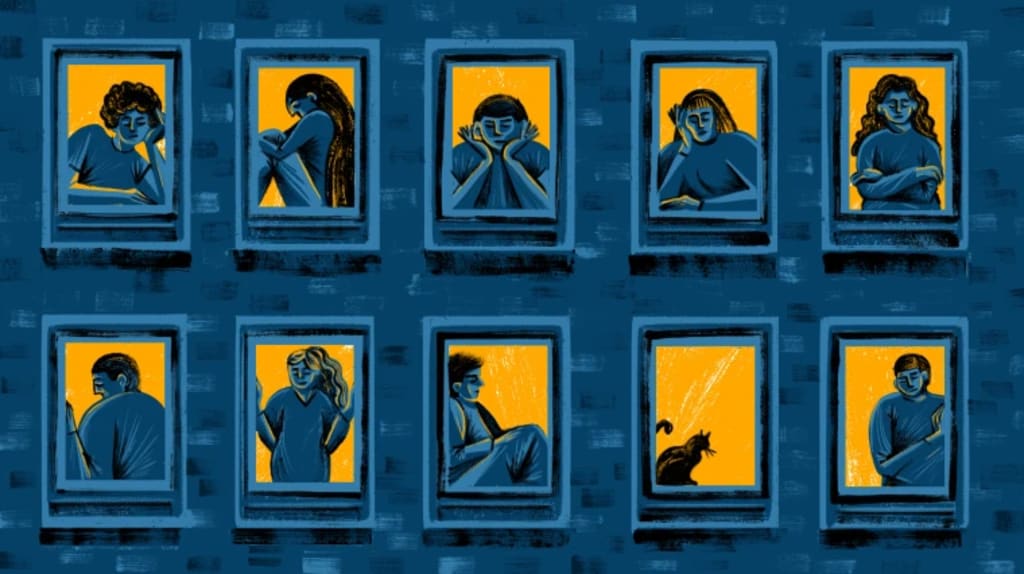
The Most Connected Yet the Most Alone
In an era where a message can travel across the world in a second and we can “like” someone’s lunch without ever knowing their name, it’s ironic—painfully so—that loneliness is becoming the defining emotional state of the 21st century. Across age groups, cultures, and countries, people are reporting a growing sense of disconnection. Mental health professionals are calling it a “loneliness epidemic.” But how did we get here? And more importantly, how do we get out?
This article is not just an exploration of the issue, but a roadmap toward reconnection—from the lens of psychology, digital life, modern culture, and timeless human need.
The Hidden Hurt of the Modern World
It’s not uncommon to see someone with thousands of followers on Instagram yet have no one to call when they’re in crisis. It’s also not rare to hear someone surrounded by people in their workplace, or even family, confess that they feel completely unseen.
A 2023 study by Cigna found that more than 50% of adults in the United States experience measurable loneliness. In the UK, there’s even a government-appointed “Minister for Loneliness.” And in Japan, where isolation has long been an issue, the term hikikomori describes people who withdraw from society entirely.
The data is clear. But beyond the numbers lies something more personal: a soul-level ache to be understood, seen, and loved.
Social Media: A Double-Edged Mirror
Social media was supposed to bring us together. In many ways, it has. We can reconnect with childhood friends, share updates with family across the globe, or even find love. But it has also become a theater of performance, where vulnerability is hidden behind filters and authenticity competes with algorithms.
We scroll through highlight reels of other people’s lives while comparing them to the raw footage of our own. This creates a distorted reality that deepens insecurity, not connection.
Even worse, the addictive nature of platforms like TikTok and Instagram rewards surface-level engagement over deep, meaningful interaction. We may be “seen,” but not truly known.
The Rise of Individualism
Our culture increasingly teaches us to chase independence, personal success, and “doing you.” While self-reliance is important, taken to the extreme, it leads to isolation.
Traditional cultures thrived on community—extended families, shared meals, neighborhoods where everyone knew each other. In contrast, modern life often separates us: we move for jobs, live in digital bubbles, and rarely know our neighbors’ names.
The rise of individualism may have given us freedom—but it also took away the village that once raised the child.
The Cost of Not Talking
Loneliness isn’t just sad—it’s dangerous. Studies show that chronic loneliness can be as harmful to physical health as smoking 15 cigarettes a day. It increases the risk of heart disease, stroke, anxiety, depression, and even premature death.
Mentally, isolation warps our perceptions. We start to believe lies like “I’m the only one who feels this way” or “No one cares about me.” These beliefs become self-fulfilling, pushing us further away from others.
The problem is worsened when we don’t talk about it. Loneliness carries a stigma, especially for men, who are socially conditioned to equate emotional expression with weakness.
The Myth of the “Strong” Silent Type
In many cultures, particularly among men, strength is defined as stoicism—keeping pain inside, never asking for help. But emotional strength is not silence. True strength is honesty.
We need to normalize saying, “I’m lonely.” Not as a weakness, but as a human truth. The moment we begin to speak about it, we give others permission to do the same. And in that space of honesty, connection is born.
Rebuilding Human Connection
So how do we reconnect in an age that’s quietly tearing us apart? Here are some practical, heart-led ways:
1. Prioritize Real Conversation
Don’t just text—call. Don’t just scroll—ask questions. When you meet someone, give them your full attention. It’s a rare gift today.
2. Create Community Where You Are
Host a weekly dinner, join a local group, volunteer, or just start talking to your neighbors. You don’t need a big plan. Connection often starts with small, consistent steps.
3. Detox From Digital
Set boundaries on screen time. Make space in your life for slow, analog moments—walking in nature, journaling, face-to-face conversation.
4. Say What You Feel
Speak up. Whether to a friend, a therapist, or a journal. The act of expression is healing in itself.
5. Check on Others
Sometimes, the best way to feel connected is to help someone else. Ask, “How are you—really?” And then listen.
A New Kind of Strength
The strongest people today aren’t the ones who hustle in silence. They are the ones who choose presence over productivity, people over performance, and authenticity over aesthetics.
It takes courage to say, “I need connection.” But it’s the first step to healing.
Alone Together, or Together Again?
We are not meant to live this way. No matter how advanced our technology becomes, the human heart still longs for a shoulder to lean on, a friend to laugh with, a voice that says, “You matter.”
Loneliness is not just a personal issue—it’s a cultural crisis. But it is one we can heal, slowly and intentionally, if we choose to see each other again.
Let’s stop performing and start relating.
Let’s turn off our phones and turn toward each other.
Let’s become villages again—in cities, in hearts, in homes.
Because at the end of the day, every human wants the same thing:
To be seen. To be heard. And to be loved.
About the Creator
Mohammad Ashique
Curious mind. Creative writer. I share stories on trends, lifestyle, and culture — aiming to inform, inspire, or entertain. Let’s explore the world, one word at a time.
Keep reading
More stories from Mohammad Ashique and writers in Humans and other communities.
Humanity at a Crossroads – A Reflection on Gender, Belief, and Social Balance
A Time to Reflect, Not to Divide In today’s world, we are constantly bombarded with opinions, ideologies, and movements. Some call it progress, others call it chaos. But one thing is clear—people are struggling to find the truth. As humans, we seek meaning, clarity, and peace. But when ideas begin to challenge the very structure of what we’ve known for millennia—such as the nature of gender—it’s worth asking: Are we moving forward, or losing our way?
By Mohammad Ashique10 months ago in Humans


Comments
There are no comments for this story
Be the first to respond and start the conversation.