
The Loneliest Man in the World
Pablo Novak and the Ghost Town of Epecuén

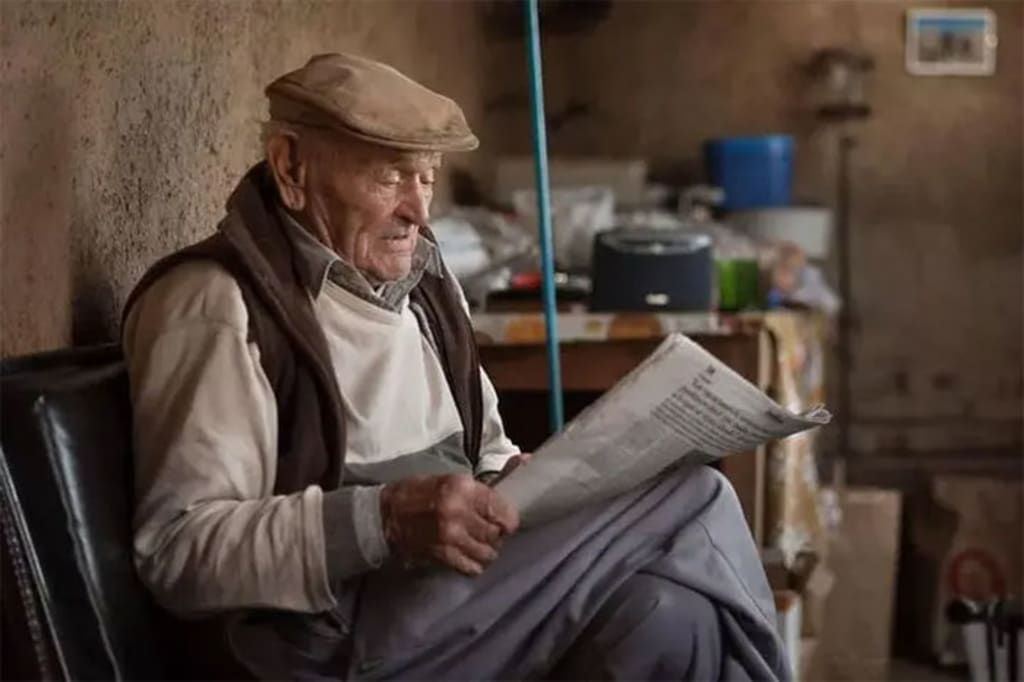
In the heart of Argentina, 300 miles southwest of Buenos Aires, lies the ruins of a once-thriving lakeside resort town—Epecuén. Once bustling with life, the town now stands silent, its streets buried under salt and debris, its buildings collapsed and decayed. But among the ruins lives a man—Pablo Novak, 93 years old—who has been called “the loneliest man in the world.”
For the past 25 years, Pablo has chosen to live alone in this ghost town, the only permanent resident of a place that nature swallowed and humans abandoned nearly four decades ago.
A Town Lost to Water
In the early 1980s, Epecuén was a popular destination. Its population of 2,000 welcomed around 20,000 tourists each year. People came from all over Argentina to bathe in the Laguna Epecuén, a salty lake believed to have healing properties. It was said to help with ailments such as rheumatism, skin diseases, diabetes, and even depression. The town thrived on wellness tourism, with over 280 businesses—including hotels, restaurants, a racetrack, and even a museum.
Then, in November 1985, disaster struck. After days of relentless rainfall and an unusual weather pattern, a nearby dam burst. In just two weeks, the entire town was submerged under three meters (10 feet) of water. The rising waters forced every resident to evacuate, abandoning their homes, shops, and dreams. Epecuén, a vibrant lakeside haven, disappeared beneath the waves.
The flooding didn’t stop there. Over the following years, the water level continued to rise, peaking in 1993 at nearly 10 meters deep. The town lay beneath the lake for decades, becoming a distant memory.
The Return of One Man
In the late 1990s, when the waters began to recede, revealing skeletal remains of the town, one man decided to return. Pablo Novak, then in his late 60s, came back—not for nostalgia or tourism, but to live.
“My wife didn’t come with me. She and my children live in a nearby town,” he told CNN in a 2015 interview. “I came back to be with my livestock—and I never left again. I’m completely alone, every single day.”
His home is a modest, crumbling structure with no electricity, scattered with rusty chairs, old newspapers, and decades of dust. Yet, to Pablo, it is home. Every day, he walks the ruins with his dog, familiar with every corner, every broken wall, every memory embedded in the ground.
“For the first four or five years after the flood, no one came here at all,” he recalls. “Now people visit sometimes. Tourists, photographers, reporters. They’re curious. But they always leave. I stay.”
A Life in Silence
Pablo's days are filled with long walks through the town's skeletal remains. The silence is deafening, interrupted only by the wind, the crunch of salt underfoot, or the distant bark of his loyal dog.
“At my age, I just enjoy life walking through the ruins of Epecuén,” he says. “I hope someone will come and ask me something.”
There’s a haunting beauty in his solitude. The fallen buildings, bleached by sun and salt, resemble a post-apocalyptic movie set. Nature has reclaimed what it once gave, and yet, Pablo remains—a quiet guardian of memories.
Though he is alone, he doesn’t describe himself as lonely in the tragic sense. Rather, he seems to have made peace with solitude, finding meaning in remembering what once was and witnessing what remains.
The Healing Waters and the Fall
Before the flood, Epecuén’s waters were legendary. The Laguna Epecuén had a salt concentration second only to the Dead Sea, allowing bathers to float effortlessly. Locals and tourists alike swore by its curative powers.
Photographs from the 1970s show smiling tourists in swimsuits, enjoying the lake and relaxing under the sun. The railway station, built in 1972, welcomed thousands. Life was good.
But then came the flood, and with it, an irreversible silence. As the waters rose, so did the despair. Businesses were ruined, homes destroyed, and families uprooted.
Most residents never returned. Epecuén became a ghost town, preserved in salt and sorrow—except for one man.
A Living Time Capsule
Over time, Pablo Novak has become more than a resident—he is a living time capsule, a symbol of resilience and memory. His story has captured the attention of journalists, filmmakers, and travelers from around the world. He appears in documentaries, and his life has been featured in newspapers and television broadcasts.
Some come for the eerie beauty of the town, others for the haunting tale of a man who chose solitude. Many leave moved, unsure if they feel sorrow or admiration.
What Keeps Him There?
When asked why he stays, Pablo doesn’t offer grand philosophies. His reasons are simple, grounded in routine and a love for the land he grew up in.
“I’ve gotten used to being alone,” he shrugs. “This is my home.”
Despite the hardships—lack of power, isolation, aging—he shows no signs of leaving. He tends to his animals, welcomes the occasional visitor, and watches over the ruins of Epecuén like a watchful spirit.
A Town Reclaimed by Nature, Not Forgotten
Today, Epecuén stands as a haunting reminder of the power of nature and the fragility of human plans. The buildings are shells of their former selves, salt crusts every surface, and the once-bustling town square is now a field of rubble.
But thanks to Pablo Novak, Epecuén is not forgotten. He tells its stories, shares its past, and keeps its memory alive. While others fled and moved on, he stayed behind to bear witness.
In the end, Pablo Novak is not just the loneliest man in the world—he is the last heartbeat of a town that refuses to be erased.
About the Creator
Eleanor Grace
"Dream big.Start small.Act now."
Keep reading
More stories from Eleanor Grace and writers in Humans and other communities.
Can Fear Kill You?
Can someone truly be scared to death? It may sound like a plot twist in a horror movie, but scientists have now confirmed that fear—if intense enough—can indeed be lethal. The connection between sudden emotional shock and fatal heart attacks is no longer just a theory; it is a scientific reality supported by new research.
By Eleanor Grace9 months ago in Humans
Autonomy Is The Real Privilege
Good morning, freedom-seekers! Today we’re gonna be looking at autonomy. A strange word, I know; one many would probably look at blankly and run away from on sight. We’re gonna figure out what it actually means, consider how it’s achieved, and decipher just how deeply most of us are tangled up in dependence without realising it.
By That ‘Freedom’ Guyabout 4 hours ago in Humans
You Don’t Miss Them, You Miss Who You Were With Them
I used to think I missed them. That the tight feeling in my chest, the sudden wave of nostalgia, the random memories that showed up uninvited were all proof that I still wanted them back. I thought longing meant love, and sadness meant unfinished business.
By HazelnutLattea2 days ago in Humans
Smart phones, Humans and Aliens.
WARNING. I will be tapping into one of your favorite creative tensions: The absurdity of humans worshipping their glowing rectangles as if they were tiny oracles. There’s something deliciously poetic about that contradiction, and it lends itself beautifully to an instructive proviso.
By Novel Allen4 days ago in Poets




Comments
There are no comments for this story
Be the first to respond and start the conversation.