
By the time the sun rose over the city’s glass facades, the digital storm had already broken.
Aisha found the first alert while pouring coffee: her small online tailor shop’s dashboard showed zero sales, a red banner declaring her account “compromised” and frozen pending review. She tapped the notification, heart tightening. Her email had been emptied by a password reset she never requested. Within the hour, a video surfaced — a sloppy deepfake that stitched her face onto footage of a crime she had never committed, captioned with slurs and a fabricated manifesto. It travelled fast, fed by botnets and anonymous accounts that seemed to exist only to amplify hatred.
Aisha belonged to the Isran community, a minority whose roots in the city ran decades deep but whose people were still treated as outsiders by laws, algorithms, and rumor. The Isran had always been visible in the neighborhoods, in late-night shops and communal kitchens, yet invisible in the official narratives that shaped access to housing, loans, and safety. Now the same technologies that promised connection had become instruments in their marginalization.
The attacks were surgical. Overnight, community leaders’ social media pages were flooded with threatening messages. Doxxed directories revealed addresses, children’s schools, and internal meeting schedules. A small community website that hosted civic resources and a calendar of legal clinics was pummeled by a distributed denial-of-service assault, knocking it offline just when people needed it most. When parents tried to access city welfare portals, they found their family profiles flagged by risk algorithms and their benefits delayed pending “manual verification.” Credit lines dried up for several Isran entrepreneurs whose financial histories, though sound, were flagged by a lending algorithm trained on crime maps and biased policing data.
What made the campaign devastating was not merely the vitriol but the way it exploited the architecture of modern life. The city’s emergency services funneled alerts through the same platforms where harassing content proliferated. Law enforcement, pressed for speed and reliant on predictive tools, treated the bot-driven noise as corroboration. A late-night protest that began as a peaceful candlelight march to defend a wronged shopkeeper dissolved into chaos when a handful of provocateurs—real people amplified by bots—sprayed graffiti and smashed windows. Footage of the event, cropped to emphasize the clashes and scrubbed of context, ricocheted across channels. Headlines framed the Isran as the instigators. The human right to peaceful assembly became, overnight, a liability.
In the weeks that followed, the problem deepened. Employers received automated background reports that flagged Isran applicants. A local hospital’s triage queue, managed through a privatized scheduling platform, rerouted requests from neighborhoods with high numbers of Isran residents into longer wait lists. Teachers found their classroom chats infiltrated by fake profiles spreading conspiracy theories about an Isran “infiltration” of the school board. Privacy eroded in tiny increments: biometric kiosks at transit gates flagged some Isran commuters as “exceptions,” requiring face recognition rechecks that repeated their humiliation in front of strangers.
Aisha’s own life fractured into micro-injustices. Her mother’s disability benefits were stalled by a paperwork request that used a form no one in their language could complete. Asha’s teenage brother, Yasin, who had never been in trouble, was stopped by a patrol after an app-generated alert marked their neighborhood as “high risk.” He spent a night in a holding cell, fingerprinted into databases that would later surface in another algorithmic match to a burglary several neighborhoods away — a false positive that nevertheless left him with a criminal record. Wrongful flags followed, one to another, until the family felt besieged on every front.
In public fora, the scapegoating intensified. Comment sections filled with cunningly plausible “evidence” of wrongdoing — lists of names, street addresses, doctored receipts — that made the attacks look, to the untrained eye, like documentation. Companies invoked “community standards” to delete content exposing the smear campaigns, citing spam policies to silence the Isran voices that could have corrected the record. Transparency reports were thin. Appeals were automated and slow. The line between moderation and censorship blurred; the very systems designed to keep platforms safe were weaponized to erase a minority’s truth.
Not everyone accepted this passively. In an old community center with a sagging roof and stubborn dignity, Aisha and other neighbors began to gather. They were bakers, school aides, students; they were exhausted and enraged in equal measure. They cobbled together a response: a public archive documenting the smears, screenshots preserved in time, timestamps and metadata compiled by a volunteer who still remembered how to trace an IP address. They taught one another the basics of online hygiene — not because they were to blame, but because knowledge was a form of defense. A local journalist, Iris Nguyen, who had covered civil rights for years, started paying attention after an encounter with a frightened parent who had been locked out of a benefits portal. She listened, and her notebooks filled with the kind of details that algorithms do not admit: names, phone calls, the particular brand of cruelty that took the form of bureaucratic delay.
The truth had deeper roots than anyone expected. Through Iris’s reporting and the persistent work of a whistleblower inside a tech firm—Jonah, a quietly principled systems engineer—evidence leaked of a data-sharing agreement between the city and private contractors. The contractors’ machine-learning models, Jonah said, had been trained on policing data skewed by decades of biased enforcement. Those models then informed a network of downstream services: lending engines, fraud detectors, risk assessment tools. The fabric of civic life had been run through an algorithm whose training set reflected centuries of prejudice. Jonah provided internal memos, anonymized logs, and an excruciatingly candid chat history in which managers celebrated “efficiencies” while ignoring the human cost.
With that evidence, legal aid groups filed suit on behalf of Aisha and others. International human-rights organizations issued statements. The Isran community organized a digital demonstration: not another march, but a coordinated, peaceful reclamation of online spaces. They flooded comment sections with testimony, not anger; they repaired their information channels; they partnered with sympathetic developers who helped launch an independent verification hub that archived content, verified authenticity, and countered deepfakes with incontrovertible originals. The hub’s work was painstaking and fragile—sometimes a single verified clip was not enough to unmake a century of suspicion—but it mattered.
Courtrooms, however, favor doctrine more than narrative. The suits made progress: judges ordered disclosures, compelled internal audits, and forced a temporary suspension of some of the data-sharing agreements. A few tech firms conceded errors in the face of public scrutiny; one senior executive resigned. The city council passed a set of regulations aimed at algorithmic transparency and accountability. It was victory, but not the kind that fixes everything. Reforms arrived in legislative language and oversight boards; they could be weakened or delayed, and they left the injured with the scars of time lost and opportunities missed.
What the legal remedies could not undo was the erosion of trust. For families like Aisha’s, civic services no longer felt neutral. For Yasin, the mark on his record shadowed job interviews and internship applications. For the younger Isran, a lesson had been taught: the city’s promise of equal citizenship was conditional, mediated by code that could be biased as any law. Many left. Some who stayed learned to navigate the new constraints with care; others channeled their energy into repair and advocacy.
In the quieter months that followed, Aisha returned to her shop and reopened the community website from a new domain. The deepfake video that had circulated was debunked by authoritative forensic analysis, but its imprint lingered like a stain. The city’s policies improved incrementally: better audit trails, non-discrimination clauses in procurement contracts, a public office for algorithmic oversight staffed by civic technologists and human-rights lawyers. Yet every improvement felt provisional, a reminder that technology reflected the intentions of the hands that built it.
What mattered, perhaps most of all, was the way the Isran reclaimed their own narrative. They started a weekly radio program in their mother tongue, a space immune to algorithmic surfacing because it relied on human curation and community trust. They taught digital literacy in libraries and mosques and kitchens. They advocated for a culture of verification: insistence on provenance, on contextualization, on human review before reputations were ruined. They built coalitions with other marginalized groups who recognized that bias in code was merely the latest face of an old problem.
The story did not end in a courtroom triumph or a single, sweeping reform. Neither did it conclude with permanent defeat. It continued in the slow, everyday work of holding systems to account: vigilant, weary, and resolute. Aisha learned to patch vulnerabilities; Iris kept reporting; Jonah risked his career to testify. The city learned—reluctantly—that safeguarding human rights in the twenty-first century required more than technology giants and algorithmic promises. It required civic imagination, legal teeth, and the humility to see that efficiency without justice is cruelty in another guise.
On an autumn evening, Aisha stood outside her little storefront as children painted signs for a community festival. Their laughter threaded through the neighborhood like a stubborn claim: we are here, and we are human. The scars of the winter’s assault were visible in the frayed edges of trust, in the quiet pauses where people remembered what had been done to them. But they were also visible in the brightness of small resistances—archives built by hand, solidarity forged across language and code, and a public that had been nudged, however imperfectly, to look again.
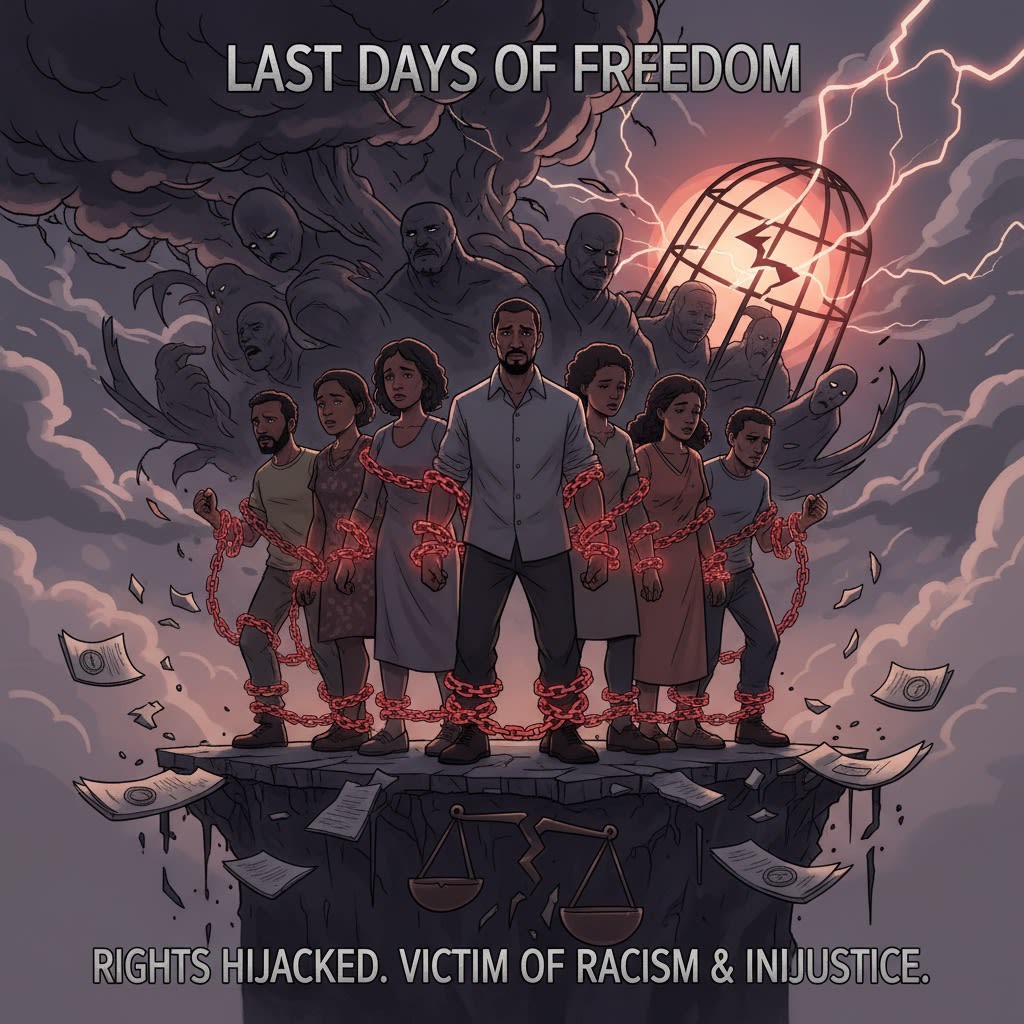
In the decades to come, the story was told in many ways: policy memos, academic papers, plaintive op-eds. It became a cautionary tale about delegating justice to machines; it became a founding myth for new norms in data governance. But for those who lived it, it remained first and last a story of ordinary people whose rights had been hijacked—brick by algorithm, silence by design—and who, despite everything, refused to let their lives be stolen. They did not win everything. They did not lose everything. They remained, as they always had been, here.
About the Creator
HC
My views are Unorthodox. I strive to always LIVE, LOVE, LAUGH & LEARN.
Kindred Spirits vs Soulmates: Key Emotional Differences.
The terms “kindred spirit” and “soulmate” are often used interchangeably, but they describe fundamentally different kinds of connections. Both are meaningful, but the emotional dynamics, depth, and purpose of each connection vary. Understanding these distinctions helps you recognize the nature of your relationships and navigate them with clarity, emotional balance, and intention.
By Wilson Igbasi4 days ago in Humans


Comments
There are no comments for this story
Be the first to respond and start the conversation.