
The Labor-Intensive Process Behind the Rising Popularity of Fox Nuts
Understanding the Harvesting, Popping, and Global Demand for Water Lily Seeds in India

Introduction: The Journey of Water Lily Seeds to Becoming Fox Nuts
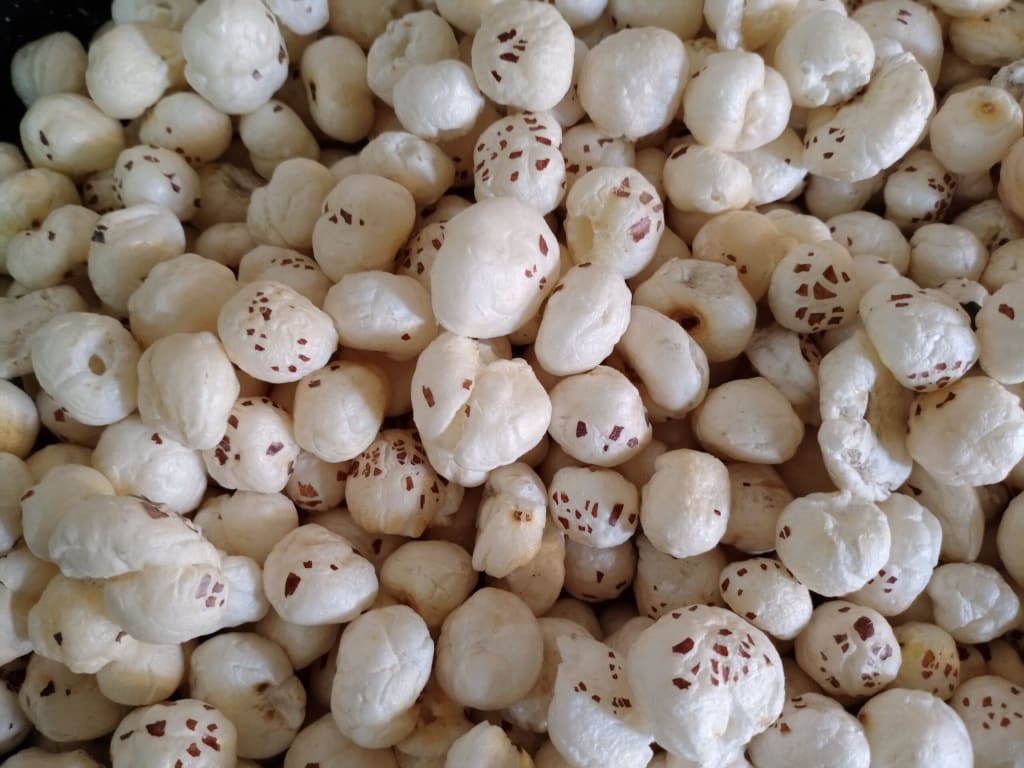
Fox nuts, or makana, are the seeds of the prickly water lily plant, primarily cultivated in the wetlands of Bihar, India. These tiny, popcorn-like seeds have garnered global attention due to their rich nutritional profile, which includes high levels of fiber, protein, and antioxidants. However, the path from water lily seed to the popular snack known as Fox nuts is far from simple. The process is arduous, requiring skilled labor and optimal conditions to achieve the perfect "pop." This article delves into the meticulous methods behind harvesting, processing, and the growing global demand for these seeds, shedding light on why they are worth every penny.
The Harvesting Process: Navigating Thorns and Waterlogged Fields
The first challenge begins with harvesting the seeds from the water lily plant. Water lilies, with their large, floating leaves, are easily recognizable. However, what isn’t immediately apparent are the numerous thorns covering the plant. These thorns pose a significant risk to workers who spend their days wading through water, often up to four feet deep, and foraging for seeds.
Lakshmi, a seasoned harvester with over 35 years of experience, explains how workers use sticks to clear the plants and identify the seeds hidden beneath the water. Each water lily plant can yield anywhere from 70 to 125 seeds, but the timing and conditions for harvesting are crucial. Ripe seeds must be collected before they fall prey to rot, as overripe seeds won’t pop effectively and are valued less.
The work is physically demanding, with workers laboring from 6 a.m. to 4 p.m. each day. Despite the challenges, a successful harvest is heavily reliant on the weather. The amount of rainfall during the spring directly impacts the size of the water lily flower and, consequently, the quality of the seeds.
Processing and Roasting: Transforming Raw Seeds into Fox Nuts
Once the seeds are harvested, they undergo a rigorous cleaning process to remove mud and debris. However, the most crucial step lies in the popping process, which can take up to four days to complete. After cleaning, the seeds are sun-dried to reduce their moisture content. The right amount of sunlight exposure is crucial, as under-dried seeds will not pop when roasted.
The seeds are then roasted in a series of clay woks, where the temperature must be carefully controlled. The first roast serves as a test to determine if the seeds are ready to pop. After the first roast, the seeds rest overnight, allowing them to further prepare for the next round of roasting.
In this phase, the seeds are transferred to iron woks, which help retain heat. The roasting process involves six different woks, each playing a role in gradually increasing the heat until the seeds make a faint, crackling noise, signaling they are ready to pop. However, even with precise techniques, not all seeds will pop. From every 100 kilograms of seeds processed, only 35 kilograms will successfully pop into Fox nuts.
Economic Impact: The High Price of Perfectly Popped Fox Nuts
The labor-intensive nature of water lily seed processing explains why these seeds are so expensive. Raw seeds can be harvested in quantities of up to 150 kilograms during the first wave, but their value is relatively low. Once popped, the price skyrockets—reaching up to 550 rupees per kilogram in local markets and up to $170 per kilogram in international markets.
This price surge is due to the painstaking efforts involved in harvesting, processing, and perfecting the seeds to achieve the desired popped texture and flavor. A successful batch of popped Fox nuts can fetch prices as high as 900 rupees per kilogram in major cities like Delhi, where they are becoming increasingly popular as a healthy snack.
Global Demand and New Farming Opportunities
In recent years, the demand for Fox nuts has grown significantly, particularly in Western markets such as the United States, where they are rapidly gaining popularity as a nutritious snack. This rising demand has provided new farming opportunities in Bihar, as farmers turn to water lily cultivation to combat the challenges posed by changing weather conditions.
With increased rainfall making traditional crops like rice and corn harder to grow, many farmers have repurposed flooded lands for water lily cultivation. Local government initiatives have further supported this shift, with programs designed to convert abandoned lowland areas into viable spaces for growing water lilies. As a result, water lily seed farming now accounts for 60% of production, with much of it taking place in flooded lowlands instead of the traditional ponds and wetlands.
Conclusion: The Future of Fox Nuts
The growing popularity of Fox nuts on a global scale reflects not only their health benefits but also the dedication and craftsmanship behind their creation. From navigating thorn-filled water lily ponds to the careful roasting process, every step adds value to the final product. As demand continues to rise, water lily farming in Bihar is expected to grow, providing farmers with new income opportunities and contributing to the global supply of this sought-after snack.
The labor-intensive process involved in producing Fox nuts—combined with their nutritional value and unique flavor—explains why they command such a high price. The increasing popularity of these seeds, particularly in international markets, ensures that they will remain a valuable commodity for years to come, offering both economic opportunities for farmers and a healthy snack option for consumers worldwide.
About the Creator
Keep reading
More stories from Anu Preethi Danila D and writers in Humans and other communities.
Shilajit: The Himalayan Elixir Bridging Tradition and Modern Wellness
The Elusive Treasure: What is Shilajit? Nestled in the towering heights of the Himalayas lies shilajit, a rare, tar-like substance celebrated in Ayurvedic medicine for over 3,000 years. Formed over centuries from the decomposition of plants and microorganisms under extreme conditions, shilajit is rich in fulvic acid, minerals, and bioactive compounds. Known as "the destroyer of weakness," it has earned a reputation as a natural vitality booster, enhancing energy, libido, and cognitive health.
By Anu Preethi Danila Dabout a year ago in Humans
Whiskey At Dusk
Guess the whiskey was more important to you in the end, wasn’t it? It was more than the well-being of your friends; more vital than showing up to the places you promised you would and could come to; more critical of a matter than fulfilling your damn responsibilities and getting the press off your back.
By Snarky Lisa4 days ago in Humans
Why Some People Detach From Fear-Driven Thinking.
Fear-driven thinking dominates the mind when uncertainty, danger, or perceived threats arise. It triggers reactive responses, heightens stress, and narrows decision-making. Yet, some individuals navigate life without being controlled by fear, detaching from automatic anxiety-driven thought patterns. This detachment is not denial or avoidance; it is a conscious or developed capacity to observe, regulate, and respond to fear without being dominated by it. Understanding why some people detach from fear-driven thinking reveals key cognitive, emotional, and behavioral strategies that promote resilience, clarity, and purposeful action.
By Wilson Igbasi3 days ago in Humans


Comments
There are no comments for this story
Be the first to respond and start the conversation.