
The King Who Exposed Greed: How One Clever Plan Saved an Entire Kingdom
A powerful moral tale from ancient Sukkur about justice, corruption, and a ruler whose honesty transformed a collapsing nation.

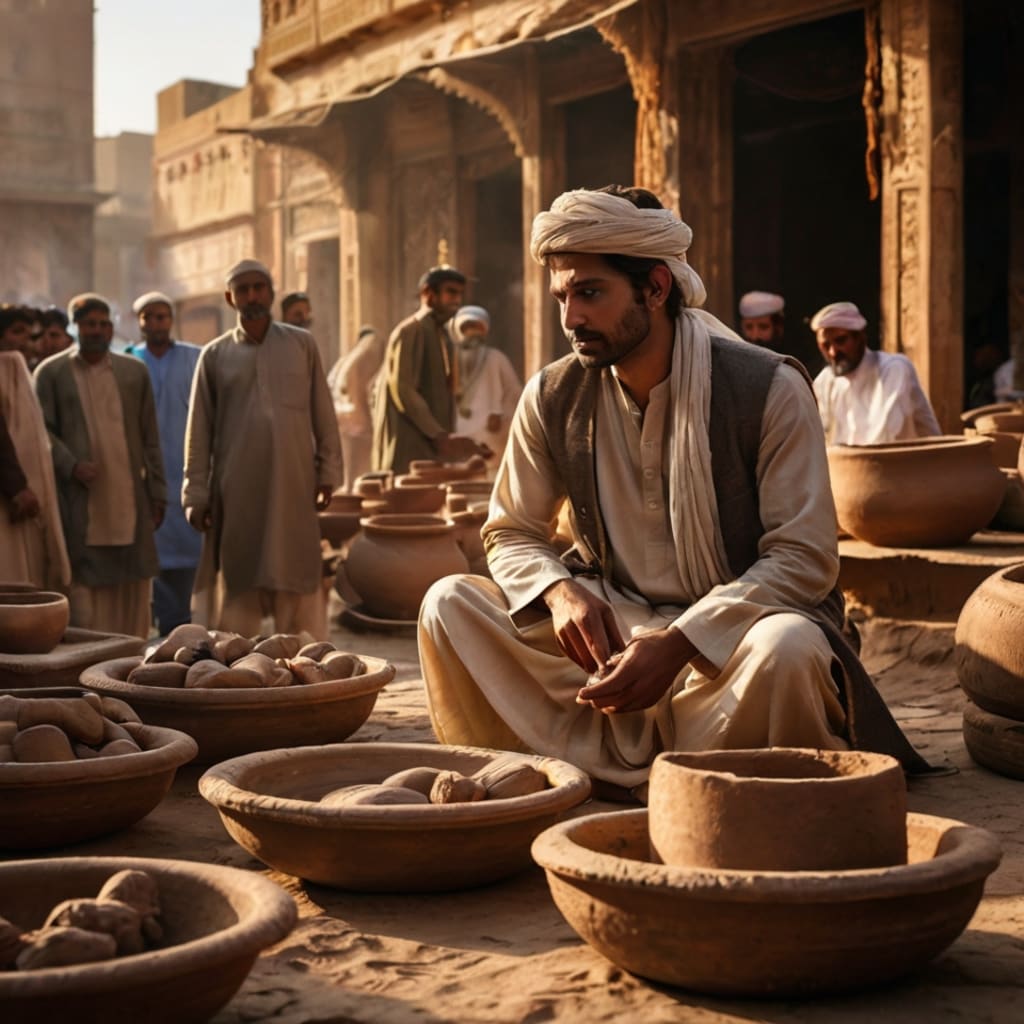
The King Who Broke the Chains of Greed
BY: Khan
Long ago, in the ancient city of Sukkur, there existed a kingdom ruled by a harsh and self-indulgent king. His power was absolute, and so were his desires. Believing the throne gave him every right to enjoy life without limits, he imposed tax after tax on his helpless people. The poor starved, the farmers suffered, and the merchants wept—but the king cared for none of it. Every time the royal treasury filled, he would travel to foreign lands and waste the nation’s wealth on luxury and meaningless pleasures.
Under the shadow of their ruler’s behavior, the kingdom’s merchants too began to taste the sweetness of easy money. If the king could drain the people without consequence, why couldn’t they? Soon, a simple one-rupee clay pot was sold for five rupees. Basic necessities became luxuries. The wealthy merchants grew richer while ordinary citizens struggled to buy even the simplest items of daily life.
The king seldom paid attention to what happened beyond the palace walls. Whether the people lived or died, prospered or suffered, was of no concern to him. And when he eventually grew tired of squeezing more taxes out of his exhausted subjects, the people finally broke their silence. Frustrated and starving, they gathered in the streets in loud protest against the unbearable taxation.
Unable to silence them and unwilling to lose his comforts, the king sought another escape. He borrowed a massive loan from a powerful neighboring empire—so large that even the kingdom’s total yearly income could not compare. The loan came with interest, of course, and soon the kingdom was drowning in debt. Money flowed out of the land faster than it entered. Farmers abandoned their fields, small traders shut their shops, and the people fell deeper into despair.
Before he could witness the full collapse he had created, the king died.
---
A New Dawn—or Another Disaster?
After the tyrant’s death, his young son ascended the throne. Unlike his father, he was righteous, humble, and deeply devoted to justice. He valued honesty more than gold and believed that a king’s true strength lay not in his wealth but in the happiness of his people.
The new king quickly realized the nation was crippled by debt, drained by corruption, and suffocating under the greed of its own merchants. He announced major reforms. Taxes on the poor were reduced, while the wealthy—especially the rich merchants—were ordered to contribute their fair share. If everyone paid honestly, the kingdom might still rise again.
But the merchants had other plans.
Unwilling to part with their precious profits, they quietly raised prices even higher and blamed every increase on the king’s new tax policies. They created confusion in the markets, whispered lies among the people, and secretly hoped the king’s administration would collapse under the pressure. After all, a weak king could be exploited. A strong king was dangerous to their greed.
The young king sensed something was wrong. Reports of unfair pricing and artificial inflation poured in from every corner of the kingdom. But instead of issuing new decrees or punishing merchants blindly, he devised a plan—a clever trap to reveal the real culprits behind rising prices.
---
The King’s Secret Investigation
He summoned his trusted minister, a wise and loyal man known for his intelligence.
“Disguise yourself as a potter,” the king said, “and go to the market. Buy a simple clay pot from every shop you can. Ask their prices but do not reveal who you are. I want to know who is telling the truth and who is lying.”
The minister agreed. The next morning, dressed as a poor potter with dust-covered clothes, he visited the bustling marketplace. He approached the first shop and pointed to a clay pot.
“How much for this?” he asked.
“Four rupees,” the shopkeeper replied confidently.
At the next shop, the price was five rupees. The third shop asked for even more.
Every shopkeeper blamed the king’s taxes, pretending their hands were tied. Each one acted as if he were innocent, a helpless victim of government policies. By the end of the day, the minister had gathered all the information the king needed.
---
Truth Revealed
The following morning, the king gave his minister a new order: “Take one clay pot and try to sell it in the same market. Offer it to every shopkeeper.”
The minister obeyed. As he walked from shop to shop, holding the same clay pot they had priced at five rupees the previous day, the truth spilled out.
“I can give fifty paisa,” one shopkeeper said casually.
“Maybe forty,” said another.
None offered even a single rupee. The same merchants who sold the pot for five rupees now valued it at a fraction of its worth. Their greed was exposed. Their lies were undeniable.
The minister returned to the palace and informed the king of everything.
---
Justice Restored
The king acted swiftly. Those merchants who had cheated the people were summoned, tried, and punished. Their fines were used to pay off a part of the national debt. The remaining merchants, terrified by the fate of their greedy companions, immediately reformed themselves. They paid taxes honestly and stopped exploiting the public.
Within a short span of time, the kingdom’s debt was cleared. Prices dropped. Trade flourished. Markets revived. The people felt hope again.
Their new king had not built palaces, monuments, or towers.
He had rebuilt trust.
He had restored justice.
And so, the people prayed for him—from their homes, their markets, and their hearts.
For the first time in decades, the kingdom prospered.
And all it took was one honest king and one clever plan to break the chains of greed.
About the Creator
How to Find the Right Intensive Outpatient Program in Your Area
Finding the right mental health or addiction treatment can feel overwhelming, especially when balancing recovery with work, family, and daily responsibilities. For many individuals, an intensive outpatient program (IOP) offers the structure and clinical support they need without requiring full-time residential care. Understanding how to evaluate and choose the right program is an important step toward long-term recovery.
By Jordan Blake5 days ago in Humans
Ludacris and Nelly draw backlash over bookings at MAGA-coded music festival
Ludacris and Nelly headlining a mostly right-wing event is good for them. It’s also great for the genre of hip hop. The two rap veterans have showcased their talents on other stages. Why can’t they perform for mostly MAGA folks and grab that bag?
By Skyler Saunders3 days ago in Beat




Comments
There are no comments for this story
Be the first to respond and start the conversation.