
The July Uprising: The Role of Bangladesh’s Students in Starting a Revolution Against Oppression
How the peaceful student protests in July 2024 turned into Bangladesh's biggest revolution against systematic discrimination.

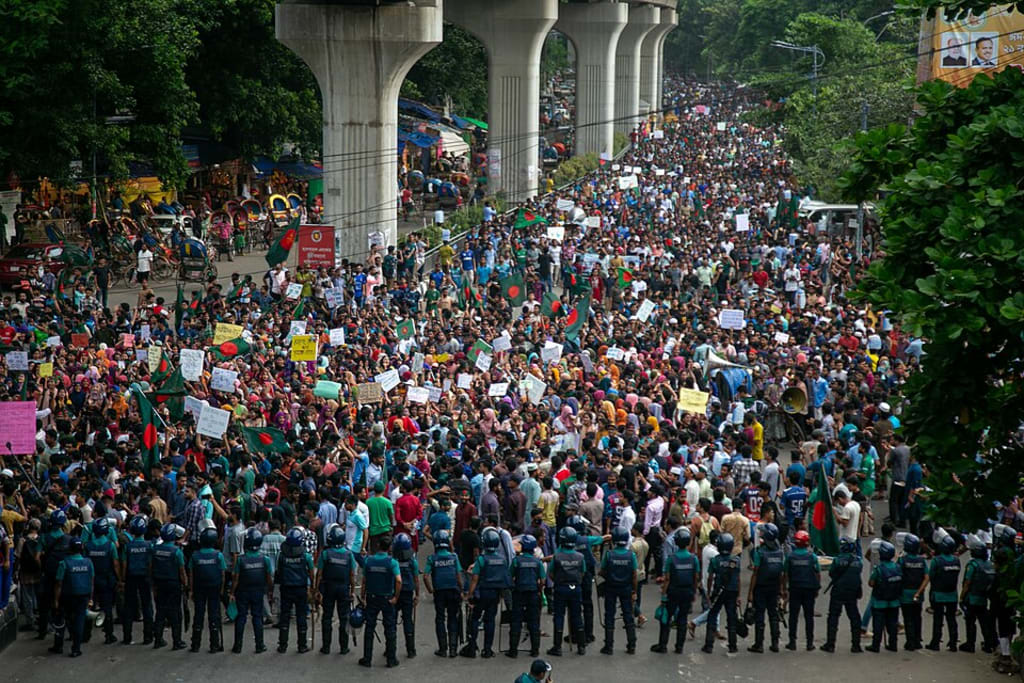
Introduction: A Nation on The Edge
In July of 2024, the students and youth of Bangladesh mounted an unprecedented uprising against the pervasive discrimination in government job allocations – the infamous quota system. Initially, these were peaceful protests but later escalated into a widespread civil movement, which is now known as the “July Revolution.”
The whole country transformed into a manifestation of the struggle, sacrifice, and hope of the people – defiant from the university premises, the highways, and urban and even far-flung rural regions.
Background: What Lit The Fire?
The Bangladesh government had for many years reserved a significant proportion of government jobs for certain groups, which included descendants of freedom fighters, through a quota system. This system was increasingly perceived as antiquated, unjust, and hindering access to opportunities on a meritocratic basis.
Reforming the quota system began as early as 2018, however, it was not until July 1, 2024, when a newly established student organization — Students Against Discrimination (বৈষম্যবিরোধী ছাত্র আন্দোলন) — launched the movement with renewed momentum.
Event Time Tree: Daily Breakdown
July 1-6: July 1,
: Students and youngest alumni from universities such as the University of Dhaka and BU have officially launched a protest.
Human chains, street blocks and campus meetings across the country.
The
requirements were simple: Abelflee ensures unfair odds and equal recruitment.
July-10 July: "Bangla Blockade"
"Bangla Blockade" and the nationwide blockade paralyzed with major roads and cities.
Everyday life is getting in the way, but public support is increasing, especially among young people and job seekers.
July 1
: In a historic moment in March
leading women, female students led at the University of Dhaka, forming human chains and major chants.
It marks symbolic change and demonstrates the inclusiveness and courage of the movement.
july 15th-19: Violence and Repression
Violence is said to have been clashing with protesters by partner companies and law enforcement authorities.
Tragic Loss: Student demonstrator Abu Said was reportedly shot by police.
Despite bloodshed, the movement increased, calling for "said's justice" and demanding a duty to explain the state.
20–27 July: Guide disappearance
Major student coordinators such as Nahid Islam and Refa Rashid were missing.
later found questions about police custody, video skin enforcement.
Massive protests followed their loss of failure and demanded their safe interests and protection.
July 31: "March for Justice"
This month ended with a massive "March for Justice" combining people from all walks of life.
Slogans like "We want equality, not equality, not privilege" on the streets like Dhaka, Chattgram, Rajshahi.
Main requirements of the movement
complete removal or reform of discriminatory odds.
Transparent and fair recruitment process for the public sector.
Legal liability for student attacks and deaths.
Protecting protest managers and freedom of speech.
Government Reaction
Government Prime Minister Sheikh Hasina further escalated, describing many of the protesters as "stimulators" or "anti-states."
The controversial term "Rajakarer Bachcha" (the descendant of the traitor), which was used by several common figures, plagued and fueled young people across the country.
Social Media and Global Reactions
Torrent with hashtags/X like #QuotareFormNow, #JusticeForStudentets, #JulyRevolution and more.
International media such as
Time, Le Monde and Al Jazeera covered the movement extensively.
Expatriates Bangladesh organized solidarity protests in cities such as London, Toronto and New York.
Legacy: More Than Just Quota Reform
Though the combat commenced with a name for honest jobs, the motion advanced right into a broader war for justice, dignity, and democratic rights. Many now remember the July 2024
rebellion a turning factor in Bangladesh`s youngsters political awakening.
Conclusion: A Generation that Refused to Be Silent
The July Uprising changed into now no longer pretty much quotas — it changed into a cry for fairness, truth, and equality. In the face of repression, college students rose with courage.
They reminded a nation — and the world — that extrade starts while youngsters stand collectively and say, “Enough.”
About the Creator
Nasrut Raiyan
Nasrut Raiyan is a Bangladeshi Forex & Crypto trader, storyteller, and founder of the NHR Concept, known for his SMC-based trading style and writing on financial freedom and self-discipline.
Keep reading
More stories from Nasrut Raiyan and writers in Humans and other communities.
The Majestic Elephant: A Comprehensive Guide to the Gentle Giant of Nature
Introduction The elephant frequently comes to mind when we think of strength, memory, and grace all rolled into one. People have been in awe of these enormous, gentle creatures for centuries because of their intelligence and emotional depth. In this article, we’ll take you on a journey through the fascinating life of elephants — from how they grow and what they eat, to how they raise their young and where they call home.
By Nasrut Raiyan10 months ago in Earth
Cabin Fever Because of Snow, Sleet, and Freezing Rain That Turned to Icy Roads
What Is Cabin Fever? The short answer is that cabin fever is restlessness from being in a confined area. Cabin fever is the distressing irritability or restlessness experienced when a person or group is stuck at an isolated location or in confined quarters for an extended time. Research shows that prolonged cold, gray skies, and being stuck indoors can trigger mood shifts similar to “winter blues.”
By Margaret Minnicks7 days ago in Humans


Comments
There are no comments for this story
Be the first to respond and start the conversation.