
The Journey of Elon Musk
From Carpet and a Mariachi Band to Mars

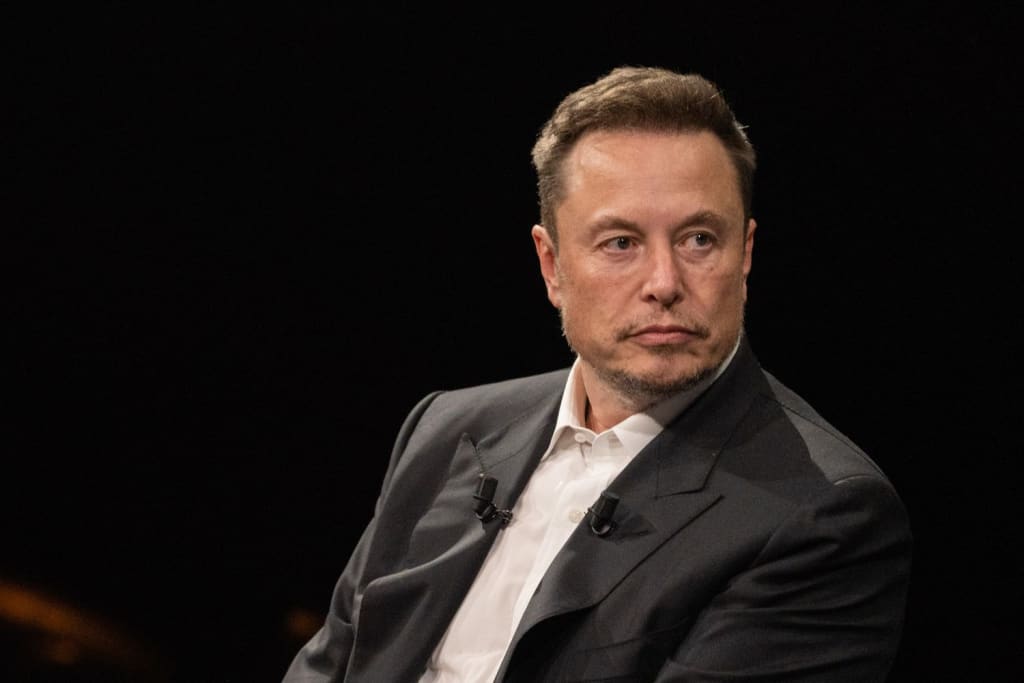
In 2002, when Elon Musk founded SpaceX, the company was remarkably modest—consisting of little more than carpet and a mariachi band. Despite the sparse beginnings, Musk's ambitions were colossal. His goal was to push beyond Earth's bounds and make human life multi-planetary, with Mars as a key destination.
On April 20, 2023, SpaceX took a significant step towards that dream with the attempt of the world's largest rocket, the fully reusable Starship, to achieve orbit. Though the launch did not succeed, it epitomizes Musk's approach to innovation: learning from failures and persisting against the odds.
Musk's educational background is unconventional for a space entrepreneur. He began his studies at Queen's University in Kingston, Ontario, choosing it over the University of Waterloo due to the latter's perceived lack of female students. After two years, Musk transferred to the University of Pennsylvania, believing an Ivy League education might open doors in the U.S. tech industry. Despite holding bachelor's degrees in economics and physics, Musk knew that these alone wouldn't make him a rocket scientist.
He immersed himself in learning, devouring books, and teaching himself about aerospace. Musk even cold-called industry experts like aerospace consultant Jim Cantrell, who was impressed by his drive and vision. At the time, Musk was not yet a billionaire, but he had earned $180 million from the sale of his financial services company X.com, which merged with PayPal and was acquired by eBay.
With this fortune, Musk invested heavily in three ventures: $100 million in SpaceX, $70 million in Tesla, and $10 million in SolarCity, which later merged with Tesla. His initial plan to purchase refurbished intercontinental ballistic missiles (ICBMs) from Russia fell through due to high costs. Instead, Musk realized that he could build rockets more affordably and founded SpaceX with this new approach.
Starting a rocket company is inherently challenging, and Musk found a crucial ally in Tom Mueller, known as the "godfather of rocket science." Mueller, who worked for TRW (now Northrop Grumman) and participated in amateur rocketry, designed the Merlin engine for SpaceX. This engine, designed for reusability, became a key component of SpaceX's rockets.
SpaceX's early years were marked by a series of setbacks. The Falcon 1, SpaceX's first rocket, faced multiple failures between 2006 and 2008. Despite these challenges, Musk's resolve remained unshaken. His famous declaration, "I don't ever give up. I mean, I'd have to be dead or completely incapacitated," underscores his commitment to his ventures. His persistence paid off on September 28, 2008, when the Falcon 1 successfully reached orbit, securing a $1.6 billion contract from NASA to resupply the International Space Station.
Simultaneously, Tesla, which Musk had joined with significant financial backing, was facing its own crisis. By late 2008, Tesla was on the verge of collapse, with only $9 million left, and the financial crisis was making it difficult to attract investors. Musk's personal life was also tumultuous; he was going through a divorce from his first wife, Justine, with whom he shares triplets and twins. In a difficult decision, Musk had to choose between SpaceX and Tesla, ultimately deciding to allocate funds to keep both afloat.
Musk's difficult childhood in South Africa, marked by bullying and family issues, contributed to his relentless determination. Despite these adversities, he found solace in coding and developed a space-themed video game, Blastar, which earned him $500 at age twelve. This early hint of brilliance foreshadowed his later success.
As SpaceX's Falcon 1 achieved orbit, Tesla was still struggling. Musk had to make tough decisions, including cutting 25% of the workforce and relying on personal connections to secure additional funding. By Christmas Eve of 2008, a new round of funding saved Tesla, allowing it to survive and eventually thrive.
Tesla's journey remained rocky, with production delays and financial hurdles. The company's initial public offering in 2010 at $17 per share was followed by struggles to meet Model S production targets. However, Musk's strategy of turning employees into salespeople and masking factory shutdowns as maintenance helped Tesla achieve its first profit in 2013.
Tesla's growth surged in the following years. By 2022, the company delivered 1.3 million cars and expanded its global footprint with new factories. Musk's focus on electric vehicles was underscored by his drive to make cars fully autonomous and develop the Optimus robot, which he believes could be more valuable than the car business itself.
Musk's ventures extend beyond automotive technology. The Boring Company aims to address traffic congestion through innovative tunneling projects, while Neuralink seeks to merge human intelligence with AI and assist those with spinal cord injuries through brain implants.
Now rebranded as X Corp under Musk's ownership, Twitter is part of his broader vision to create an "everything app." This includes transforming Twitter into a better video platform and integrating diverse functionalities.
Elon Musk's journey from a modest startup to shaping multiple industries is a testament to his unyielding drive and visionary thinking. His persistence, despite significant obstacles, reflects his belief in pursuing important goals despite the odds. As he once said, "When something is important enough, you do it even if the odds are not in your favor."
About the Creator
Horace Wasland
Research analyst, writer & mystical healer. Exploring the edge where science meets mystery. From mystery/the mystical, to facts, news & psychology. Follow for weekly insights on all four and please leave a tip if you like what you read :)
Keep reading
More stories from Horace Wasland and writers in Humans and other communities.
The Other Side of the Pyramids
1. Outbreak of Cholera Linked to Mummy Bandages In the early 20th century, mummies were more than just historical artifacts; they were even used as wrapping paper for food in Europe. This practice was driven by a fascination with ancient Egypt and the perceived mystique of mummies. Unfortunately, the mummy bandages used as wrapping paper were not free from pathogens. An outbreak of cholera was traced back to food wrapped in these bandages, revealing the dangerous consequences of such practices. The health risks led to the abandonment of this practice, as the contamination of food posed a serious threat to public health. The use of mummy bandages as wrapping paper is a stark reminder of how historical artifacts were exploited without regard for their potential dangers. For more context, see an ancient Egypt map to understand the geographical origins of these mummies.
By Horace Waslandabout a year ago in Humans



Comments
There are no comments for this story
Be the first to respond and start the conversation.