
The Japanese Principle of Ma in Home Design
Create mindful spaces with Ma design, a Japanese approach that uses emptiness, tatami, and flow to bring balance and room to breathe at home.

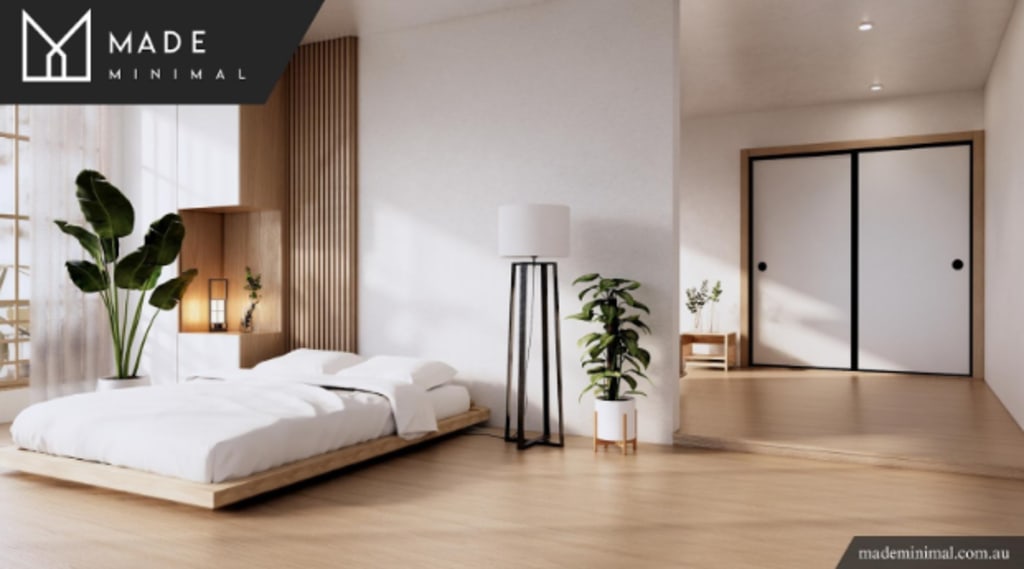
The Japanese Principle of Ma: Designing Space Around Emptiness
Ever feel like your home looks tidy but still feels cluttered? That restless energy often comes from a lack of breathing space, not just physically, but mentally too.
Ma design, a quiet gem of Japanese minimalism, offers a simple change: design with emptiness in mind. It focuses on leaving room between things so your space feels relaxed and balanced without being overdone.
At Made Minimal, we work with this idea every day, helping people shape homes that feel open and intentional.
In this post, you’ll get practical ideas and cultural insights to bring Ma into your space, using tatami layouts, low cushions, and clever storage to create a natural room to breathe. Read on to learn more about using Ma in your home.
What Is Ma?
In Japanese culture, Ma refers to the purposeful space between objects. This idea has shaped everything from architecture to daily rituals, drawing from Zen philosophy and a deep respect for balance and simplicity.
Ma helps define areas without needing walls, guiding how people move and feel in a space. Rather than filling every corner, Ma's design encourages restraint and awareness. These are core values in Japanese minimalism.
This approach supports mindful spaces by allowing for peace, flow, and mental clarity. You’ll find Ma woven into tatami rooms, garden paths, and the deliberate gaps between everyday objects.
How Ma Shapes Home Flow
Ma creates flow through space, stillness and intention. Gaps between objects are designed to let air, light and movement pass through with ease. Walkways stay clear, corners remain open, and furniture rests with just enough distance to feel balanced.
This layout reduces noise and tension. There’s less friction when moving through the room. Light reaches further, and each area feels connected without being crowded. With Ma, the home settles into a quiet rhythm where everything has room to breathe. Small changes like below can create a noticeable difference:
- Removing a central coffee table allows easier movement through shared areas
- Pulling furniture slightly apart reduces visual weight and creates balance
- Keeping sightlines open between doors and windows extends light and flow
- Arranging fewer objects lets each one have a clear role
- Leaving occasional blank zones, like an empty corner, brings visual relief
These choices create a home that supports clarity, ease, and quiet focus. Now, let’s learn about another Ma design.
Tatami Mats: The Foundation of Ma in Layout
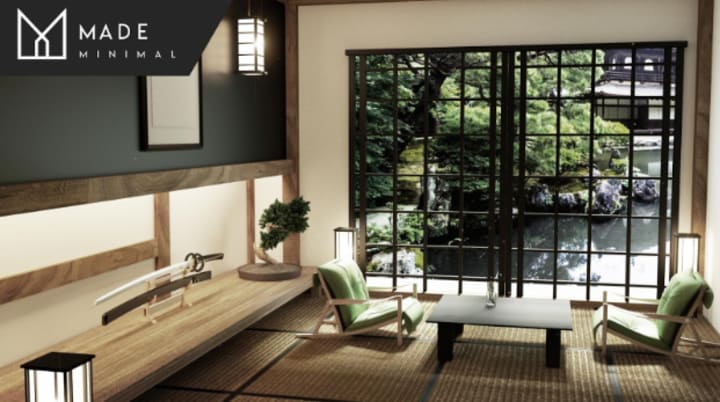
Tatami mats are traditional Japanese floor coverings made from rice straw and woven rush grass. Their soft feel and precise dimensions give structure to a room without using furniture or walls.
In Ma's design, tatami brings calm through careful placement, spacing and quiet pauses between each mat. These details invite slower movement, define purpose and create gentle room to breathe.
Different tatami arrangements bring out unique moods and rhythms. Here are three time-tested layouts to consider, each offering its own quiet balance.
Shyugi-Shiki
Shyugi-Shiki is the traditional formal layout often used in ceremonial rooms. Mats are arranged in a symmetrical grid, with corners aligned and patterns consistent throughout the space. This layout reflects harmony, discipline, and focus.
Fushinari
Fushinari refers to a slightly staggered placement of tatami mats. This approach avoids strong symmetry and creates a more relaxed, natural rhythm in the room. Used in everyday living areas, it softens sightlines and movement, encouraging a gentle energy.
Ryurei
Ryurei is a more flexible and open layout, originally developed for seated tea ceremonies. Mats are placed to accommodate low tables and floor seating, leaving generous gaps around key elements. The layout allows people to move freely and sit comfortably in different spots.
Cushion Culture: Creating Mindful Sitting Zones
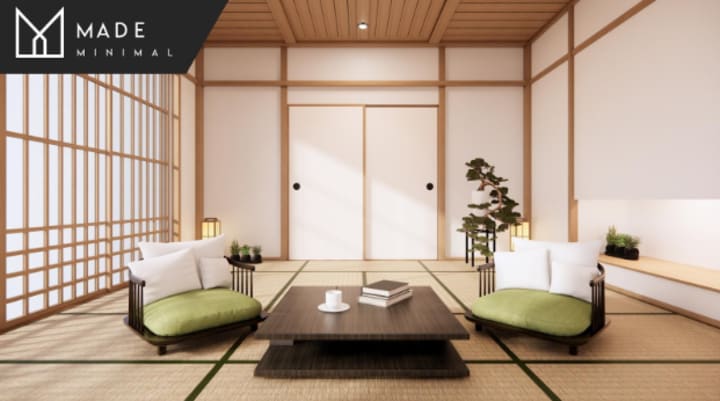
The use of floor cushions, or Zabuton, has deep roots in Japanese tradition. Found in tea rooms, temples, and homes, these cushions support a grounded, low-centred way of sitting that naturally slows the body and quiets the mind.
A few ideas to try with these cushions:
- Reading corner beside a window with a cushion, throw, and soft light
- Tea corner in a quiet part of the room with two cushions and a low tray
- Meditation spot using one cushion and a small mat with nothing around it
Leave space around each setup, and keep the scale small. From our experience, a single cushion placed with intention can change the mood of an entire room.
Hidden in Plain Sight: Storage That Supports Emptiness
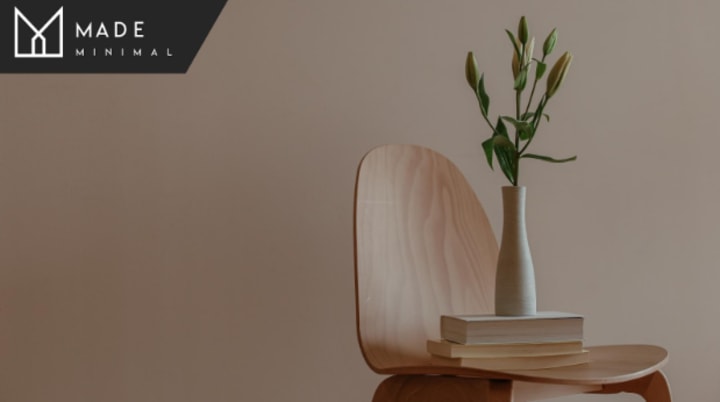
After decorating the space with cushions and floor zones, storage becomes the obvious thing that holds it all together. In Ma's design, what stays out of sight matters just as much as what’s visible.
Traditional Japanese homes often use clever storage such as:
- Tansu chests: Freestanding wooden chests that often serve a dual purpose. Some are used as stairs in compact homes.
- Built-in cupboards: These are fitted flush with the wall, often with sliding doors. They blend well into the structure of the room.
- Underfloor compartments: Used for storing bedding or seasonal items, these hidden sections maximise vertical space while keeping the room looking untouched.
For modern spaces, try:
- Sliding panels: These take up less space than hinged doors and can stretch across large storage areas without creating visual disruption.
- Multi-use furniture: Look for coffee tables with hidden storage, bench seats with lift-up lids, or ottomans that open from the top.
- Wall recesses: Shallow built-ins or niches carved into walls can hold books, candles, or display items without adding weight or interrupting the room’s rhythm.
Designing for the Senses: Light, Sound, and Texture
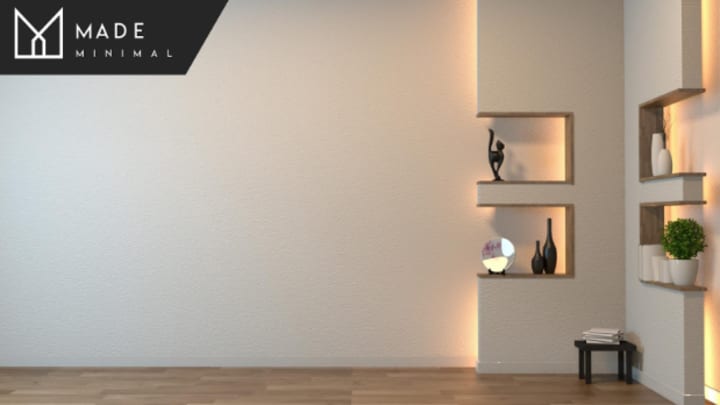
In Ma design, the way light falls, how sound moves, and what textures invite touch, they all work together. These elements help decorate mindful spaces that feel calm, grounded, and connected to the moment.
Light
Natural light feels more present when it has space to move. Clear surfaces and open layouts allow sunlight to move across the room without interruption.
Shoji screens, made of wood and paper, diffuse light into a soft, even glow. And sheer curtains or plain walls also help reflect light gently and add warmth without harshness.
Sound
Sound softens in a space without clutter. The creak of timber floors, the whisper of fabric, or the sound of wind through a window become part of the room’s rhythm.
A mix of soft materials like tatami and textured fabrics also helps absorb harsh noise and reduce echoes.
Texture
Texture stands out more when visual noise is reduced. A rough timber bench next to a linen cushion or a woven mat across a smooth floor creates quiet contrast. These small differences offer comfort and character without adding visual pressure.
Designing With Space in Mind
The Japanese principle of Ma brings focus to how space is shaped through placement, stillness and thoughtful design.
In this article, we explored how Ma design influences key elements in the home, such as tatami layouts, floor cushions, soft textures, quiet storage and clean sightlines. These choices support mindful spaces that feel open without feeling empty.
If you’d like help putting these ideas into practice, Made Minimal offers pieces designed with intention and simplicity in mind. Explore our collection or reach out to start shaping a space that feels relaxed, purposeful, and truly your own.
About the Creator
Anton
Guest Post Provider
Autonomy Is The Real Privilege
Good morning, freedom-seekers! Today we’re gonna be looking at autonomy. A strange word, I know; one many would probably look at blankly and run away from on sight. We’re gonna figure out what it actually means, consider how it’s achieved, and decipher just how deeply most of us are tangled up in dependence without realising it.
By That ‘Freedom’ Guy2 days ago in Humans
Car Rental Business Requirements
The car rental industry continues to grow as people look for flexible transportation without the cost of ownership. Whether you’re planning to start small or build a large operation, success depends on understanding and meeting the right car rental business requirements from day one.
By Ava Bennetta day ago in Humans
Smart phones, Humans and Aliens.
WARNING. I will be tapping into one of your favorite creative tensions: The absurdity of humans worshipping their glowing rectangles as if they were tiny oracles. There’s something deliciously poetic about that contradiction, and it lends itself beautifully to an instructive proviso.
By Novel Allen6 days ago in Poets




Comments
There are no comments for this story
Be the first to respond and start the conversation.