
The Icelandic Women's Revolution
How Kvennafrí Transformed Gender Equality

In 2021, the gender pay gap in the United States stood at 17%, while Japan reported a staggering 22%. On the contrary, Iceland boasted a remarkably low pay gap of around 10%, marking it as one of the world's few nations where women nearly matched men in earnings. Yet, rewind the clock about half a century, and the scenario was vastly different. In 1975, the gender pay gap in the U.S. soared to a staggering 37%, Japan lagged at 42%, and Iceland found itself at 40%. How did Iceland traverse this journey from inequality to parity? The answer lies in a pivotal event that unfolded on a historic day in 1975.
To fully grasp this transformation, we must delve into the significant event of 1975 when Icelandic women executed an audacious plan that would eventually bring the nation to a standstill. Their mission was clear: to illuminate the stark gender disparities embedded in Icelandic society. The initiative that emerged was coined "kvennafrí," a term translating to "women's day off."
The journey towards kvennafrí was set against a backdrop of Iceland's emergence as an independent nation, separating from Denmark in 1944 and adopting a parliamentary democracy. The conservative Independence Party ruled for nearly two decades, overseeing policies that perpetuated gender inequality, particularly in the workplace. Women were predominantly relegated to low-paying, undervalued roles, with many forced to leave the workforce and take on domestic responsibilities.
In response to these decades of conservative policies, a formidable group known as The Redstockings emerged. This audacious women's collective employed radical tactics to demand equal rights, such as staging provocative acts like crowning a cow at the Young Miss Iceland pageant to challenge beauty standards and crucifying a doll dressed as a housewife to protest traditional gender roles.
One of the Redstockings' primary objectives was to address workplace inequity. The turning point arrived in 1970 when they participated in a May Day demonstration, but they aspired to achieve more—a full-blown strike. However, organizing a strike outside established trade unions and employers' associations was prohibited in Iceland.
The breakthrough came in 1975 with the initiation of the United Nations' "International Women's Year," a global conference dedicated to women's issues. Iceland formed a committee comprising representatives from diverse women's associations across the nation to coordinate events addressing gender discrimination. Among the committee members were the Redstockings, known for their progressive views.
The Redstockings seized this moment to propose the idea of a women's strike to spotlight the gender pay gap during International Women's Year. Although some conservative women's associations viewed the notion as radical, they persevered. The committee eventually reached a compromise: instead of a "strike," it would be termed a "day off" or kvennafrí.
With a mere three months to prepare, the Redstockings and the committee embarked on a remarkable journey of mobilization. They enlisted the support of multiple labor unions and women's organizations, spanning the political spectrum. Their mission was clear: to orchestrate an event where women across Iceland would collectively abstain from both domestic and professional labor to underscore their economic significance.
Their tireless efforts included writing countless letters to households across Iceland, conducting phone outreach, disseminating informative materials, and conducting late-night meetings. Together, they galvanized support and stoked enthusiasm for kvennafrí.
On October 24th, 1975, their collective vision materialized as 90% of Icelandic women refrained from work at home and in offices. Approximately 25,000 women flooded the streets of Reykjavik, delivering speeches and singing anthems of women's rights. The impact was profound: Iceland ground to a halt. The telephone system crashed without switchboard operators, newspapers could not publish due to absent type setters, and even the national airline canceled flights due to the absence of stewardesses. Preschools shuttered as women's domestic labor vanished, forcing men to either remain at home or bring their children to work.
The ripple effects of kvennafrí were profound. Following the day off, Iceland enacted its first Gender Equality Act, officially outlawing wage discrimination based on gender. Women's rights were enshrined in the Constitution, and the representation of women in Parliament surged. In 1980, Iceland elected its first female head of state, the world's first democratically elected woman president. She attested that kvennafrí laid the foundation for her historic election.
While no country has entirely eradicated the gender pay gap, Iceland's rapid progress serves as an inspiring testament to the possibility of closing this divide. The success of kvennafrí exemplifies the potential for change when a nation unites across political and social lines to pursue equality.
Kvennafrí didn't conclude in 1975. Subsequent events occurred in 1985, 2005, 2010, 2016, and 2018, addressing issues ranging from reproductive rights to the ongoing gender pay gap. This enduring tradition continues to shape Iceland's journey toward gender equality, leaving an indelible mark on its history.
About the Creator
Keep reading
More stories from Jarene France and writers in Humans and other communities.
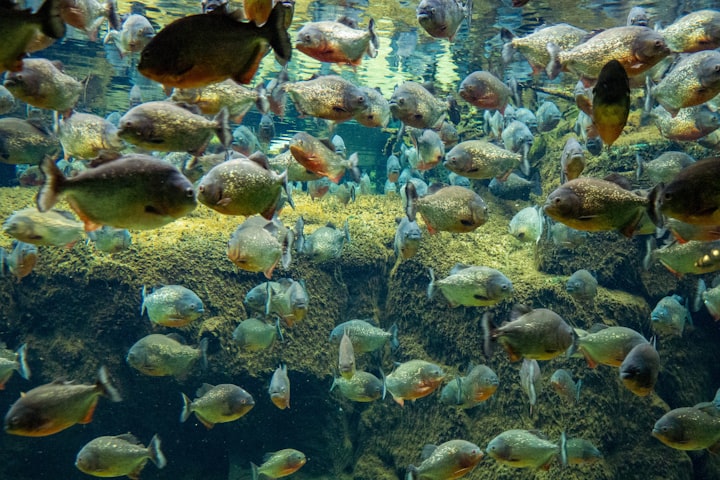
Piranhas: Separating Fact from Fiction
Introduction: Picture yourself along the lush banks of the Amazon River, admiring the exotic wildlife and breathtaking scenery. But suddenly, you slip and find yourself plunging into the water. Panic sets in as you remember the stories of fearsome piranhas lurking beneath the surface. Are you doomed? Will your fall trigger a fatal feeding frenzy? Let's dive deep into the world of piranhas to unravel the truth and understand your real fate in this perilous scenario.
By Jarene France2 years ago in Humans
Autonomy Is The Real Privilege
Good morning, freedom-seekers! Today we’re gonna be looking at autonomy. A strange word, I know; one many would probably look at blankly and run away from on sight. We’re gonna figure out what it actually means, consider how it’s achieved, and decipher just how deeply most of us are tangled up in dependence without realising it.
By That ‘Freedom’ Guy3 days ago in Humans
The Hidden Valentine part 5
The Blueprint of a Heart Maya returned home with her mind buzzing like a swarm of bees. The city outside her apartment felt like a different world—bright lights, loud music, people laughing, couples holding hands, the whole world celebrating love in the most obvious way possible. The irony hit her like a cold wave.
By Ahmed aldeabellaa day ago in Humans
The Path to Salvation
The late autumn evening air filled the monk's lungs, but it wasn't the season that chilled his bones. The heavy-handed presence of evil he had sensed upon entering the woods surrounding this mountain village had not bothered to conceal itself from him.
By Made in DNA2 days ago in Fiction



Comments
There are no comments for this story
Be the first to respond and start the conversation.