
The Greatest
Unraveling the Legendary Journey of “The Greatest” in the World of Boxing

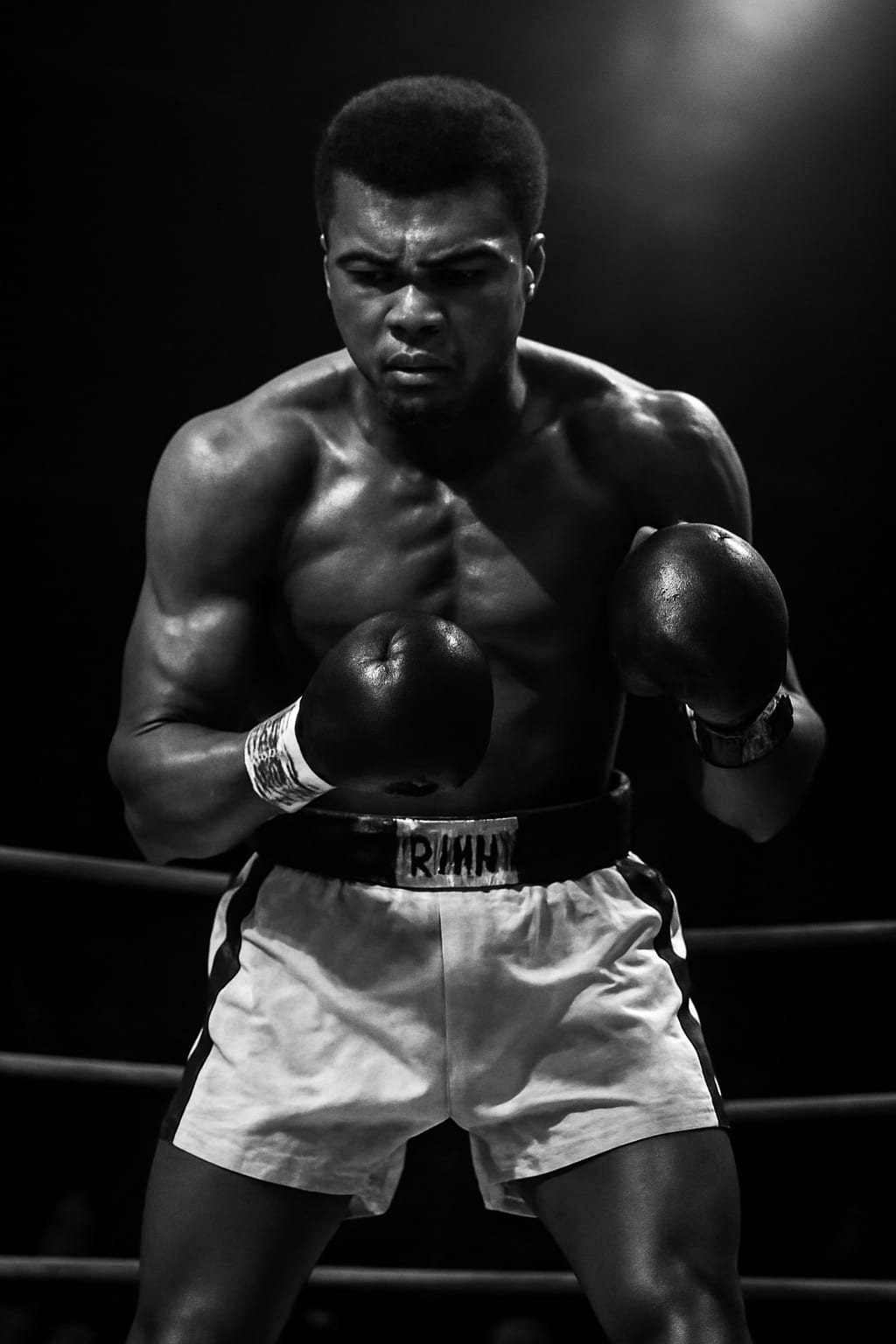
In the realm of sports, few names have etched their place in history with the brilliance and charisma that Muhammad Ali commanded. A name synonymous with strength, confidence, and an unyielding spirit, Ali’s journey wasn’t just about punches and titles—it was about revolutionizing what it meant to be a champion. Known widely as “The Greatest,” his lustrous career as a boxer remains one of the most inspirational sagas in sports history.
The Birth of a Legend: From Cassius Clay to Muhammad Ali
Born on January 17, 1942, in Louisville, Kentucky, Cassius Marcellus Clay Jr. was introduced to boxing at the age of 12. His initial drive stemmed from a stolen bicycle incident, leading him to Joe E. Martin, a Louisville police officer and boxing coach. That spark ignited the fire that would later burn across global arenas. Early signs of greatness were evident, with Clay dominating the amateur boxing scene, including a gold medal win in the 1960 Rome Olympics in the light heavyweight division.
Transformation and Triumph: Embracing a New Identity
In 1964, Clay made headlines by defeating Sonny Liston to claim the world heavyweight title, shocking the boxing world with his unorthodox style and psychological bravado. Shortly after, he announced his conversion to Islam and adopted the name Muhammad Ali. This was not just a change of name but a powerful symbol of self-identity and religious commitment, which became a cornerstone of his legacy. His bold stance challenged the norms of his time, earning him admirers and critics alike.
The Art of Boxing Redefined: Ali’s Unique Fighting Style
Muhammad Ali’s boxing technique revolutionized the sport. His phrase “Float like a butterfly, sting like a bee” wasn’t just poetic—it described his actual ring strategy. With unmatched footwork, lightning-fast jabs, and an ability to read opponents like a book, Ali broke the mold of traditional heavyweight boxers who relied primarily on brute force. His lustrous career in the ring was marked by intelligence, precision, and elegance.
The Ali vs. Frazier Trilogy: A Rivalry for the Ages
The legendary bouts between Muhammad Ali and Joe Frazier remain etched in boxing lore. The first fight in 1971, dubbed the “Fight of the Century,” saw Ali taste his first professional defeat. Yet, this loss only fueled his hunger. Their second fight in 1974 evened the score, but it was the third—the brutal “Thrilla in Manila” in 1975—that defined their rivalry. In sweltering heat and unbearable conditions, Ali emerged victorious, calling it “the closest thing to dying.”
Rumble in the Jungle: Conquering George Foreman
One of Ali’s most iconic victories came in 1974 in Zaire (now the Democratic Republic of the Congo) against George Foreman. Most experts wrote Ali off, believing Foreman’s sheer power would be too much. But Ali introduced the world to the “rope-a-dope” strategy—absorbing punches while conserving energy before launching a counterattack. In the eighth round, Ali knocked out Foreman, regaining the heavyweight title and reinforcing his status as a master tactician and true champion.
The Political Fighter: Beyond the Ring
Ali’s fight wasn’t confined to the boxing ring. In 1967, during the Vietnam War, he refused to be drafted into the U.S. military citing religious beliefs and opposition to the war. This bold move resulted in the suspension of his boxing license and the stripping of his title. Facing prison time and public backlash, Ali stood firm, stating, “I ain’t got no quarrel with them Viet Cong.” His stance made him a global symbol of civil rights and resistance.
Comeback and Retirement: Leaving the Ring with Honor
After being exiled from boxing for over three years, Ali returned to the ring and began one of the most remarkable comebacks in sports. He reclaimed the heavyweight title twice more before finally hanging up his gloves in 1981 after losing to Trevor Berbick. By the end of his illustrious boxing career, Ali had fought 61 times, with 56 wins, 37 of them by knockout, and only 5 losses. His retirement marked the end of an era, but not the end of his influence.
Living with Parkinson’s: A Champion Beyond the Ring
In 1984, Muhammad Ali was diagnosed with Parkinson’s disease, a condition believed to be linked to the repeated blows he sustained in the ring. Yet, even in the face of this debilitating illness, Ali remained a fighter. He turned his attention to humanitarian work, traveling the globe as a goodwill ambassador and raising awareness for Parkinson’s. His lustrous legacy was amplified by his resilience and grace in the face of adversity.
Global Recognition and Legacy
Over the years, Ali received numerous accolades, including the Presidential Medal of Freedom, the highest civilian honor in the United States. His impact reached beyond sports; he became a cultural and humanitarian icon. In 1996, the world watched in awe as a trembling but proud Muhammad Ali lit the Olympic torch in Atlanta—a moment that symbolized both vulnerability and unparalleled strength.
Muhammad Ali’s Impact on Pop Culture and Media
Ali was more than an athlete—he was a media sensation. With his rhyming boasts, unapologetic confidence, and sharp wit, he redefined the public persona of athletes. His interviews were theatrical, often filled with poetry and verbal jabs that built anticipation before his fights. His charisma inspired movies, books, documentaries, and even songs. Ali didn’t just fight for belts; he fought for attention, influence, and social change.
Philosophy of Life: Wisdom in Words
Ali’s quotes still resonate around the world. Lines like “He who is not courageous enough to take risks will accomplish nothing in life” and “Service to others is the rent you pay for your room here on earth” reflect the wisdom of a man who saw life as a battle worth fighting with purpose and dignity. His philosophy inspired millions to dream big and fight fearlessly.
A Lasting Symbol of Greatness and Hope
Even after his death in 2016, Muhammad Ali continues to inspire. Murals of his triumphant pose grace city walls. Young boxers study his movements. Social activists quote his speeches. His influence spans generations and cultures. The story of Muhammad Ali is not just about victories and titles—it’s about resilience, transformation, and unshakable belief in oneself.
The Financial Side of Greatness: Ali’s Wealth and Endorsements
Though Ali’s early career saw limited financial gains due to the era’s constraints, his later years brought immense financial success. Through endorsements, licensing deals, and biographical films, his estate grew significantly. Ali wasn’t just a champion in the ring—he became a global brand. His name, image, and quotes continue to generate revenue, reflecting the lasting economic impact of his lustrous boxing legacy.
Ali’s Family and Personal Life: A Glimpse Beyond the Gloves
Muhammad Ali was married four times and had nine children. Among them, Laila Ali followed in his footsteps, becoming an undefeated boxing champion. Despite his public persona, those close to him describe him as warm, humorous, and deeply spiritual. His family stood by him during his Parkinson’s struggle, showcasing the human side of a man often viewed as larger than life.
Muhammad Ali in the Classroom: An Educational Inspiration
Today, Ali’s story is studied in schools, colleges, and leadership seminars. Educators highlight his stand on civil rights, his poetic style of speech, and his philosophical views. His life is a lesson in courage, conviction, and self-respect. He is a perfect example of how one individual can redefine excellence and integrity through discipline and determination.
Why Muhammad Ali Still Matters Today
In a world still battling inequality, racism, and political unrest, Ali’s story is more relevant than ever. He was a Black Muslim who defied norms, challenged authority, and embraced his identity with pride. He fought not only for titles but for truth. His example urges us to stand tall, speak boldly, and never back down from our principles.
Conclusion: The Enduring Flame of “The Greatest”
Muhammad Ali’s lustrous career wasn’t just about boxing—it was about legacy. He showed the world how to fight with fists, words, and spirit. He remains a beacon of hope, courage, and transformation. His story teaches us that greatness is not just achieved by talent but by character, purpose, and unwavering belief.
About the Creator
Lana Rosee
🎤 Passionate storyteller & voice of raw emotion. From thoughts to tales, I bring words to life. 💫
Love my content? Hit Subscribe & support the journey! ❤️✨
Keep reading
More stories from Lana Rosee and writers in Humans and other communities.
Who Is Zohran Mamdani and His Path to Mayorship
In an era where politics is increasingly dominated by corporate influence and rehearsed narratives, the rise of individuals like Zohran Mamdani reminds us that genuine change is still possible. With his distinct background, progressive ideals, and fearless stance on social justice, Mamdani has emerged as one of the most inspiring political figures in New York politics. But who exactly is Zohran Mamdani, and how might his journey shape the road to a potential mayorship?
By Lana Rosee8 months ago in Humans
A Historic Declaration
We the People of the Husbands of the United States of America, in Order to form a more perfect Union, and I mean you...with me...establish Justice, insure domestic Tranquility, provide for the common defence, promote the general Welfare, and secure the Blessings of Liberty to ourselves, after Puberty, do ordain and establish this Declaration of Co-Dependence.
By Gerard DiLeo5 days ago in Humans
Review of 'Man on the Run'
My wife and I saw Man on the Run, a nearly 2-hour documentary on Amazon Prime, about Wings, Paul McCartney's group that flew around the world from shortly after The Beatles broke up in early 1970 to shortly after John Lennon was murdered at the end of 1980, making a Beatles reunion forever impossible.
By Paul Levinson3 days ago in Beat




Comments
There are no comments for this story
Be the first to respond and start the conversation.