
The Girl Who Remembered Tomorrow
Her dreams were warning signs no one believed

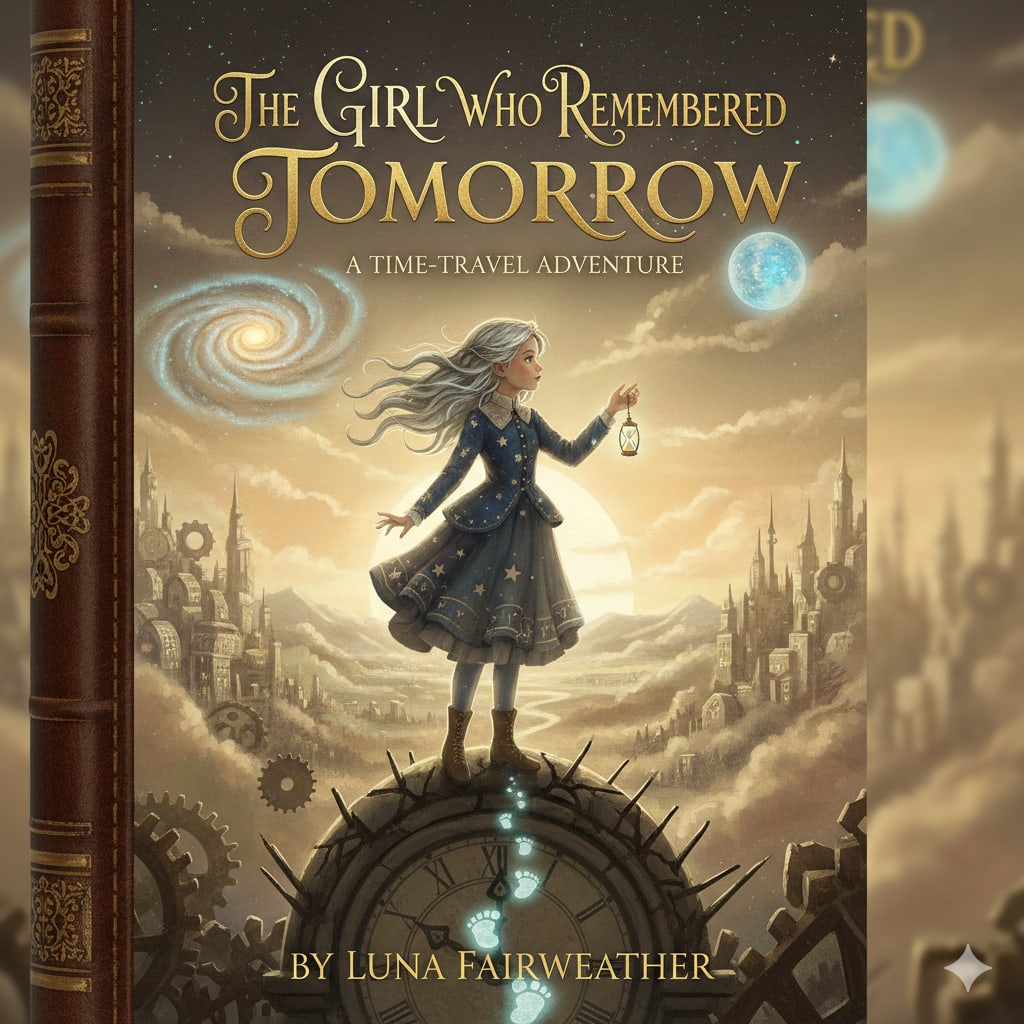
The Girl Who Remembered Tomorrow
The first time it happened, Mara thought it was a dream. She had been walking home from school when a flash of light hit her eyes, and suddenly, she could see herself—standing in the same street, five minutes into the future. She saw herself trip on the uneven pavement, her books scattering across the asphalt, and instinctively, she jumped aside, avoiding the fall.
For a moment, she froze. Her heart pounded in disbelief. She glanced down at the books she had almost dropped and then at the empty street ahead. Nothing felt different, yet she knew something had changed inside her. The world, she realized, had begun whispering its secrets to her.
Over the next few weeks, these “flashes” became more frequent. She would wake up knowing exactly what her mother would say when she asked about dinner, or she could recite word-for-word the math problems that would appear on her next quiz. At first, it was thrilling. She aced tests without studying and avoided awkward moments before they happened. Friends began joking that she had a “superpower.” Mara laughed with them, but inside, a seed of fear had begun to grow.
The most troubling visions were the ones that hadn’t happened yet—years from now, in places she hadn’t been, with people she didn’t know. Sometimes, she would see herself standing in a sunlit room, older, looking worried, talking to someone whose face she could not recognize. Other times, she would witness small tragedies: a car swerving into a tree, a dog chasing a child onto a busy street, a man dropping a wallet and being accused of theft. These were not mere coincidences—she knew they would happen.
Her parents dismissed her growing anxiety as teenage imagination, but Mara couldn’t ignore it. The world had become a map she could read, but only if she paid attention. And paying attention was exhausting. Every day, she made tiny adjustments, small interventions: moving a fallen branch on the sidewalk, warning someone about a spill, picking up a lost phone. Slowly, she noticed the outcomes shift. The car never hit the tree. The dog was stopped just in time. The man kept his wallet.
Mara realized then that remembering tomorrow was not just a gift—it was a responsibility. She carried a weight no one else could see, a knowledge of events that had yet to occur. But the more she intervened, the more fragile her own present became. Every time she changed the future, she felt a tug, as if reality itself were stretching, resisting. She started forgetting small things in the present: where she had left her keys, what she had eaten for breakfast, even the faces of friends she had seen every day.
One evening, while watching the sunset from her bedroom window, Mara had a vision unlike any before. She saw herself, older, sitting alone on a park bench. She looked up, and a young girl—herself, younger—ran toward her, tears in her eyes, clutching a small notebook. The older Mara smiled sadly and said, “You have to let go.” The vision ended before she could ask what it meant.
The next morning, Mara woke with a determination she hadn’t felt before. She went through her day meticulously, saving minor mishaps and averting dangers. But as the sun began to set, she felt a strange emptiness. It was as if the world had grown quieter, not because things were safer, but because it no longer depended on her alone. Her memories of tomorrow were fading.
She sat in her room, notebook in hand, writing everything she had seen—the visions, the interventions, the outcomes. She wanted to preserve them, even if she could no longer experience them firsthand. The notebook quickly filled with scribbled warnings, advice, and glimpses of futures that might never come to pass.
Days passed. The flashes of tomorrow grew faint. One morning, Mara woke up and realized she could no longer predict the small events of the day. She tried to remember, but her mind returned only fragments: a brief glimpse of a bus arriving late, a whisper of laughter in the park. The world had returned to its natural rhythm, indifferent to her foresight.
Yet Mara felt a strange peace. Though her visions were gone, she had changed the world in subtle ways. She had prevented accidents, solved small problems, and saved lives. She had glimpsed the consequences of every choice and had learned the quiet power of action over fear.
Sitting on her bed, Mara picked up the notebook and read the words she had written. She realized that even without her gift, she carried the lessons of tomorrow in her memory. Life, she understood, was not about controlling the future, but about moving through it with awareness and courage.
And though the flashes were gone, sometimes, just as the sun dipped below the horizon, she would catch a flicker in her mind—a memory of a moment that had not yet happened—and she would smile, knowing that, for a time, she had walked between the present and the future, and had made a difference.
The girl who remembered tomorrow had learned the greatest truth of all: that the power to change the world did not lie in seeing it before it happened, but in choosing to act when the moment was here.
About the Creator
Samaan Ahmad
I'm Samaan Ahmad born on October 28, 2001, in Rabat, a town in the Dir. He pursued his passion for technology a degree in Computer Science. Beyond his academic achievements dedicating much of his time to crafting stories and novels.
Keep reading
More stories from Samaan Ahmad and writers in Humans and other communities.
A Day That Broke Time
A Day That Broke Time The morning had started like any other in the sleepy town of Rivermist. Sunlight spilled lazily across cobblestone streets, and the air smelled of dew and wet earth. People went about their routines—bakers kneading dough, children chasing each other to school, and old men sipping tea on wooden benches. But something in the air that day felt… off, though no one could have said exactly what.
By Samaan Ahmada day ago in History
The Angry Man in Your House
"If you grow up with an angry man in your house, there will always be an angry man in your house" This statement has caused plenty of controversy online, people say its a statement that blames victims while also undermining those who break traumatic cycles to form health relationships... but if I'm honest now that I'm in my 30s it makes more sense to me than ever, and I'd argue that its not just about fathers and uncles.
By S. A. Crawford4 days ago in Humans



Comments
There are no comments for this story
Be the first to respond and start the conversation.