
The Garden of Forgotten Voices
How a Hidden Garden Restored a Broken Town

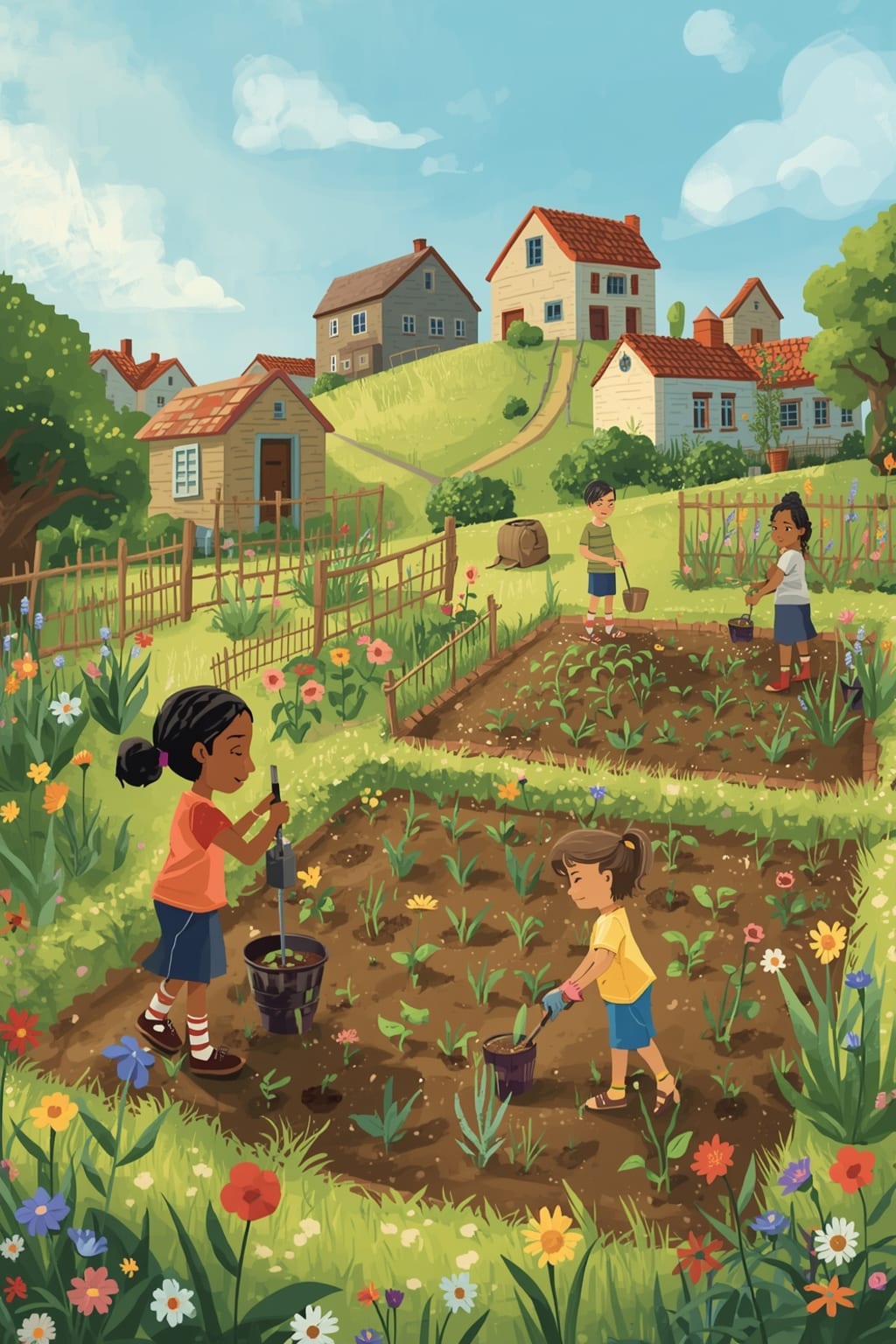
In the heart of a city fractured by years of conflict and mistrust, there was a neighborhood few dared to enter. Empty houses, cracked sidewalks, and silent streets told the story of a community divided by old feuds, broken promises, and misunderstandings.
People avoided one another. Parents kept children inside. Shops were shuttered. Even the local school was quiet, echoing with absence.
But there was one place that still held hope—a small, forgotten garden, hidden behind a rusted iron gate and tangled vines.
It had once been vibrant, full of flowers and laughter, but over time, it had been abandoned. Weeds choked the paths, fountains dried up, and benches rotted. It was the only reminder that peace and beauty had once existed in the neighborhood.
THE GIRL WHO BELIEVED
A twelve-year-old girl named Amira had heard stories from her grandmother about the garden.
“People grow flowers, children play, and neighbors share stories,” her grandmother said, her voice soft. “It’s a place where hearts remember kindness.”
Amira decided to find the garden herself. She had a quiet rebellion in her heart: she refused to accept that her neighborhood would remain broken.
On a bright Saturday morning, she slipped through the twisted vines, pushed open the iron gate, and stepped into the hidden world. Sunlight broke through the branches, casting golden patterns on the ground.
It was overgrown and wild, but Amira saw potential. She began cleaning small patches, pulling weeds, and planting seeds from the packets her grandmother had given her: marigolds, roses, and sunflowers.
THE FIRST FRIEND
A few days later, Amira saw movement near the gate.
A boy, perhaps thirteen, with a wary look, stood watching her from the street.
“I… I didn’t know anyone came here,” he said nervously.
“I come here to fix it,” Amira replied, brushing soil off her hands. “Do you want to help?”
He hesitated. Most people in the neighborhood didn’t trust outsiders. But something about her determination drew him in.
“I’m Samir,” he said finally. “My mom says this garden is cursed.”
Amira laughed softly. “No garden is cursed. It’s just forgotten. And I think forgotten things can still grow again.”
Over the next few weeks, Amira and Samir worked together. They cleared the weeds, repaired broken benches, and planted rows of bright flowers. Slowly, they started talking—not just about the garden, but about school, families, and their dreams.
The garden became their secret place of hope.
SPREADING PEACE
Soon, other children began noticing the change. First, it was shy glances from the street. Then, a few joined to help, carrying watering cans or picking up stones.
Adults began observing too. They were initially suspicious—why were children trespassing in a forgotten place? But when they saw the joy on the children’s faces, the cautious smiles, and the laughter, curiosity overcame doubt.
One day, Ms. Hina, a teacher, entered the garden. “This is… wonderful,” she said. “I didn’t know the garden could feel alive again.”
She suggested that the school hold a class in the garden. Slowly, adults who had avoided each other began entering. Neighbors who once argued over petty grievances now sat side by side on the repaired benches.
THE FESTIVAL OF BLOOMS
Months later, Amira and Samir organized a Garden Festival. They invited every family in the neighborhood. Children hung handmade decorations, adults brought food to share, and music drifted through the garden.
The air was filled with laughter, chatter, and the scent of flowers. People hugged, shared stories, and even apologized for past conflicts.
For the first time in years, the neighborhood felt alive and united.
Amira watched from a shaded bench. Samir joined her, smiling.
“Who would have thought a forgotten garden could do this?” she asked.
“Sometimes, all it takes is someone to believe in what was lost,” Samir replied.
The garden was no longer forgotten.
It was a symbol that even after years of silence, division, and anger, peace could bloom again—if someone dared to start.
THE LESSON
Peace does not always arrive with words or laws.
Sometimes it begins quietly:
With a child planting seeds
With neighbors sharing work and stories
With small gestures of trust
And over time, it grows stronger than resentment, fear, or anger.
Amira realized that healing a community takes patience, courage, and love, and that even the smallest hands can spark a revolution of kindness.
About the Creator
M.Farooq
Through every word, seeks to build bridges — one story, one voice, one moment of peace at a time.


Comments
There are no comments for this story
Be the first to respond and start the conversation.