
The Bridge of Quiet Steps
How Two Worlds Met in Silence

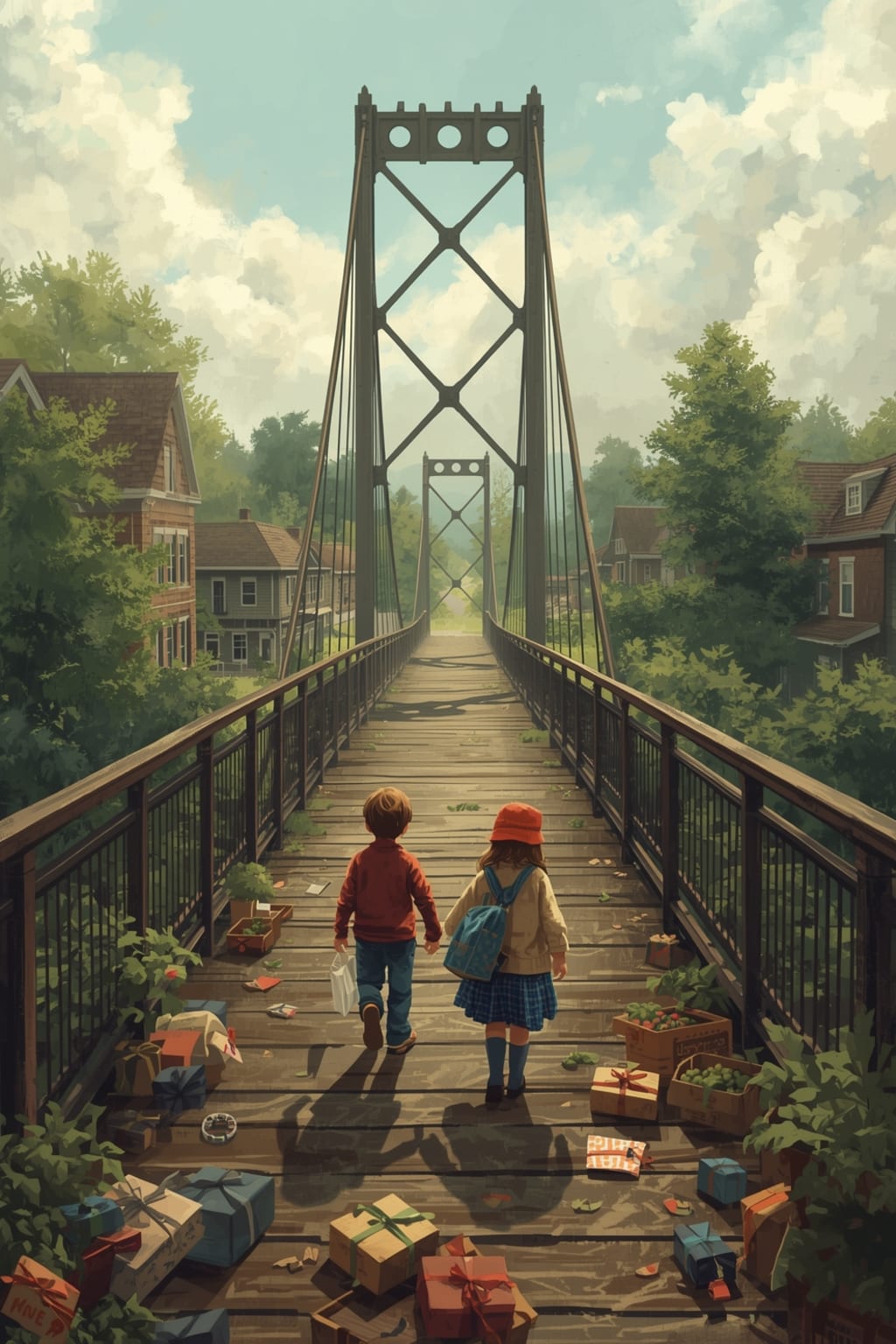
For as long as anyone in the towns of Ravleen and Busaira could remember, the old stone bridge connecting them had been the heart of the community. Merchants carried spices and fabrics across it, children raced along its worn stones after school, and festivals spilled over its center with laughter, music, and bright lanterns.
But one bitter winter, a disagreement between two influential families spiraled into years of resentment. Harsh words became rumors, rumors became mistrust, and mistrust hardened into avoidance. Slowly, the bridge, once a symbol of connection, became a line of division. People stopped crossing. Markets grew quiet. Families ignored one another. Even the river below, usually sparkling under the sun, seemed dim in mourning.
CHILDHOOD FRIENDSHIP IN THE TIME OF SILENCE
Rayyan, an 11-year-old boy from Ravleen, felt the sting of the division deeply. He remembered playing with Zara, his best friend from Busaira, just last winter. They had raced along the riverbanks, traded marbles, and whispered secrets under the shade of old willow trees.
But now, they were forbidden to see each other. Each evening, they stood on opposite riverbanks, waving silently. Their small hands lifted toward each other, but the rules—and the pride of adults—kept them apart.
One foggy morning, Rayyan could bear it no longer. He had an idea.
In his small workshop behind his house, he carved a tiny wooden boat from scraps of driftwood. Inside, he placed a folded note:
"I miss our talks. I hope the adults remember friendship too."
Carefully, he carried the boat to the center of the bridge and set it down. His heartbeat thundered in his ears. For the first time in months, he felt as if he had done something meaningful.
THE FIRST REPLY
The following morning, Zara appeared with her mother at the bridge. She froze when she saw the boat, then read the note. Her eyes sparkled with unshed tears. She ran home and returned the next day with a blue ribbon tied to a small, folded note of her own:
"Friendship waits. Peace can too."
Rayyan could hardly believe it. Their first silent conversation had begun.
THE SPREAD OF KINDNESS
Over the next few weeks, the two children began leaving gifts on the bridge:
Painted stones with little flowers
Hand-carved wooden animals
Notes of encouragement
Small treats wrapped in cloth
Other children noticed. Some were hesitant, afraid of the rules. But curiosity won. Soon, the bridge became a canvas of friendship. Bright ribbons, notes, and small handmade treasures stretched across its worn stones.
The adults began noticing. At first, many frowned, fearing trouble. But slowly, memories of shared festivals, laughter, and warm greetings returned. Their hearts softened.
THE INCIDENT THAT CHANGED EVERYTHING
One windy evening, as children were leaving their notes, a gust of wind tore many ribbons from the bridge. They scattered across the river below, threatening to be lost forever. Adults from both towns rushed to collect the precious messages.
For the first time in years, neighbors from Ravleen and Busaira stood face to face on the bridge.
Mrs. Naureen from Busaira held a note in her trembling hands:
"We want to play again. Please don’t fight."
Mr. Javed, an elder from Ravleen, shook his head.
"We forgot what this bridge really meant. Perhaps we’ve lost more than we realized."
Slowly, quietly, the first steps toward reconciliation were taken. Handshakes. Polite smiles. Tentative greetings. It was awkward, but it was real.
REBUILDING THE COMMUNITY
Over the next months, life returned to the bridge:
Merchants crossed again, carrying spices, grains, and fabrics
Families began inviting neighbors for shared meals
Children ran freely between towns, carrying notes and ribbons for their friends
Festivals were held jointly, music echoing across the river
Rayyan and Zara were at the heart of it all. Every day, they left new messages, teaching their peers the value of courage, patience, and empathy.
One afternoon, Zara asked:
"Do you think peace will last this time?"
Rayyan smiled, tying a golden ribbon across the center of the bridge.
"It’s not just about today. It’s every small step we take. Every ribbon, every note… that’s how peace grows."
DEEPER CONNECTIONS AND LESSONS
As the months passed:
Old rivalries between families softened. Conversations replaced gossip.
Elders shared stories of when the towns had been one community, laughing and working together.
Children created a small “bridge library,” leaving books for anyone to borrow.
The bridge, once a symbol of fear, became a living testament to cooperation, forgiveness, and unity.
Rayyan realized something important: peace was not an event. It was a series of small choices—courageous, consistent, quiet actions. One message, one ribbon, one step at a time.
THE FINAL FESTIVAL
The towns decided to hold a festival to celebrate the bridge and the restored friendship. Lanterns were hung along the railings. Music floated across the river. Children ran through streets, laughing and waving their ribbons.
Rayyan and Zara stood in the center, tying the last golden ribbon across the bridge.
“This is ours,” Zara whispered. “The bridge… and the peace.”
Rayyan nodded. “We started it. Everyone else joined in. That’s how peace works.”
For the first time in decades, the bridge was alive with joy, laughter, and the quiet strength of unity.
THE LESSON OF THE BRIDGE
The bridge no longer separated. It connected.
Peace is not always about speeches, laws, or power.
It grows from courage, small gestures, consistent kindness, and the willingness to take the first step.
Rayyan and Zara had shown the town that even in darkness, hope can light the way.
The bridge became a symbol for future generations: a reminder that hearts willing to reach out can heal even the deepest divisions.
About the Creator
M.Farooq
Through every word, seeks to build bridges — one story, one voice, one moment of peace at a time.
Signs You Already Met Your Soul Tribe Without Noticing.
We often search far and wide for our soul tribe, the group of people who resonate deeply with our energy, values, and purpose. Yet sometimes, they are already around us, unnoticed in the midst of everyday interactions. Your soul tribe is not necessarily your closest friends or family, but those who uplift, challenge, and support your growth at a soul level. Recognizing them requires awareness, intuition, and understanding subtle signs that go beyond ordinary connection.
By Wilson Igbasi4 days ago in Humans



Comments
There are no comments for this story
Be the first to respond and start the conversation.