
The Garden Between Walls
Peace grows where care and patience take root.

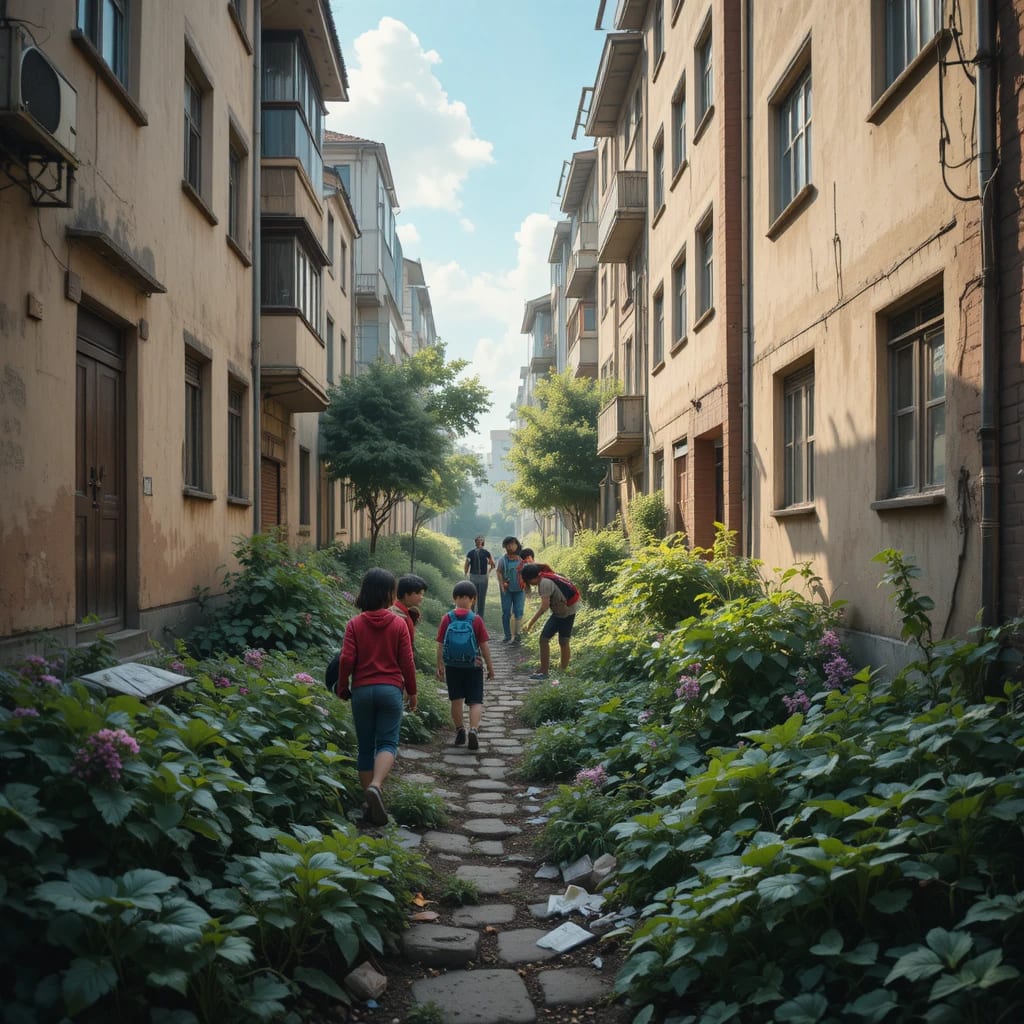
In the heart of a crowded, bustling city, life often felt rushed and disconnected. Narrow streets, honking cars, and towering apartment buildings pressed close together. Between two such buildings, hidden from most passersby, lay a long, narrow strip of land — neglected, overgrown with weeds, littered with broken bricks, old tires, and garbage. Residents ignored it, calling it an eyesore, a “forgotten space.”
But Ayesha, a young schoolteacher with a love for nature, saw possibility where others saw despair. Every day, as she walked home from school, she looked at the narrow patch of earth and imagined a garden. She pictured flowers blooming in riotous colors, birds returning to perch on shrubs, and children laughing as they explored the greenery.
One quiet evening, she decided she could not wait any longer. She bought packets of seeds, a small watering can, and gardening gloves. She knelt on the soil and began the slow work of cleaning: pulling weeds, moving stones, and preparing the ground for planting.
At first, it seemed hopeless. The soil was hard and dry in places, soggy and full of trash in others. Each morning she returned home from school, tired yet determined, to continue her work. Slowly, tiny green shoots began to appear.
The First Visitors
People in the neighborhood noticed her efforts with skepticism. Windows creaked open as curious neighbors watched her kneeling among the weeds.
“What is she doing here?” whispered Mrs. Khan, a longtime resident who rarely smiled. “Nothing will grow here. Why bother?”
But Ayesha paid them no mind. She kept planting, watering, and caring for the soil.
One morning, a little boy named Bilal wandered into the strip of land, holding a tattered ball in his hands. He knelt next to Ayesha, staring at the tiny green shoots.
“What are you doing?” he asked, tilting his head.
Ayesha smiled, her hands muddy. “I’m planting a garden. Would you like to help me?”
Bilal nodded eagerly. Together, they cleared trash, dug holes, and planted seeds. Soon, other children joined, curious and excited. They carried water in little cans, laughed as they stumbled over stones, and carefully pressed seeds into the soil, learning the patience that gardening demanded.
The first blossoms were small, almost unnoticed, but each day more appeared. Sunflowers stretched tall, marigolds blazed in gold, and roses timidly peeked from the edges. With every new flower, the children’s excitement grew, and the neighbors began to take notice.
Bridging Differences
The garden did more than bring life to the soil; it began to transform the people around it.
Mr. Ahmed, a retired man who had lived in the building for decades, brought old clay pots and rusty tools. He taught the children how to carefully transplant seedlings and prune branches without hurting the plants.
Mrs. Samina, a widow who had been in constant conflict with her neighbors over trivial matters, brought packets of seeds and shared stories of her childhood garden. Slowly, her quarrelsome demeanor softened. She laughed at the children’s mistakes and praised their efforts.
Even neighbors who had avoided each other for years began speaking. Differences that had seemed insurmountable — disputes over walls, parking, and noise — melted in the warmth of shared labor. People realized that caring for something together required patience, understanding, and cooperation.
Ayesha noticed subtle changes. Children who had been shy or withdrawn began speaking up, laughing more freely. Adults who rarely smiled greeted one another warmly. Peace, she realized, was taking root alongside the plants — quiet, patient, persistent.
A Test of Patience
One summer afternoon, heavy rain poured down, threatening the young garden. Seeds were washed away, flowers bent under the water, and puddles formed in low spots. Many neighbors thought it was hopeless.
But Ayesha did not despair. She gathered the children and adults who had helped her and said, “We cannot control the storm, but we can care for what remains. Together, we can make it stronger.”
They worked in the rain, digging drainage channels, staking fragile plants, and carefully covering seedlings. By evening, exhausted and soaked, they stood back and admired the garden. It was battered but still alive.
“That’s the lesson,” Ayesha said. “Peace, like a garden, is never perfect. Storms come. But care, patience, and effort keep it growing.”
A Community Transformed
Months turned into a year. The once-forgotten strip of land had transformed into a lush, vibrant garden. Children played, neighbors sat on benches and shared tea, and birds returned to the greenery. The garden became a sanctuary, not only for plants but for people.
Arguments between neighbors became rare. Conflicts that had persisted for years faded as people worked side by side in soil and sunlight. Friendships formed where none had existed before. The garden had become a symbol of harmony, patience, and hope.
Ayesha watched one evening as Bilal and his friends ran among the flowers, their laughter ringing through the narrow space. Mr. Ahmed tended the potted plants along the edges, while Mrs. Samina taught the children about different types of flowers and herbs.
She realized that peace is not an abstract feeling; it is cultivated patiently, nurtured carefully, and shared generously. It grows slowly, in the small gestures of care, in listening, in guiding, in forgiving, and in working together toward something beautiful.
Legacy of the Garden
Years later, Ayesha moved to another city, but the garden continued to flourish. The children she had taught became young adults, passing the lessons of patience, care, and cooperation to new generations. The neighborhood had changed permanently — not just because of the flowers, but because people had learned how to nurture life and each other.
Even in a bustling, noisy city, peace could bloom — quiet, resilient, and alive — in the smallest spaces where people were willing to care.
The garden between the walls remained, a reminder that even forgotten places — and neglected hearts — can bloom again when nurtured with patience, understanding, and love.
About the Creator
M.Farooq
Through every word, seeks to build bridges — one story, one voice, one moment of peace at a time.
Golden Globes 2026 Reflect a Changing Hollywood Awards Night
Award shows often feel distant from everyday life, but every so often, one night captures a deeper mood. The Golden Globes 2026 did exactly that. It was not just about trophies or fashion. It was about where Hollywood stands right now. Audiences are changing. Stories are changing. Expectations are changing too. This ceremony felt quieter in some ways, yet heavier with meaning. There was pride, discomfort, nostalgia, and uncertainty all sharing the same room. The Golden Globes have always been a mirror of the industry, and in 2026, that mirror showed both growth and lingering cracks. To understand why this night mattered, we need to look beyond the red carpet and into what the evening truly revealed.
By Muqadas khana day ago in Humans


Comments
There are no comments for this story
Be the first to respond and start the conversation.