
The Bridge of Conversations
Peace begins when we listen more than we speak.

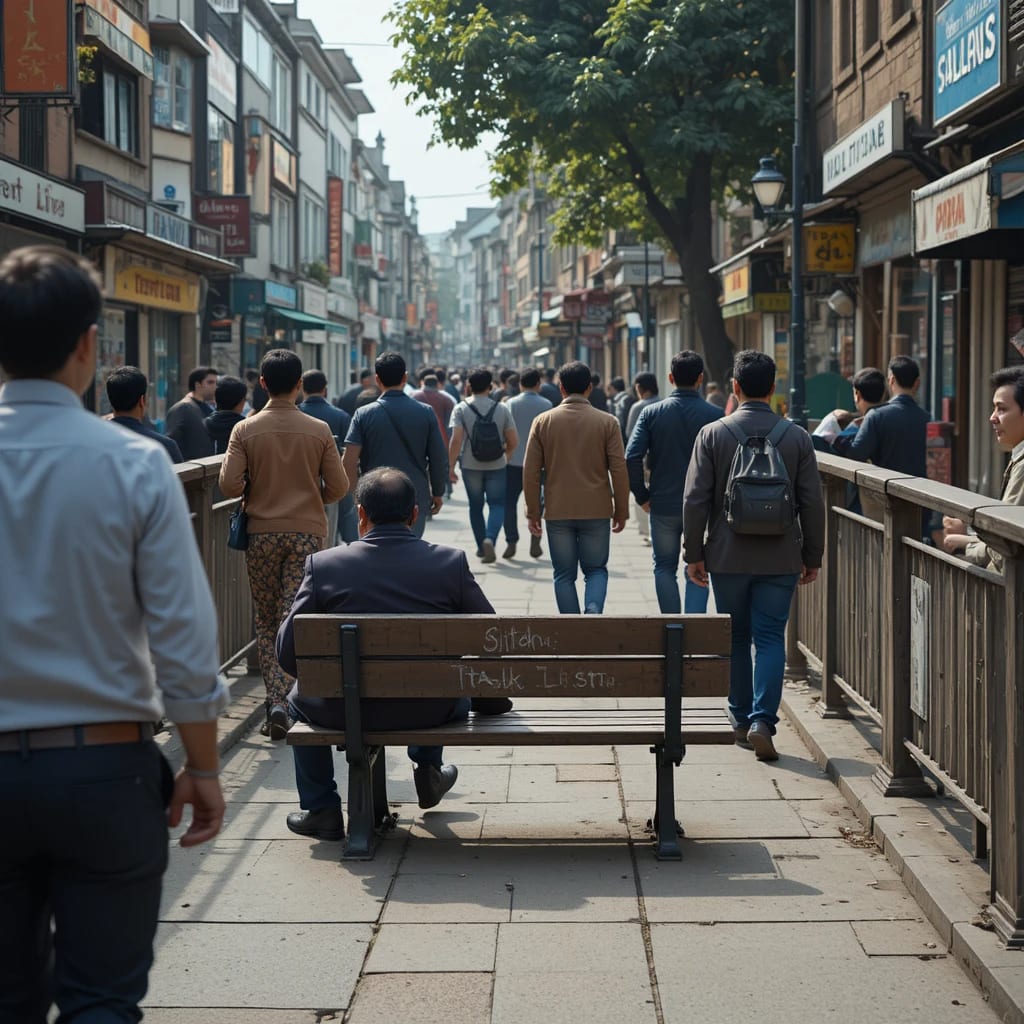
In a crowded city, a narrow pedestrian bridge connected two busy neighborhoods. Every day, hundreds of people crossed it — rushing to work, carrying groceries, or walking to school. Most ignored one another, their eyes glued to the ground or their phones.
Imran, a middle-aged man who ran a small stationery shop near the bridge, noticed something troubling. Arguments, shouting, and minor scuffles had begun occurring more frequently on the bridge. Strangers pushed past each other, tempers flared, and the once-neutral passageway had grown tense.
Imran, though quiet and unassuming, decided he could not stand by any longer. He placed a small bench at the center of the bridge, and a sign above it:
“Sit. Breathe. Talk. Listen.”
At first, people ignored it. The city’s rhythm was too fast, too impatient. But slowly, a few curious souls stopped — first one, then another.
The First Conversation
The first person to sit was Sana, a teacher from the neighborhood across the bridge. She had been frustrated by the daily chaos and welcomed the chance to pause. Sitting next to her was Rashid, a delivery driver known for his short temper. Both stared at the river flowing beneath them, silent at first.
After a few minutes, Rashid spoke. “I hate this bridge. People push, shout, and… I don’t know, it’s just stressful.”
Sana nodded. “I know. I used to get angry too. But maybe we just need… someone to talk to?”
The conversation was slow, awkward, and full of pauses. But by the time they stood up, they had found common ground — shared frustrations, shared hopes, and the simple realization that listening to one another felt better than arguing.
A Growing Habit
Word spread. Slowly, the bridge transformed. Children brought their parents, shopkeepers joined, and people who had long ignored one another began exchanging smiles and greetings.
Imran did not speak much himself. He simply sat on the bench each day, encouraging people to pause, breathe, and connect. Sometimes he would place a small notebook nearby for visitors to write thoughts, apologies, or reflections.
Over time, arguments decreased. People became calmer, more patient, and more considerate. What had been a place of tension slowly became a place of understanding.
A Personal Moment
One rainy afternoon, two old neighbors who had been feuding for years hesitated at the bridge. Their argument had begun over something trivial — a dispute about a shared wall — but had festered for decades.
They sat silently on Imran’s bench. The rain poured down, but neither moved. Finally, one spoke.
“I… I’m sorry,” said one.
The other nodded, eyes misting. “I’m sorry too. I… I forgot why we were angry.”
They shook hands. The bridge, once a symbol of conflict, had become a place where peace could take root — one conversation, one apology, one shared moment at a time.
The Legacy of Listening
Months turned into years. The bridge became a quiet sanctuary in a noisy city. People from both neighborhoods would meet there daily — to talk, to share meals, or simply to sit in silence together. Children played, old friends reunited, and newcomers were welcomed warmly.
Imran’s small act — a simple bench and the encouragement to listen — had transformed not just a bridge, but the lives of everyone who crossed it. He realized that peace is not always created by grand gestures or sweeping laws. Sometimes, it begins quietly, one conversation at a time.
And on that bridge, amid the rushing river below and the city buzzing above, peace became a living, breathing presence — cultivated by patience, listening, and human connection.
About the Creator
M.Farooq
Through every word, seeks to build bridges — one story, one voice, one moment of peace at a time.


Comments
There are no comments for this story
Be the first to respond and start the conversation.