
The Future of Augmented Reality: Transforming Industries with Cutting-Edge Solutions
How AR is Shaping the Future of Work and Business
Augmented Reality (AR) is revolutionizing the way businesses operate, enhancing productivity, and creating immersive digital experiences. With the rapid adoption of AR across industries, companies are leveraging innovative solutions to streamline operations, improve training, and deliver better customer engagement. This blog explores the significance of AR, how it is reshaping various sectors, and the advanced technologies driving its adoption.
Why Augmented Reality Matters Today
The global AR market is experiencing exponential growth, fueled by advancements in wearable technology, AI integration, and the demand for remote collaboration. Industries such as manufacturing, healthcare, logistics, and retail are increasingly relying on AR-driven solutions to enhance efficiency and reduce operational costs. As digital transformation accelerates, businesses must explore AR technologies to stay competitive and future-proof their operations.
Industries Benefiting from AR Technology
1. Manufacturing and Maintenance
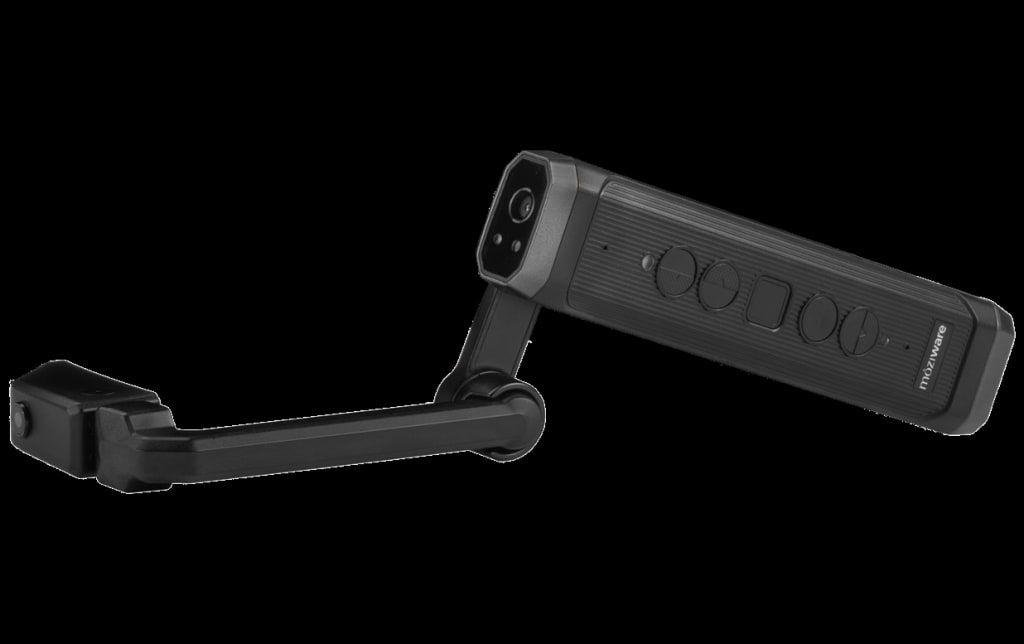
AR-powered smart glasses and headsets are transforming the manufacturing sector by enabling hands-free access to real-time data, improving accuracy, and minimizing downtime. Technicians can now visualize complex schematics, receive step-by-step guidance, and collaborate with remote experts without disrupting workflow. Solutions like Moziware CIMO – designed for industrial applications provide seamless integration for industrial settings, ensuring enhanced productivity and safety.
2. Healthcare and Medical Training
In healthcare, AR is revolutionizing medical training, diagnostics, and patient care. Surgeons use AR overlays for precision procedures, while medical students benefit from interactive simulations. AR technology also facilitates remote consultations, bridging the gap between patients and healthcare professionals. The ability to visualize internal organs and conditions in real-time significantly enhances diagnosis and treatment planning.
3. Logistics and Supply Chain Management
Warehouse management and logistics operations have seen remarkable improvements with AR implementation. Workers use AR-enabled devices to scan barcodes, optimize inventory placement, and receive navigation assistance within warehouses. This reduces errors, enhances speed, and ensures accurate deliveries, ultimately boosting supply chain efficiency.
4. Retail and E-Commerce
The retail industry is leveraging AR to offer customers immersive shopping experiences. From virtual try-ons to interactive product displays, AR enhances consumer engagement and confidence in online purchases. Brands are using AR-powered applications to allow customers to visualize furniture placement, clothing fits, and cosmetic applications before making a purchase decision.
Key AR Technologies Shaping the Future
1. AR Wearables and Smart Glasses
Wearable AR devices, such as ARGO by DigiLens for immersive experiences, provide real-time data visualization and hands-free interactivity. These devices are enhancing workflows across industries by delivering high-resolution augmented overlays, increasing efficiency, and minimizing operational disruptions.
2. AI-Driven AR Solutions
Artificial Intelligence (AI) is playing a crucial role in AR development, enabling real-time object recognition, natural language processing, and intelligent automation. AI-powered AR applications are enhancing decision-making, predictive maintenance, and customer interactions, making AR solutions more intuitive and efficient.
3. Remote Collaboration and Training
The demand for remote work and virtual training has accelerated the adoption of AR-driven collaboration tools. Companies are using AR-based platforms to conduct virtual meetings, provide real-time technical support, and offer immersive employee training programs. This has reduced travel costs, improved knowledge retention, and increased productivity across organizations.
How to Integrate AR into Your Business
If you're considering adopting AR technology for your business, here are some key steps to get started:
- Identify Your Business Needs – Assess the challenges your business faces and explore how AR can provide solutions.
- Choose the Right AR Solution – Select AR technology that aligns with your industry, workflow, and objectives. Devices like Upgrade to RealWear Navigator 520 offer high-performance AR solutions for industrial environments.
- Invest in Training and Implementation – Ensure your team is trained to use AR tools effectively and integrate them seamlessly into daily operations.
- Measure and Optimize Performance – Continuously monitor AR implementation to analyze its impact and make necessary improvements.
Final Thoughts
The rapid evolution of AR technology is transforming the way businesses operate, enhancing efficiency, and driving innovation across industries. By adopting AR-powered solutions, companies can improve workforce productivity, optimize operations, and create exceptional customer experiences. As the technology advances, businesses that invest in AR today will position themselves for long-term success in the digital landscape.
About the Creator
Keep reading
More stories from Hafsa Usmani and writers in Humans and other communities.
The Importance of Clean Indoor Air and How to Achieve It
Indoor air quality is a crucial yet often overlooked aspect of our daily lives. Whether at home, in the office, or in educational institutions, the air we breathe plays a significant role in our health, productivity, and overall well-being. Poor indoor air quality can lead to a host of problems, including respiratory issues, allergies, and reduced concentration. This blog explores why clean indoor air is essential and how businesses and individuals can take actionable steps to improve it.
By Hafsa Usmaniabout a year ago in Humans
Why Didn't Anyone Tell Us
Men, move along. This is not for you. This is for the women. I was forty-five when I began menopause. It is pretty young for that to be going on in a woman’s life, but I had undiagnosed PCOS, my entire life. Thank you to all the gynecologists I had seen my entire life. That in itself should encourage women to keep seeking second opinions, especially when you are not getting correct answers or any at all.
By Alexandra Grant2 days ago in Humans
10 Brutal Truths About the Twin Flame Journey No One Talks About.
The twin flame concept has exploded in popularity, promising an epic, soul-shattering love that transcends ordinary relationships. It's sold as the ultimate spiritual partnership—one soul split into two, destined to reunite in profound harmony. Yet beneath the glossy narratives of destiny, unconditional love, and "sacred union" lies a far harsher reality. The twin flame journey is often excruciating, disorienting, and far from the fairy-tale romance many expect. Here are 10 brutal truths rarely discussed openly in spiritual communities, drawn from countless personal accounts, expert critiques, and lived experiences.
By Wilson Igbasi4 days ago in Humans
Worth the Wait: Puerto Viejo, Costa Rica
Beach bumming in a small Caribbean beach town sounded like a perfect way to end our 6-month trip through Mexico and Central America. Or so we thought. The foul, fishy stench of rotten seaweed hit our nostrils as we stepped from the cramped bus and looked out at a rather depressing, empty, and underwhelming black sand beach. It was pouring with rain, and we had to quickly fish out our ponchos. We thought, this couldn’t be it, could it?
By Sh*t Happens - Lost Girl Travel6 days ago in Wander



Comments
There are no comments for this story
Be the first to respond and start the conversation.