
The Future of Augmented Reality
Transforming the Way We Interact
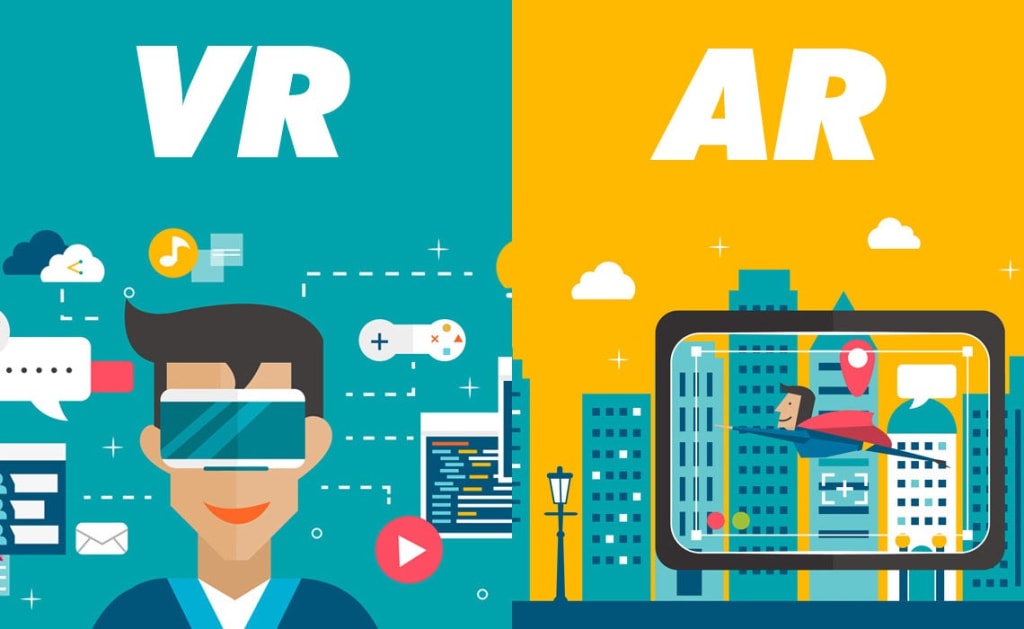
Augmented Reality (AR) has emerged as a groundbreaking technology that overlays digital information and virtual elements onto the real world, creating an immersive and interactive experience. In recent years, AR has gained significant momentum, capturing the attention of tech enthusiasts, developers, and industries alike. With its potential to revolutionize various sectors, from education to entertainment, AR is poised to transform the way we interact with the world around us. In this article, we will delve into the future of augmented reality and explore the profound impact it is set to have on our lives.
1. Augmented Reality Defined:
Augmented Reality is a technology that integrates digital information, such as images, videos, and 3D models, with the user's real-world environment in real-time. By utilizing computer vision, object recognition, and spatial mapping, AR enhances the perception of reality by superimposing virtual elements onto the physical world, seamlessly blending the two realms.
2. Evolution and Current Applications of AR:
AR technology has come a long way since its inception. Initially popularized through smartphone apps like Pokémon Go, AR has expanded its horizons to various industries. From retail and marketing campaigns to architecture and industrial design, AR has demonstrated its versatility and potential. Companies are leveraging AR to provide immersive shopping experiences, interactive product demonstrations, and virtual try-on features, enhancing customer engagement and driving sales.
3. Advancements in AR Hardware:
The future of AR heavily relies on advancements in hardware technology. Tech giants have been investing in developing AR-specific devices such as smart glasses and headsets to offer a more seamless and immersive experience. These devices aim to eliminate the reliance on handheld screens and provide a hands-free AR experience. With ongoing research and development, we can expect AR hardware to become more lightweight, comfortable, and visually impressive, bringing us closer to a full-fledged AR ecosystem.
4. AR in Education and Training:
One of the most promising applications of AR is in the field of education and training. AR can revolutionize the learning experience by overlaying virtual objects, interactive simulations, and real-time information onto textbooks, enhancing students' understanding and engagement. From anatomy lessons with 3D organ models to historical reenactments and virtual field trips, AR has the potential to make education more interactive, immersive, and personalized.
5. AR in Healthcare:
The healthcare industry is embracing AR to improve patient care, surgical procedures, and medical training. Surgeons can utilize AR to project patient data, vital signs, and real-time guidance during complex surgeries, enhancing precision and reducing errors. Additionally, AR can aid in medical education by offering realistic simulations, allowing students and healthcare professionals to practice procedures in a safe and controlled environment.
6. AR in Entertainment and Gaming:
AR has already made a significant impact on the entertainment industry, with Pokémon Go being a prime example. However, the future holds even more exciting possibilities. Imagine attending live concerts and sports events with AR overlays providing real-time statistics, player information, and interactive experiences. Moreover, AR can transform gaming by enabling users to interact with virtual characters and objects in their real environment, creating a more immersive and dynamic gameplay experience.
7. AR and Workplace Productivity:
In the business world, AR has the potential to enhance workplace productivity and collaboration. With AR-enabled smart glasses, employees can access real-time information, instructions, and data visualizations without having to refer to multiple screens or devices. This hands-free approach can streamline workflows, improve efficiency, and reduce errors in various industries, including manufacturing, logistics, and maintenance.
8. AR and Social Interaction:
The future of AR extends beyond individual experiences and ventures into social interaction. AR can enable people to connect and communicate in new ways, bridging the physical and digital divide.
Imagine attending virtual meetings where participants appear as holograms, or engaging in AR-enhanced social media platforms that overlay digital content onto real-life interactions. AR has the potential to transform the way we connect and collaborate, making interactions more immersive, engaging, and meaningful.
Conclusion:
As augmented reality continues to evolve, its impact on society will be profound. With advancements in hardware, expanding applications in education, healthcare, entertainment, and workplace productivity, AR is poised to transform the way we interact with the world. From enhancing learning experiences to improving patient care and revolutionizing gaming, the future of augmented reality holds limitless possibilities. As we embrace this technology, it is crucial to address privacy concerns, develop user-friendly interfaces, and foster ethical guidelines to ensure a responsible and inclusive AR ecosystem. The future is exciting, and with augmented reality, we are on the cusp of a new era of interactive and immersive experiences.
About the Creator
Reaching for the Stars: The Best Destinations for Astronomy Lovers.
For those with an insatiable curiosity about the universe, stargazing isn't just a hobby; it's a passion. It's a quest to unravel the mysteries painted across the night sky, to feel connected to something vastly larger than ourselves. But in our increasingly light-polluted world, finding truly dark skies where the Milky Way blazes in all its glory can feel like a daunting task. Fortunately, there are still pockets of Earth that offer exceptional conditions for astronomical observation, beckoning astronomy enthusiasts to embark on unforgettable celestial adventures. This article explores some of the best destinations for astronomy lovers, where you can witness the cosmos in all its breathtaking splendor.
By Wilson Igbasi7 days ago in Humans
A More Human Vocal
When we launched Vocal nearly a decade ago, the world was a very different place. LLMs did not exist, and stories were created one at a time by people sitting down to write, revise, and share something personal. Many of our assumptions about publishing, trust, and participation were built for a world where effort and output were inseparable.
By Justin @ Vocal7 days ago in Resources




Comments
There are no comments for this story
Be the first to respond and start the conversation.