
The first known example of human social empathy is Little Benjamin.
The significance of the name Benjamina

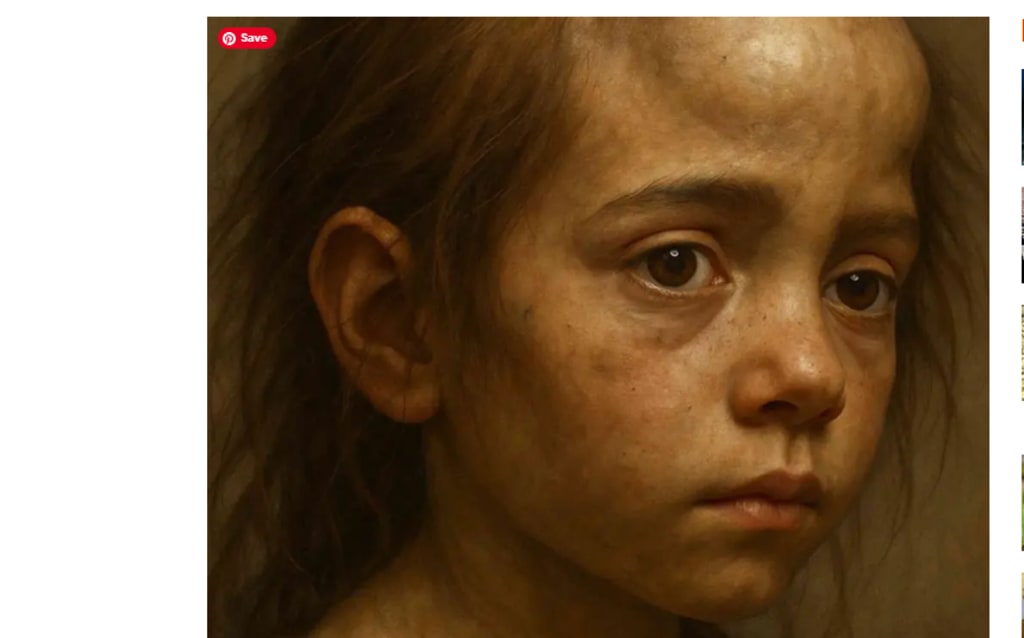
For over half a million years, Benjamina's tiny skull was concealed in the Atapuerca Mountains of Spain. Her account now calls into question long-held beliefs about the origins of human empathy.
The remains of the kid, according to Juan Luis Arsuaga of the Complutense University of Madrid, who oversees the excavations at Sima de los Huesos, compel researchers to reconsider Middle Pleistocene social life.
Benjamina was identified by excavators as Cranium 14, an essentially intact neurocranium from a girl of Homo heidelbergensis who was between ten and twelve years old.
According to computed tomography tests, her brain volume is close to 1,200 cm³, which is marginally less than that of many preteens nowadays.
Putting things together: The life of Benjamina
Lambdoid synostosis, a disorder where the left limb of the back-of-the-head suture fused before birth, was discovered during early repair.
The rarest kind of craniosynostosis is true fusion of this suture, which happens in about 2% of instances. According to current statistics, the prevalence of craniosynostosis is approximately one per 2,000 live births.
The uneven dome on Benjamina's right parietal plate is the result of pressure forcing growth towards the forehead and opposite side since the fused bone is unable to expand.
Recognising lambdoid synostosis. To avoid increased intracranial pressure and visual impairment, surgeons now open the fused bone during the first year of life. Secondary difficulties like headaches, balance problems, and cognitive disabilities can develop if treatment is not received.
Benjamina did not have surgery. She lived for at least ten years despite her deformity, as evidenced by the fact that she outlived her baby teeth and developed permanent molars.
Indications of community concern
The excavation team observed that Benjamina provides early signs of social cohesiveness and empathy in our evolutionary past. In a hunter-gatherer setting, a crippled child would have needed assistance with food, protection, and possibly mobility to survive.
Similar patterns can be seen in skeletal examinations of Neanderthals from nearby Valencia, where a six-year-old with significant inner-ear abnormalities only survived long past infancy with the help of a supportive community.
When taken as a whole, these Iberian fossils suggest that caring for others did not develop later in our species, but rather deep within the genus Homo.
The significance of the name Benjamina
The Hebrew term for the youngest or most adored child is where the name Benjamin originates. In addition to her youth, researchers selected her because of the care she most likely had throughout her life.
Giving her a name also reflects the growing trend of humanising ancient people in paleoanthropology. It enables the general public to relate to prehistoric narratives as once-living members of a social group rather than merely as statistical points.
The fact that her group is prepared to spend money on an unproductive youngster suggests emotional ties, shared accountability, and possibly even primitive social rules.
These characteristics would subsequently support longer childhoods, cooperative hunting, and the ensuing cultural explosion. Benjamina expands the medical record as well. Her skull is described as "the earliest evidence of craniosynostosis occurring in a hominid" in the report.
Recording pathology. This antique aids geneticists in tracking the evolution of skull-fusion genes. Additionally, it serves as a reminder to clinicians that children who go untreated can grow up to be school-age, which helps them counsel parents who choose not to have surgery today.
Educating the future generation
The first people to watch this demonstration were the students in my thermodynamics class. Martín-Olalla from the University of Seville stated, "I think this approach will eventually become more accepted," highlighting the importance of presenting this proof to students at an early age.
A new generation of physicists looking for internal consistency may find resonance in the argument since it grounds the theorem in the second law itself rather than a loosely attached third principle. Martín-Olalla recognised that reinterpretations of established theory frequently encounter resistance.
Although there were abnormalities in earlier fossil skulls, such as the Salé cranium and Singa 1, neither could be conclusively identified as having true lambdoid synostosis.
These people did not have the unique skull characteristics or CT information required to verify the uncommon fusion type, in contrast to Benjamina.
Other historical examples, such as the malformed skulls from the Bab-al-Hanax cemetery in Spain or the Münsingen-Rain burial site in Switzerland, happened considerably later and exhibit greater diversity.
Benjamin has a special position in paleopathological records since it is still the earliest case that has been proven with such accuracy in diagnosis.
About the Creator
Keep reading
More stories from Francis Dami and writers in Humans and other communities.
To maintain your memories in sequence, the human brain employs a storage technique.
For decades, researchers have been baffled by the brain's memory storage mechanism. How our minds can store new knowledge without erasing what we already know has long been a mystery. Following a thorough examination, scientists have discovered that place cells contain crucial hints about this process.
By Francis Dami9 months ago in Humans
Experienced Dating Partner Brings Emotional Intelligence Patience And Relationship Wisdom
Dating an experienced partner can provide unique advantages that enhance the quality and depth of a relationship. Such partners often bring emotional intelligence, patience, and practical relationship wisdom, making it easier to navigate challenges and build strong connections. Their past experiences offer insights into communication, conflict resolution, and long-term compatibility. While every individual and relationship is different, having a partner who has learned from previous relationships can foster understanding, empathy, and stability. This experience translates into better support, more meaningful connections, and a higher likelihood of sustaining a healthy partnership.
By Robert Smith7 days ago in Humans


Comments
There are no comments for this story
Be the first to respond and start the conversation.