
The First Guest (Mekveloba)
The Celebration of Bedoba

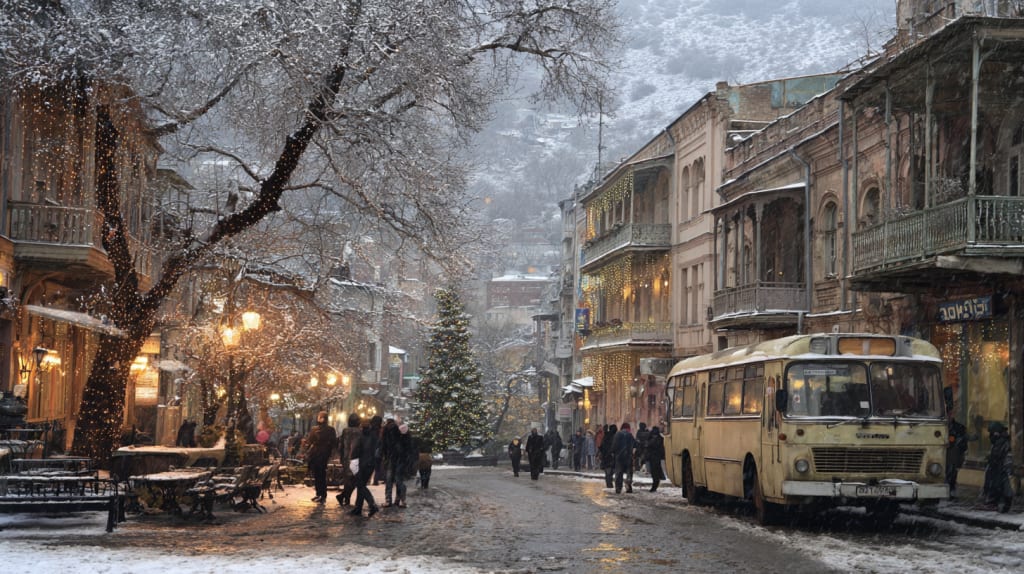
I don’t remember my first snow. But I do remember playing in it with a girl named Cinnamon. I remember tilting our heads back and catching snowflakes on our tongues, laughing as they melted—each one gone before you could really taste it. She was winter and snow and wildness. The only warmth I trusted.
We’d often go down to the winter ponds, skipping frozen stones across the ice, or leaving corn for deer we never saw. She had no father, and mine had more of a relationship with alcohol and fists than anything else. But everyone we knew had a similar story. Hurt is abundant in the hollows of Appalachia. It's generational, and often devoid of hope.
Yet, she and I were different. Born wild, and unable to abide the hungry and pain-filled shacks of home. We scavenged wild berries and dodged thunderstorms in the summer, but it was winter we loved most. Screaming at the sky from fields of new snow or howling under a full moon like the wild and free wolves we imagined ourselves to be.
Somehow, we knew that unless you dreamed too big for those blue hills, they hollowed you out.
But one night my mother packed me into the back of her old Mustang and drove into the dark. I never saw Cinnamon again.
Years later I ran away from home, living under bridges and scrounging through trash for meals. By the time winter came, I’d made my way to the marble graveyards of Washington. Her streets were so cold they took everything I had left, until desperation pushed me overseas.
I learned how to disappear, to survive in places where winter bites deeper than Appalachia ever could. Cold nights under thin blankets in the Balkans—tracking shadows for people who never gave their names. The work left stains, and the weight drove me east, to mountains older than those I’d grown up with.
High mountain passes stared down at me when I arrived, bigger than any dream I’d ever had. Standing in their shadows, I understood for the first time how much my home was a hill.
Those first days were hard. Bitter winds tearing down snow-covered peaks, leaving a cold in my bones I thought only death might match. At night I heard wolves and thought of my childhood. Of Cinnamon, and the moon.
Mornings were all the same. Blinding white as far as the eye could see, broken only by pine trees and peaks. Breakfast was always a humble affair. Porridge and bad coffee or worse tea. But it was honest, and honesty was the most valuable commodity to be had among strangers.
No one spoke English, and except the shopkeeper, no one spoke to me. Everyone thought I was Russian. Conversations stopped midway when I’d walk into a room, or I’d catch sideways glances from people who hadn’t seen me before. It was my first lesson, that strangers were welcome, unless they weren’t.
Eventually another rattling old bus came through, and I caught a ride down the mountain. A wink from the old shopkeeper and a worn Soviet coin my only reminder of that place.
Fog and frost marked the windows of the bus, with just the tops clear. Standing would let me see what was outside, but no one else was looking out. I’d learned long ago that the better part of being invisible was simply doing what everyone else was. So, I waited, riding from town to town until I saw a tower standing high on a hill overlooking the city below.
It was there I exited the bus. The doors hissed open, and I stepped into slush that sucked at my boots. Then English—clear, cutting through the Georgian chatter.
“Are you lost, or just cold?”
A woman, her coat dusted with snow, was looking straight at me. No smile. Just eyes that sized me up like the mountains had.
I opened my mouth. My words felt thick and unused.
“Both.”
She nodded, like that was answer enough, and then turned toward a half-buried door. Light and warmth spilled from windows barely above street level. I watched as she went down the steps and in, never looking back.
I followed, an unusual thing for me. But she didn’t invite me over or look longingly over a glass. So, I came to her.
She was sharp. Not unkind, but unforgiving in the same way my life had been. Our conversation was like a spring thaw, running over rocks. It meant nothing to anyone but the mountain, and everything to me.
By the end of the evening, Qvevri wine had stained our lips. Ojaleshi, Saperavi, Mujuretuli—I don't remember, but its tang haunts me to this day. We left, her words like a candle in the dark as we walked.
Every morning after she was waiting for me. Some days wet from rain or snow, and others red-cheeked and windblown. Always precise, and never soft with her words or wants. I followed her like the moon chases the sun. Sometimes graciously. Other times with a wine-induced headache I couldn’t believe she was immune to.
Like everyone, we celebrated the New Year and took joy in the falling snow. It was a good omen. And, as she pointed out, for the day after tomorrow, when I would be visiting her house as the first guest of the year.
She laughed at my surprise—a rare sound—then smiled.
“It’s Bedoba. You are my Mekvle.”
The next day was January first, and for the first time, I didn’t see her. Instead, she’d left a note. Things I was to bring, and the dreadfully early time she had ordered my arrival.
January second was cold. I woke to new snow. It had blanketed the entire city, crunching under my feet as I made my way toward her address.
Arriving at her house, I was surprised to see that no one had yet been in or out. The snow was unmarked. No one else had set foot here. My hand barely touched the door before it was opened. And, following the directions from her note, I stepped in with my right foot first. I threw candies across the floor and into the corners of her home, while handing her family the homemade sweets I’d been told to bring.
It was the first time I’d walked into a woman’s home and thrown candy at her family.
But it was magic. A step into the unknown. Broken bits of English, Georgian, and Russian accented my every misstep into the welcoming arms of strangers who acted like they’d known me my whole life. I was the lucky foreigner, as was tradition.
We feasted throughout the day. A table with more food than anyone could possibly eat, and wine of every color and variety flowing into cups and heartfelt dedications. As the evening progressed, people began playing instruments, singing together with beautiful melodies and harmonies unlike anything I’d heard before.
The next day I awoke to a knock at the door of my apartment. Her family was inviting me to breakfast. They were proud of me. Said I drank like a Georgian the night before. But I couldn’t get out of bed. I’d woken up very much like an American. They laughed, and I stayed home to nurse my head.
Life went on. It snowed more, and I saw her each day. The year was good, until it wasn’t.
That summer, my past came back to haunt me, lurking in the corners of a life I now realized had only been an escape. However much I wanted to, I couldn’t keep it. They would burn her world down to reach me, and I wouldn’t let that happen.
All I could do was let her go.
So, I left. I walked away without saying a word, her silhouette fading into the mountain mists, letting her hate me to ensure her safety. I could do nothing else. And while hope springs eternal, love sometimes drowns in it.
Today, I carry her memory and tradition with me, visiting someone each year on January second. I’m always the first person to come and enter their house with my right foot. I bring wine and drop sweets as if by accident, subtly scattering them for luck. When the wine flows, it stains like memory. And for one day, I let myself believe the year ahead can be shaped by joy instead of scars.
Sometimes, I remember her in a song.
About the Creator
H. J. Buell
⚔️Georgian mythology meets Game of Thrones⚔️
The Knight in the Panther Skin — Georgia’s 🇬🇪 12th-century national epic — in modern English prose for the first time.
Read all 174 chapters, serialized weekly and completely free.
@hjbuell
Keep reading
More stories from H. J. Buell and writers in Humans and other communities.
Come to Me
I say your name, hoping it will start the flow of words I so desperately wish to put on this page. Yet once the sound has passed my lips, there is nothing. Only an empty room. I wish to tell you of my feelings, but like the last rays of the sun, you have long since gone.
By H. J. Buell7 days ago in Humans


Comments
There are no comments for this story
Be the first to respond and start the conversation.