
The Farmer Who Grew a Global Organic Brand
“From a failing plot of land to supermarket shelves worldwide—one man’s story of resilience, sustainability, and smart branding.”

The Farmer Who Grew a Global Organic Brand
“From a failing plot of land to supermarket shelves worldwide—one man’s story of resilience, sustainability, and smart branding.”
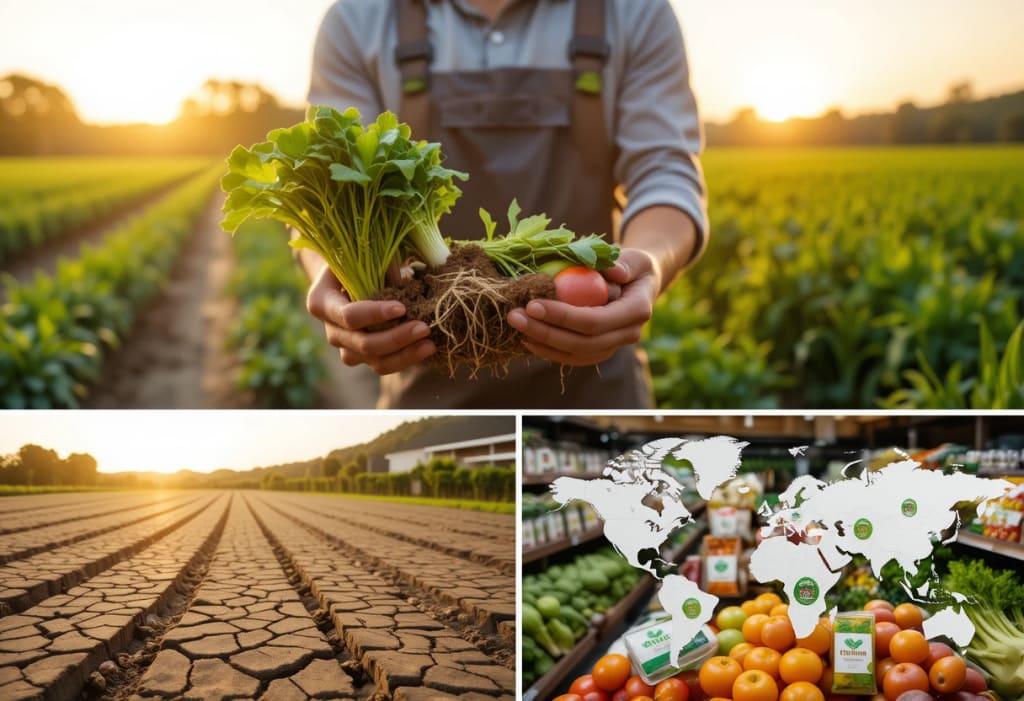
Arjun stood at the edge of his family’s farm, staring at the cracked soil that had once fed generations. The land stretched wide under the scorching sun, but the crops were failing. Years of pesticide use had stripped the soil of life, leaving behind nothing but dust and disappointment.
His neighbors whispered that it was only a matter of time before he sold the farm. Developers were already circling, eager to turn farmland into concrete. But Arjun wasn’t ready to give up. He had inherited this land, and with it, a responsibility—not just to his family, but to the earth itself.
“Maybe the soil isn’t failing,” he told himself one evening as he flipped through old books on agriculture. “Maybe it just needs to breathe again.”
That was the beginning of his journey into organic farming.
The Leap of Faith
Arjun sold his tractor to buy earthworms, compost bins, and heirloom seeds. Instead of spraying chemicals, he began making natural fertilizers from cow dung, neem leaves, and fermented plant extracts. At first, the results were discouraging. Yields were small, and weeds seemed to grow faster than his crops.
His neighbors laughed.
“Organic farming? That’s for hobbyists, not for someone trying to make a living,” one scoffed.
But Arjun pressed on. Slowly, the land began to change. Earthworms returned to the soil. The ground grew softer, richer. His vegetables—though fewer in number—were brighter, tastier, and healthier than ever before. When he brought a basket of tomatoes and cucumbers to the local market, customers noticed.
“These taste like the vegetables from my grandmother’s farm,” one woman said, buying more than she planned. Word spread quickly.
From Local to Lifestyle
At first, Arjun sold only at weekend markets. But soon, health-conscious families began seeking him out. They wanted vegetables free of chemicals, food that was closer to nature. Arjun’s stall became the busiest in the market.
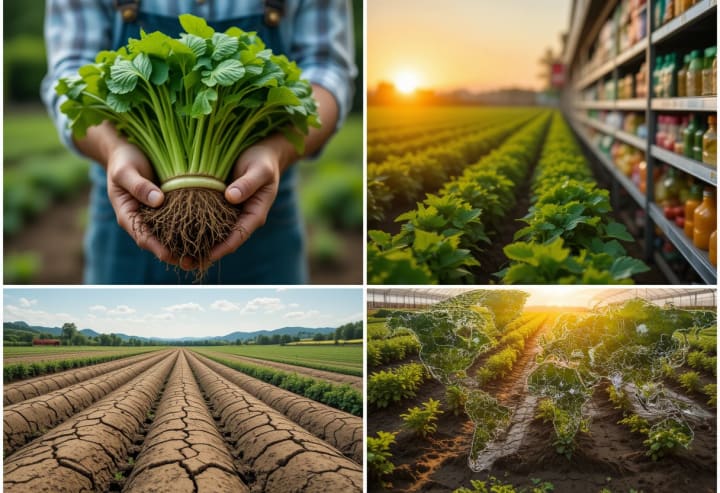
Sensing an opportunity, he did something that most farmers never considered—he branded his produce. He called it “PureEarth Organics.” The name was simple, but it carried weight. He used recycled paper bags stamped with a green leaf logo. He told customers not just what he was selling, but the story behind it: how he had revived dead soil and refused to poison the land.
Storytelling became his strength. People weren’t just buying vegetables—they were buying into a philosophy.
The Social Media Spark
One of his younger cousins, a college student, suggested taking photos of the farm and posting them online. At first, Arjun laughed.
“Who wants to see dirt and vegetables on the internet?”
But he agreed to try. His cousin uploaded photos of dew-kissed spinach, sunlit rows of carrots, and baskets of colorful produce. They added captions about sustainable farming and the importance of soil health.
The posts went viral. Within months, wellness bloggers and chefs were tagging PureEarth Organics. Orders started pouring in, not just from local towns but from cities miles away.
Scaling Up Without Selling Out
As demand grew, Arjun faced a dilemma: expand too quickly and risk losing the authenticity that made his brand special, or stay small and turn away business. He chose a middle path.
Instead of turning his farm into a factory, he built partnerships. He trained neighboring farmers in organic practices and brought them under the PureEarth label. Together, they created a farmer’s cooperative that shared knowledge, resources, and profits.
Supermarkets soon came knocking. They wanted PureEarth produce on their shelves. Arjun agreed—but on his terms. All packaging had to be eco-friendly, and every store had to display the story of the farmers behind the food.
By the time his products appeared in major cities across Europe and the U.S., PureEarth had become more than a farm. It was a movement.
Recognition and Responsibility
Awards followed. Arjun was invited to conferences on sustainability. Newspapers wrote about “the farmer who turned failure into fortune.” But for him, the true victory wasn’t fame or profit. It was watching other farmers switch to organic methods, inspired by his journey.
“Your story gave me the courage to stop using chemicals,” a farmer from another village told him. “Now my land is alive again.”
Arjun realized that his brand wasn’t just about selling vegetables. It was about proving that farming could be both profitable and sustainable. It was about giving the earth a chance to heal.
The Global Stage
Today, PureEarth Organics can be found in luxury supermarkets from London to Los Angeles. Its packaging still carries the same green leaf logo that Arjun designed in his kitchen. But the vision has grown bigger. The cooperative funds soil restoration projects, educates young farmers, and runs workshops in schools to teach children where their food comes from.
And through it all, Arjun still starts his mornings the same way: walking barefoot across his fields, touching the soil that once seemed broken beyond repair.
“Everything begins here,” he says softly, crouching to let the earth crumble in his palm. “If we take care of the land, it will take care of us.”
From a failing farm to a global organic brand, Arjun’s story is proof that resilience, sustainability, and smart branding can change not just a business—but the world.
About the Creator
Keep reading
More stories from waseem khan and writers in Humans and other communities.
Today, Tomorrow
I had a moment recently where I contemplated what is even genuine anymore in the digital space. Humans were bound to be predictable in our unethical use of AI, I cannot think of any popular user generated platform online that has not been exploited or oversaturated in one way or another. Money, power and dominance are the pillars of society, so it is no surprise the rapid development of AI coincides with the human condition.
By Malachai Houghabout 10 hours ago in Humans



Comments
There are no comments for this story
Be the first to respond and start the conversation.