
The Fake Smile
Hiding Pain Behind the Curve of a Lie

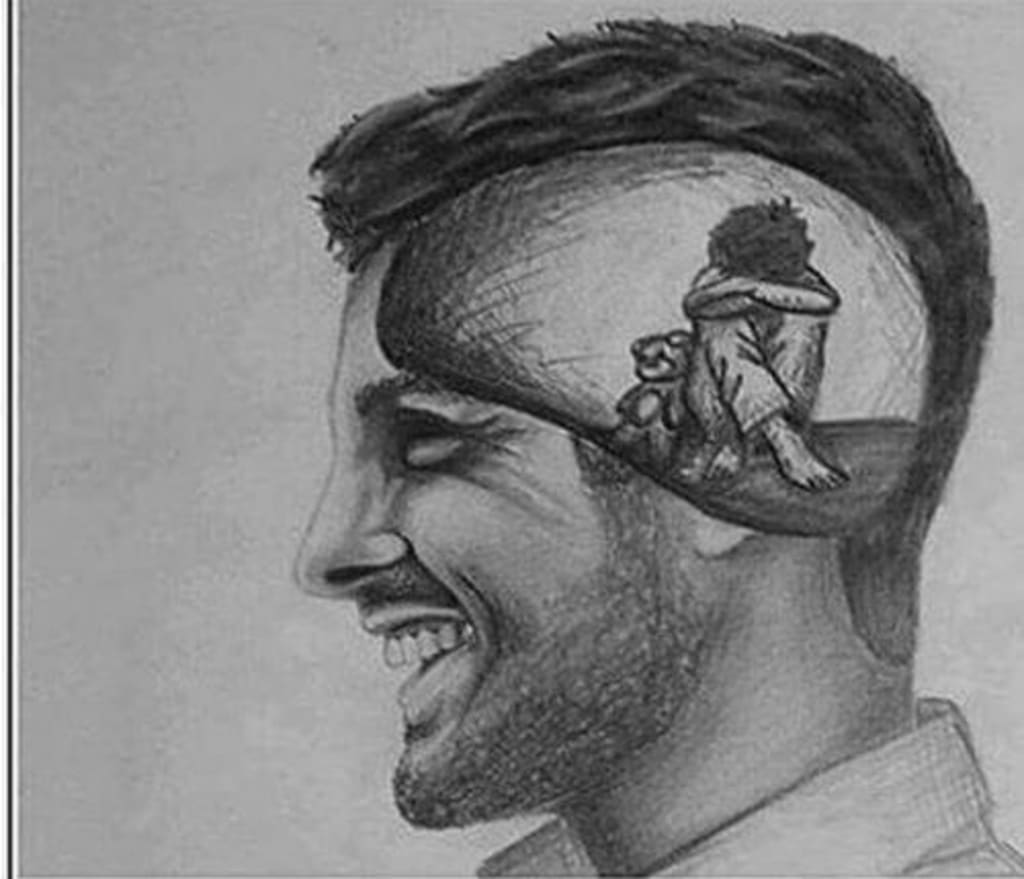
In the bustling halls of Rosewood High, where students laughed and shared secrets between classes, Ava Morgan stood out—not for being the loudest, the smartest, or the most popular—but for her smile.
Every day, without fail, Ava wore the same radiant smile. It was the kind of smile that made others feel better about their own lives. Teachers admired her positivity, classmates gravitated toward her energy, and even the janitor often said, “That girl’s smile could melt the coldest heart.”
But no one knew that behind Ava’s perfect smile was a storm she fought alone.
At home, life was far from perfect. Her mother, once a kind and loving woman, had become a shadow of her former self after Ava’s father walked out on them. Days turned into nights filled with silence, and the warmth of home turned cold. Ava became the adult in the house, managing bills, comforting her mother through breakdowns, and even working part-time at a local café to make ends meet.
But every morning, she looked into the mirror and whispered, “Smile. Just one more day.” And then she painted on that same fake smile that the world had come to expect.
It wasn’t that Ava wanted to deceive people. It was that she didn’t want to burden anyone with her pain. She believed her sadness would be too much for others to handle, so she buried it deep within her. Smiling became her mask, and behind it, she hid all the things she didn’t want the world to see: loneliness, exhaustion, and a heart slowly breaking.
Her best friend, Emma, always admired Ava but started to notice cracks in her cheerful armor.
“You’re always happy, Ava. Like, always. Doesn’t anything ever get to you?” Emma once asked with a curious smile.
Ava hesitated, then laughed it off. “I just believe in being positive. There’s always someone going through worse, right?”
Emma nodded, but the answer didn’t sit right.
One rainy afternoon, as Ava sat alone at the café wiping down tables, Mr. Harlan, a retired literature teacher and regular customer, walked in. He had always been quiet but kind, often reading books and leaving large tips. That day, he looked at Ava longer than usual and said gently, “You remind me of my daughter.”
Ava smiled. “Thank you. I hope that’s a good thing.”
He looked down, his voice trembling. “She always smiled, too. Until one day… she couldn’t anymore. None of us saw it coming. I always wonder what would’ve happened if I had looked past her smile.”
The words hit Ava like a wave. Her throat tightened, and for the first time in a long while, her eyes welled up in front of someone else. Mr. Harlan noticed.
“You don’t have to smile all the time,” he said softly. “You don’t always have to be okay.”
That night, Ava couldn’t sleep. His words echoed in her heart. For years, she had believed strength meant silence, that hiding pain made her strong. But maybe, just maybe, real strength was in sharing, in letting someone see behind the mask.
The next day, Ava didn’t put on the fake smile. When Emma saw her in the hallway with puffy eyes and no grin, she immediately rushed over.
“Ava? What’s wrong?”
And for the first time, Ava told someone the truth. She talked about her father leaving, her mother’s depression, the financial struggles, the loneliness, the pressure of pretending.
Emma didn’t say anything right away. She just hugged her. A long, warm, silent hug that said, You’re not alone.
From that day, Ava still smiled—but it was different. It wasn’t forced. It wasn’t hiding pain. It was real when it came, and when it didn’t, that was okay too. Her smile no longer needed to be perfect—it needed to be true.
She started journaling, joined a support group at school, and slowly rebuilt not just her life, but her idea of what it meant to be strong. She learned that healing starts the moment we stop pretending we’re fine.
And every time someone complimented her on her smile, Ava would thank them, but now she knew—what mattered more than the smile on her face was the peace in her heart.
---
Moral: Sometimes, the brightest smiles hide the deepest pain. Always check on your “happy” friends. And remember, it’s okay not to be okay. Real strength lies not in pretending—but in being real.
About the Creator
Mati Henry
Storyteller. Dream weaver. Truth seeker. I write to explore worlds both real and imagined—capturing emotion, sparking thought, and inspiring change. Follow me for stories that stay with you long after the last word.
Keep reading
More stories from Mati Henry and writers in Humans and other communities.
Suicide
The world saw Ali as a quiet boy with a gentle smile. He walked the same roads every day, greeted people with polite nods, and attended his college classes without complaint. But what the world didn’t see was the storm brewing inside his mind — a silent war he had fought for years without ever calling it by its name.
By Mati Henry 10 months ago in Humans
Problem-Solving Techniques For Couples Experiencing Communication Breakdowns
There are hardly any cases of communication breakdowns that are not caused by anything. When they are experiencing a conflict, couples tend to fight over superficial items like chores, money, time management, yet underlying reasons like neglect of feelings, being unsatisfied, or a lack of connection to each other are the underlying cause of the fight. To determine the root cause one needs to be honest and perceptive of emotions. Rather than merely looking at the disagreement at hand, partners can gain the advantage of posing reflective questions that help them understand more about what they are actually feeling. Do they want reassurance, validation, or support? Awareness of these emotional needs will be changing arguments into platforms of understanding and solution as opposed to cycles of blame and defensiveness.
By Mark Hipster4 days ago in Humans
Review of 'Man on the Run'
My wife and I saw Man on the Run, a nearly 2-hour documentary on Amazon Prime, about Wings, Paul McCartney's group that flew around the world from shortly after The Beatles broke up in early 1970 to shortly after John Lennon was murdered at the end of 1980, making a Beatles reunion forever impossible.
By Paul Levinsona day ago in Beat



Comments
There are no comments for this story
Be the first to respond and start the conversation.