
The Evolution of Genetics: From Mendel’s Laws to the Genomic Era and Its Impact on Science and Knowledge
Explore the journey of genetics from Mendel’s foundational experiments to the age of genome research, and how this science has transformed our understanding of heredity, life, and future discoveries.

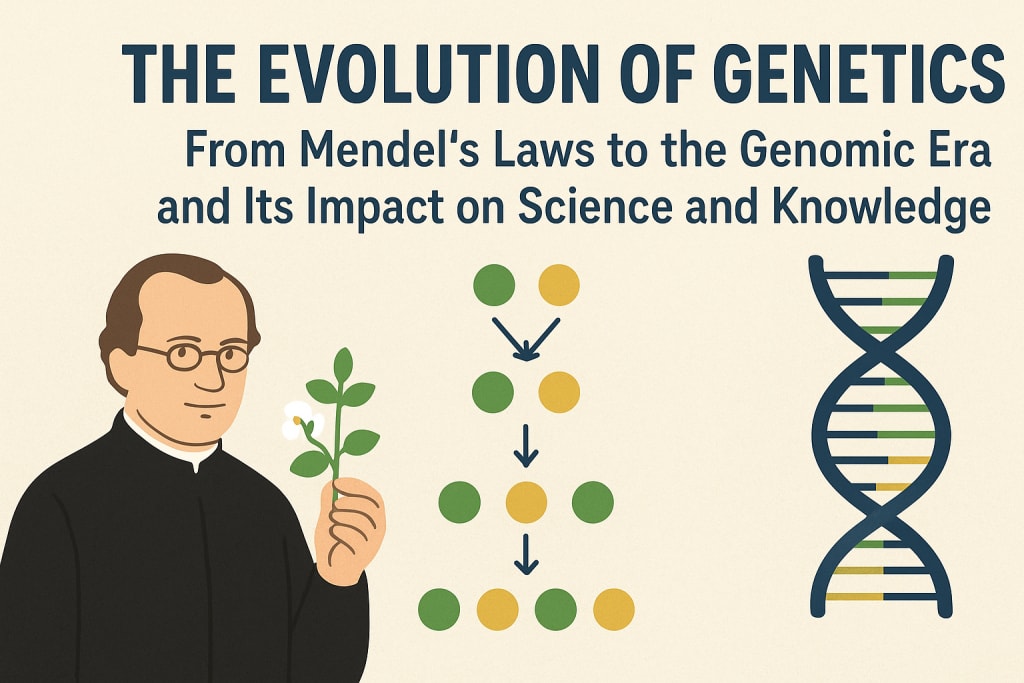
The Development of Genetics and Its Impact on the Future
Genetics is one of the most prominent sciences that has witnessed astonishing developments over the past two centuries, contributing to changing our understanding of life and opening new horizons in the fields of medicine, agriculture, and the environment. This science is concerned with the study of genes, the basic units that carry genetic information in living organisms, how they are transmitted across generations, and their role in determining biological traits. From the discovery of the laws of heredity by the Austrian monk Gregor Mendel in the nineteenth century to the sequencing of the human genome in the early twenty-first century, this field has come a long way, making it one of the most important pillars of modern science.
The Beginnings of Genetics
The roots of modern genetics go back to Mendel's experiments on pea plants, where he laid the first foundations for understanding how genetic traits are transmitted. Mendel discovered that traits are transmitted according to specific laws, such as the law of segregation and the law of free assortment, paving the way for a deeper understanding of the mechanisms of inheritance. The importance of Mendel's work was not appreciated during his lifetime, but it later became a cornerstone of this science. At the beginning of the 20th century, scientists began to link Mendel's discoveries to new developments in biology, especially after the discovery of the structure of DNA by James Watson and Francis Crick in 1953.
The discovery of the double-helix structure of DNA was a turning point in genetics. It provided a deeper understanding of how genetic information is stored and transmitted, and how genes can control cell function. Since then, scientists have begun exploring genes at the molecular level, leading to technologies such as genetic engineering and genome editing.
The Human Genome Project
In 1990, the Human Genome Project was launched, one of the most ambitious scientific projects in history. This initiative aimed to sequence all the genes in human DNA, approximately 3 billion base pairs. The project lasted for more than a decade and was announced complete in 2003. This achievement was a scientific revolution, allowing researchers to gain a more comprehensive understanding of the genes responsible for disease and how they interact with environmental factors.
One of the most important outcomes of this project is enabling scientists to identify genes associated with genetic diseases, such as cancer, diabetes, and heart disease. It has also helped develop advanced diagnostic technologies, such as DNA tests, which are now used for early detection of diseases. Furthermore, the project has contributed to the concept of personalized medicine, where treatments can be tailored based on each individual's genetic makeup.
Genome Editing Technologies
One of the most significant developments in genetics over the past two decades has been the emergence of CRISPR-Cas9, a revolutionary genome-editing tool. This technology allows scientists to cut, replace, or modify specific sections of DNA with pinpoint precision. This technology has raised great hopes for treating genetic diseases, such as cystic fibrosis and hemophilia, and even eliminating some types of cancer. However, its use raises profound ethical questions, particularly regarding the modification of human genes in embryos, which could lead to genetic changes that are passed on across generations.
Applications of Genetics in Agriculture and the Environment
The impact of genetics has not been limited to medicine, but has also extended to agriculture and the environment. Genetic engineering has contributed to the development of crops resistant to pests and harsh environmental conditions, increasing agricultural productivity and reducing the need for chemical pesticides. For example, genetically modified crops such as corn and soybeans are now grown in many countries around the world, helping to achieve food security.
In the environmental field, genetics is used to conserve biodiversity by studying the genes of endangered species. Techniques such as DNA cloning are also being used to save some rare animal species. However, significant challenges remain, such as ensuring that these interventions are safe and do not negatively impact ecosystems.
Challenges and Future Prospects
Despite the tremendous progress made in genetics, it still faces numerous challenges. Foremost among them are the ethical concerns associated with modifying human genes, particularly regarding the possibility of creating "designer babies" whose traits are pre-selected. There are also technical challenges related to the accuracy and safety of genome editing techniques, as errors can lead to unexpected results.
In the future, genetics is expected to continue to play a pivotal role in improving human life. Future developments could contribute to the complete eradication of genetic diseases, enhanced agricultural production, and environmental protection. However, this progress requires a delicate balance between scientific innovation and ethical responsibility.
Conclusion
Genetics is the embodiment of humanity's ability to understand the secrets of life and harness them for the common good. From its humble beginnings with Mendel's experiments to modern breakthroughs such as CRISPR technology, this science has proven to be a driving force for human progress. As developments in this field continue, the most important question remains: How can we use this power wisely to ensure a better future for all? Answering this question requires close collaboration between scientists, policymakers, and society at large to ensure that the fruits of this science serve humanity.
About the Creator
PositivePulse
💡 Sharing simple habits, health tips & lifestyle hacks.
🌱 Believe in small steps → big change.
📖 Writer on wellness | ☕ Coffee & positivity lover.
Reader insights
Nice work
Very well written. Keep up the good work!
Top insights
Compelling and original writing
Creative use of language & vocab
Easy to read and follow
Well-structured & engaging content
Excellent storytelling
Original narrative & well developed characters
Expert insights and opinions
Arguments were carefully researched and presented
Eye opening
Niche topic & fresh perspectives
Heartfelt and relatable
The story invoked strong personal emotions
Masterful proofreading
Zero grammar & spelling mistakes
On-point and relevant
Writing reflected the title & theme
Keep reading
More stories from PositivePulse and writers in Humans and other communities.
10 Simple Daily Habits to Transform Your Health and Life Forever (Backed by Science)
10 Small Habits That Will Change Your Health and Life for the Better Have you ever thought that simple changes could completely change your life? I personally tried this and discovered that going to bed earlier, drinking an extra glass of water, or even smiling can make a huge difference in my mood and health. In this article, I'll share with you 10 very easy habits that don't require much effort or money, and you can start them from home... today. 1. Drink Enough Water First of all, water is the body's fuel. When I forgot to drink water, I would feel tired and get headaches for no reason. Try to drink 6–8 glasses a day. If water alone is boring, try adding a lemon slice or mint leaves to give it a refreshing taste and motivate you to drink more. 2. Go to Bed Early and Get Enough Sleep Sleep isn't a luxury; it's a daily maintenance requirement for your body and mind. Try setting a fixed time for going to bed and waking up, and try to stay away from your mobile phone an hour before bed. I've noticed that 8 hours of sleep makes my day lighter and my nerves calmer. 3. Move, even if it's just 10 minutes. You don't need a gym or expensive equipment. Walking around the house, doing some indoor exercises, or even jumping rope will all get your body moving and stimulate your blood circulation. Try 10 minutes a day, and trust me... the first two weeks are enough to feel the difference. 4. Reduce sugar and fast food. Excess sugar gives you instant energy, followed by a drop in mood and energy. I tried reducing sugar for one week, and I felt my concentration improve and my skin became clearer. As for fast food, try replacing it with a homemade meal, even if it's just once a day. 5. Eat more fruits and vegetables. If you don't like vegetables, start with one vegetable or fruit you like and gradually increase the quantity. They're full of vitamins and fiber and help you feel full without gaining weight. 6. Try deep breathing. For five minutes every morning, sit quietly, take a deep breath, and exhale slowly. This small exercise relieves stress, improves your mood, and gives you a comfortable start to the day. 7. Take care of your personal hygiene. Regular showering, dental care, and even organizing your clothes all boost your self-confidence and maintain your health. Dress for yourself before anyone else. 8. Sit Properly. If your job requires prolonged sitting, try to keep your back straight. A good chair and adjusting your screen to eye level will save you a lot of pain in the future. 9. Smile and Think Positively. Even if you're having a tough day, smiling changes your body chemistry. Studies show that laughter reduces stress hormones and improves immunity. As for positive thinking, it's a form of training; the more you practice it, the more it becomes part of your personality. 10. Make Time for Rest. Not every minute has to be productive. Sometimes, sitting with a cup of coffee or reading a book you love recharges your energy. Rest isn't laziness; it's part of productivity. The Bottom Line: Change doesn't happen overnight, but it starts with a small step. Choose one or two habits from this list and start them today. Within a month, you'll notice that your health, energy, and even your mood have changed for the better.
By PositivePulse5 months ago in Lifehack
Minnesota and Illinois Invoke the 10th Amendment in Lawsuits to Block Federal Agents in Their Cities — Here’s Why That Matters
States Push Back Against Federal Enforcement Minnesota and Illinois have launched high-profile lawsuits invoking the 10th Amendment of the US Constitution in an effort to block or limit the actions of federal agents—particularly immigration enforcement officers—operating within their cities. The legal challenges mark a significant escalation in the long-running conflict between state governments and Washington over who has the authority to enforce immigration laws and how far federal power can reach.
By Aarif Lashari4 days ago in Humans
How to Succeed at the Benson Directory®
Congratulations and welcome to the Benson Directory® employee #22391! As our newest call handler, you will have the privilege of speaking with dozens of unique and interesting people on a daily basis as well as the opportunity to earn bonuses for high performance. Contained within this handbook you will find a set of ease to follow instructions designed to help you settle in to your new role and begin paving the way to success.
By S. A. Crawford2 days ago in Fiction




Comments (3)
Nice
I love this story it makes me feel happy ♥️♥️
So nice i love it we have to support each other are you agree with me