
The Difference Between Trustworthiness and Trust Is “Merit”
While trustworthiness is an impression, trust is built

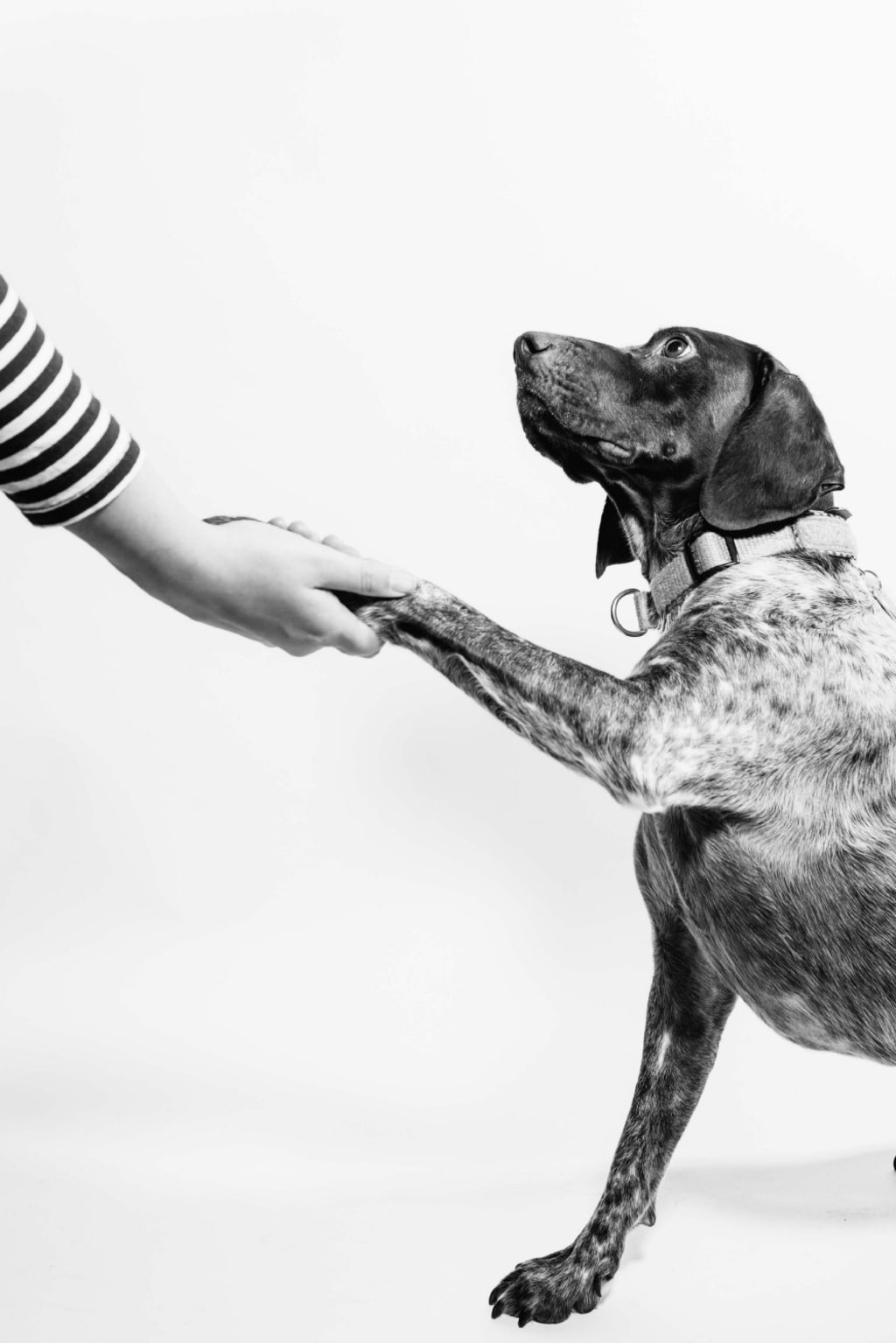
“Forgiveness is instant and unearned, but trust must be earned.” — Rick Warren
If you are a new reader, welcome on board, and thank you for deciding to stop by. If you are a returning one, I want you to know how grateful I am for your trust and loyalty!
This being said, it seems to me there is confusion around the word trust, you know that beautiful foundation for building healthy relationships. Did I already share with you a healthy relationship was a nurturing exchange in both directions? Well, now it’s done! 😁
What if we try to explore, together, the difference introduced in the title? Sounds like a plan, right? I guess you wouldn’t have clicked on the link if you weren’t interested in the first place, silly me! 🙈
Trustworthiness
Truth is some people “seem” to be trustworthy, while they are merely brilliant manipulators who mastered the art of mirroring:
When someone mirrors us, they are doing a range of things. They may mimic us, emulate us, be interested in us, share our interests, point out our strengths, gently point out our weaknesses, and simply reflect us. Healthy mirroring involves a person who sees us accurately, and who allows us to see them as well. It is safe. It is reciprocal. It is honest. It is kind. Having this sort of holistic mirroring leaves us feeling safe. Narcissistic mirroring is a whole other game. The process is less about seeing you in some meaningful way than it is about data gathering. — Dr. Ramani Durvasula
Interestingly, those fake trustworthy people sell to you, on purpose, the kind of connection you crave. As human beings, and before our lifetime of conditioning even started, we used to be secure interdependent people:
When I am physically interdependent, I know that I can do any physical task alone. But, I also recognize that you and I, working together, could do much better than, even at my best, I can accomplish alone. If I am emotionally interdependent, I am emotionally healthy and self-reliant, but I also admit my need for sharing the love. If I am intellectually interdependent, I can recognize that our analytical skills put together could take us to the farthest places I would have never been able to reach alone! — Reformulation of Stephen Covey work
The conditioning made us accumulate numerous limiting beliefs about ourselves and build an insecure attachment style:
- Fearful-Avoidant,
- Anxious-Preoccupied,
- Dismissive-avoidant,
- Some people might be a combination of two styles.
The style depends on our bond with our caregivers and how they loved us conditionally and/or inconsistently.
Some of us might have been raised by narcissistic parents, resulting in microtraumas, which sometimes could lead to CPTSD (Complex Post Traumatic Stress Disorder).
What happens during adulthood is that we tend to look for the patterns we know and perceive as the “norm” in our relationships. Manipulators, and especially malignant narcissists — described in the words of Psychoanalyst Otto Kernberg (1970) as sadistic psychopaths — know it and exploit it shamelessly.
Always keep in mind that Narcissistic Personality Disorder (NPD) is best known as the triplet {E, E, E}: Entitlement, Exploitation, and lack of Empathy, along with grandiosity pattern and need for control.
More to the point, after studying your attachment style — and they are experts in doing so in no time— they make sure to provide you with your familiar patterns no matter the kind of relationship — be it a life partner, a colleague, a friend, you name it!
It is their intentional strategy to seem trustworthy to you. Giving them your trust for free is the shortest road to abuse, anger, disappointment, frustration, sadness, disgust, confusion, guilt, shame, etc.
Sometimes, you may even lose your sanity especially when your self-esteem is low and that you are codependent (quick to self-doubt and self-loathing and having weak emotional boundaries).
Bear in mind that not only manipulators can violate your boundaries, be selfish, toxic, and unable to value your investment in the relationship and honor your feelings. Many kind souls may disappoint you because they don’t know better. Should you be interested, I explored the topic here.
As a general rule, trust is a gift you should only grant to the person who deserves it, no matter how trustworthy they might seem to be!
What does it take to build trust?
Trust as a verb is "built". It involves making deposits. The first and major one is showing integrity. Unfortunately, spotting duplicity requires making use of one's critical thinking skills.
And because most people are operating on auto-pilot without even being aware of it, their self-awareness human endowment, and the ability to question everything, including their own thoughts, are sadly out of service most of the time.
A non-exhaustive list of other deposits could be:
- Active listening, making the person we are interacting with feel seen and understood or what we call providing them with psychological air, as well as attending to the little courtesies and small kindnesses. The latter part is not the same thing as merely buying you gifts. It is about the "being" versus the "doing".
- Clarifying the expectations of every party from the relationship and getting them on the table in the most transparent way.
- Keeping promises: you need to understand that some people tend to build their hopes — in some cases their lives — around your promises. keeping your commitments is showing you care, and this could build bridges of trust that span the gaps of understanding. I mean, let’s be pragmatic! We will not be able to understand people from the very first interactions. It takes time, and that’s okay!
- Apologizing quickly and sincerely whenever screwing things up, as we all do. It takes a great deal of internal security and strength of character.
Making those deposits raises the “Trust Reserve”. In other words, the trust will not be easily lost. We can make mistakes and withdrawals from the reserve — or what Stephen Covey liked to call the “Emotional Bank Account” — and there will still be room to continue trusting the person and elevate it again.
Final thoughts
Unless you fully reconnected with your purest gut, that is having entirely re-written your invasive subconscious program, and which was never achieved by any human being, most probably— at least, according to my limited knowledge, giving your trust for free is seldom a winning strategy.
More often than you would like to believe, you granted your gift to a person in whom you saw great potential. Sadly, the potential is anything but enough whenever the person is not ready to break their denial circle.
You can continue believing in potential and risking to break your heart over and over again or decide your sacred trust needs to be deserved. The choice is yours!
About the Creator
Myriam Ben Salem
I'm a passionate grown kid, a writer, a storyteller, an edutainer (education & entertainment), a lifelong learner, a speaker, an unapologetic truth-teller, and a stoic life philosophy lover!
Keep reading
More stories from Myriam Ben Salem and writers in Humans and other communities.
The Gym Dog Was Eventually Granted a Warm and Loving Home When I Started Losing Hope
Dear future Dad/Mom, I might not know you yet, but I already love you. A wise person once said it best and I share their feeling. I love you! You don’t even know me! Maybe… but if many can hate for no reason, I can love! My name is Arbia. I love playing with humans and giving them tons of free hugs and kisses. I’d be beyond grateful if you could adopt me, save me from the cruel streets where I risk being killed, or at least abused for the only crime of being a defenseless stray dog, every day! Dad/Mom/even better for double love Dad & Mom (or Dad & Dad or Mom & Mom): you may find me most of the time in front of the gym. I count on your humane nature and generous heart!
By Myriam Ben Salem4 years ago in Humans
Regulation at the Threshold
Author’s Note — Flower InBloom This series is part of my ongoing work exploring personal sovereignty through nervous system awareness and structural alignment. I write not to dramatize change, but to understand how the body organizes through it. When we learn to regulate at the threshold, endings stop feeling like collapse and begin revealing architecture.
By Flower InBloom6 days ago in Humans
I was in a Toxic Relationship, with my Workplace
“You got that?” My ex yelled. His hands were balled into fists at his side. At six foot three, he towered over me. A normal person would have been afraid, but I looked up a video of George Lopez repeatedly saying, “I got this,” and showed it to him. I had grown used to this treatment, so much so that I didn’t blink when he ripped the phone from my hand and threw it across the room.
By Jade M.6 days ago in Confessions




Comments
There are no comments for this story
Be the first to respond and start the conversation.