
"The Delicate Dance of Breath and Swallow: Exploring the Intricate Balance"
The fact that you Can't Breathe and Swallow Simultaneously.
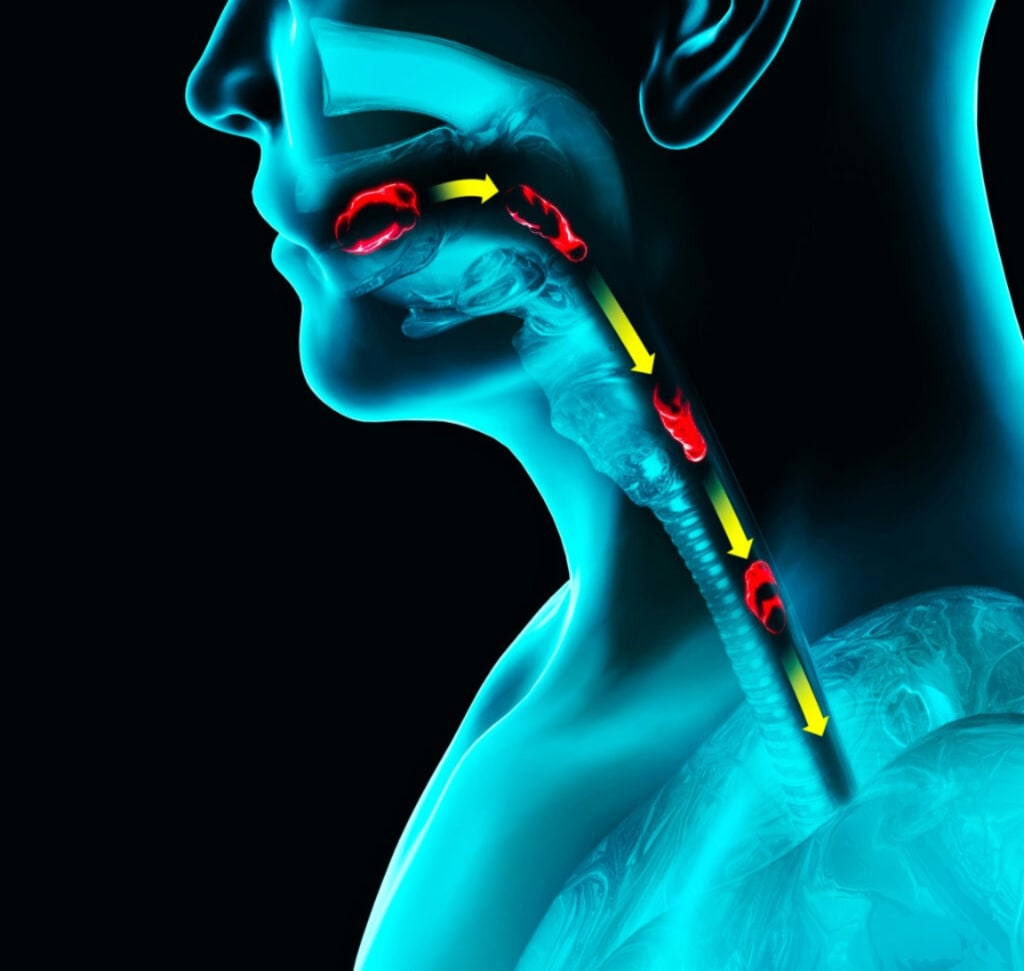
Introduction:
Breathing and swallowing, two fundamental processes that sustain life, seem deceptively simple, yet they engage in a delicate dance within the human body. However, one might not realize that the act of breathing and swallowing cannot occur simultaneously. In this exploration, we unravel the intricacies of this physiological phenomenon, delving into the anatomy, neural control, and evolutionary significance of the seamless coordination between respiration and swallowing.
Chapter 1: The Anatomy of Breathing and Swallowing
Understanding the inability to breathe and swallow simultaneously begins with an exploration of the anatomy involved in these processes. The respiratory and digestive systems are intricately connected, sharing a common passage—the pharynx. This shared pathway, while efficient, requires precise coordination to avoid interference between breathing and swallowing.
Chapter 2: The Pharyngeal Crossover
The pharynx serves as a nexus where the pathways for breathing and swallowing intersect. During normal breathing, air travels through the nasal passages or mouth, down the pharynx, and into the trachea. When swallowing is initiated, the epiglottis—a flap-like structure—covers the trachea to prevent food or liquid from entering, directing it instead to the esophagus.
Chapter 3: The Respiratory Pause
To facilitate safe swallowing, a brief interruption in breathing occurs. This respiratory pause is a protective mechanism to ensure that the airway is closed off during the passage of food or liquid through the pharynx. This pause is imperceptible in daily life but is orchestrated by a sophisticated neural control system to prevent the potential risks of aspiration.
Chapter 4: The Neural Control of Breathing and Swallowing
The coordination between breathing and swallowing is governed by a complex interplay of neural signals. The brainstem, a critical control center for vital functions, orchestrates the sequential activation of muscles involved in respiration and swallowing. Neural pathways ensure that these activities occur in a well-timed and mutually exclusive manner.
Chapter 5: The Role of the Epiglottis
The epiglottis, a cartilaginous structure in the throat, is a key player in the prevention of airway compromise during swallowing. Its flexible nature allows it to seal off the trachea temporarily, redirecting the bolus of food or liquid toward the esophagus. This rapid and precise movement safeguards the respiratory system during the intricate process of swallowing.
Chapter 6: Evolutionary Considerations
The separation of breathing and swallowing is not only a product of intricate anatomy but also holds evolutionary significance. The design ensures the protection of the airway, preventing foreign substances from entering the respiratory system. This separation likely evolved as an adaptive response to the challenges posed by the coexistence of breathing and eating in complex organisms.
Chapter 7: Disorders and Dysfunctions
Disruptions in the coordination between breathing and swallowing can lead to various disorders and dysfunctions. Conditions such as dysphagia, where swallowing is impaired, or aspiration, where substances enter the airway, underscore the importance of the precise interplay between these vital processes. Understanding these disorders is crucial for diagnosis and intervention in clinical settings.
Chapter 8: The Challenge of Talking and Eating
While breathing and swallowing cannot occur simultaneously, the human body has evolved to manage the dual tasks of talking and eating, which may give the illusion of simultaneous action. However, this dual-task coordination involves rapid alternation between speaking and swallowing, highlighting the adaptability of the respiratory and swallowing systems.
Chapter 9: Implications for Medical Procedures
The understanding of the inability to breathe and swallow simultaneously has practical implications for medical procedures. Interventions such as intubation, where a tube is inserted into the trachea for artificial ventilation, require careful consideration of the respiratory and swallowing dynamics to prevent complications.
Chapter 10: Embracing the Complexity
The inability to breathe and swallow simultaneously serves as a testament to the intricate design of the human body. As we navigate the daily rituals of eating, drinking, and breathing, our bodies seamlessly execute a series of coordinated movements that preserve our health and well-being. Embracing the complexity of this delicate dance between breath and swallow invites a deeper appreciation for the marvels of our physiological design.
Conclusion:
In the symphony of life-sustaining processes, the inability to breathe and swallow simultaneously emerges as a nuanced melody played out within the human body. From the intricate anatomy of the pharynx to the sophisticated neural control governing each movement, the separation of these essential functions showcases the precision and adaptability of our physiological systems. As we savor each breath and every swallow, let us marvel at the finely tuned coordination that ensures our respiratory and digestive harmony—a testament to the remarkable design that underlies our everyday acts of sustenance.
About the Creator
Keep reading
More stories from fatima zahra ajankar and writers in Humans and other communities.
"Beyond the 1%: The Astonishing Unity of the Human Genome"
Introduction: In the vast tapestry of human diversity, there exists an extraordinary thread that binds us together—our shared genetic code. While the visible differences among individuals are apparent and celebrated, the underlying truth is that all humans are more than 99% identical at the genetic level. In this exploration, we embark on a journey through the intricate landscape of the human genome, unraveling the profound unity that transcends superficial distinctions and connects us on a fundamental biological level.
By fatima zahra ajankar2 years ago in Humans
Whiskey At Dusk
Guess the whiskey was more important to you in the end, wasn’t it? It was more than the well-being of your friends; more vital than showing up to the places you promised you would and could come to; more critical of a matter than fulfilling your damn responsibilities and getting the press off your back.
By Snarky Lisa2 days ago in Humans




Comments
There are no comments for this story
Be the first to respond and start the conversation.