
The Day I Stopped Apologizing for Who I Am.
"Breaking free from the need to please — and finally embracing my true self."

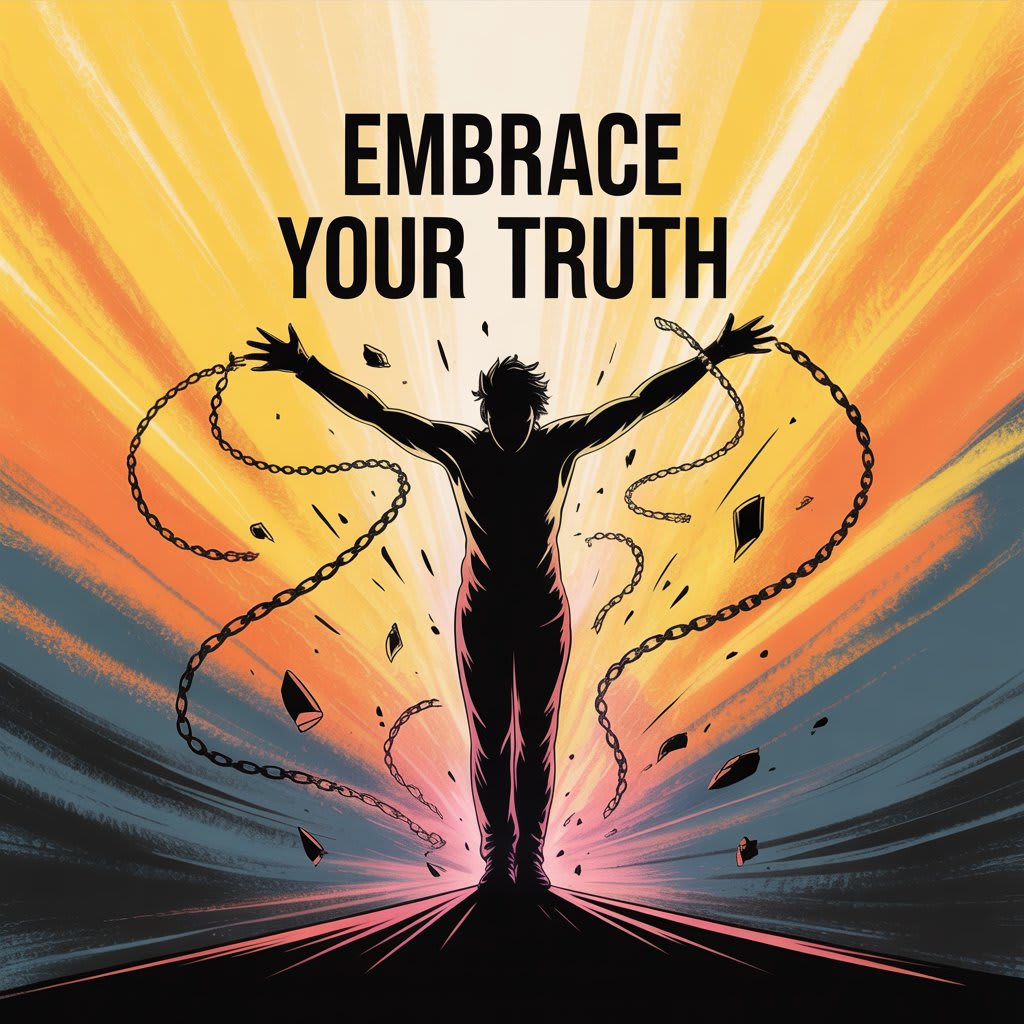
For as long as I can remember, I’ve been saying “sorry” for things that didn’t need apologies. I apologized for taking up space, for speaking my mind, for existing in ways that made others uncomfortable—even if only slightly. It became my default response, a reflex ingrained so deeply that I barely noticed it anymore.
I would say “sorry” when someone bumped into me on the street. I’d apologize for asking questions in meetings or for voicing my opinion. If I needed help, I’d apologize for being a burden. And if I made a mistake, even a tiny one, I’d say sorry until it felt like the only word that mattered.
Underneath all this politeness was a quiet fear: the fear of rejection. The fear that if I wasn’t agreeable, I wouldn’t be accepted. If I wasn’t perfect, I wouldn’t be loved. So, I kept apologizing, hoping to smooth over any ripples I caused.
The People-Pleasing Pattern
For years, I was a master at people-pleasing. I was a professional shape-shifter, molding myself into whoever I thought others wanted me to be. Friendly but not too bold. Smart but not intimidating. Kind but never confrontational. I said “yes” when I wanted to say “no.” I laughed at jokes that made me uncomfortable. I gave my time, energy, and boundaries away freely.
I thought this was kindness. I thought this was love. But over time, I realized it was something else entirely: fear disguised as generosity.
People seemed to like me. They told me so. But the truth was, they liked versions of me that weren’t real. I was like a mask, carefully crafted to please and avoid conflict. And beneath the mask, I was slowly losing myself.
The Moment Everything Changed
The turning point didn’t come with a grand event or dramatic confrontation. It came in a small, quiet moment that forced me to stop and reflect.
A close friend asked me for help on a project. It was last-minute, and I was already stretched thin with work and personal commitments. I felt exhausted, overwhelmed, and frankly, resentful. But as always, before I could think it through, I typed “Of course! I’ll help.”
That night, as I stared at the glowing screen of my phone, I felt a deep weariness settle in my chest. Not because of the work itself, but because of what I was doing to myself.
I realized I wasn’t being kind—I was being afraid.
I wasn’t helping because I wanted to; I was helping because I feared disappointing others, feared conflict, feared rejection.
That’s when I decided something had to change.
The Power of One Honest “No”
The next time someone asked for something that didn’t fit with my capacity or wellbeing, I paused. For the first time in a long time, I allowed myself to consider my own needs.
I responded with a simple message:
“I wish I could help, but I need to pass this time.”
No explanations. No apologies. Just honesty.
My heart raced as I hit send, bracing for disappointment or anger. But it never came. Instead, the response was kind and understanding: “Thanks for letting me know. Totally understand!”
That moment taught me one of life’s most important lessons:
The people who truly care about you don’t need you to shrink yourself to fit their expectations.
Unlearning the Apology Reflex
Since that day, I’ve been intentionally catching myself before the automatic “sorry” slips out. It’s harder than it sounds because it’s so deeply wired.
Instead of saying, “Sorry I’m late,” I say, “Thanks for waiting.”
Instead of, “Sorry to bother you,” I say, “Do you have a moment?”
Instead of “Sorry for asking,” I say, “I have a question.”
These small shifts remind me—and others—that my feelings and needs matter just as much as anyone else’s.
Little by little, the weight lifted. I started liking myself more—not because others were approving me, but because I was finally showing up as my true self.
The Myth of Being “Too Much”
One thing I’ve learned is that no matter what you do, someone will always tell you that you’re “too much.” Too sensitive. Too loud. Too emotional. Too quiet. Too bold.
But here’s the truth:
You’ll always be “too much” for the wrong people. And you’ll never be enough for yourself if you keep trying to be everything to everyone.
You don’t owe the world a watered-down version of yourself.
Living Authentically Is Freedom
Learning to say no, to set boundaries, and to stop apologizing for my existence has been liberating. It hasn’t always been easy—old habits die hard, and sometimes guilt creeps back in.
But with every honest “no” and every unapologetic “yes” to myself, I reclaim a little more freedom. Freedom to be real, to be messy, to be perfectly imperfect.
I’ve come to realize that true kindness starts with being kind to myself. That authenticity is the foundation for real connection. And that my worth isn’t determined by how much I please others, but by how faithfully I honor who I am.
Final Thought
If you’re reading this and recognize yourself in these words, here’s my message to you:
You don’t have to say sorry for existing.
You don’t have to apologize for your needs, your feelings, or your boundaries.
You are allowed to take up space.
You are allowed to have a voice.
You are allowed to be exactly who you are.
The day I stopped apologizing for who I am was the day I began truly living. And you can too.
About the Creator
FAIZAN AFRIDI
I’m a writer who believes that no subject is too small, too big, or too complex to explore. From storytelling to poetry, emotions to everyday thoughts, I write about everything that touches life.
Keep reading
More stories from FAIZAN AFRIDI and writers in Humans and other communities.
The Most Dangerous Lie We’ve Been Told About Happiness.
The Most Dangerous Lie We’ve Been Told About Happiness Why chasing happiness might be the very thing keeping you from it From a young age, we are taught that happiness is the goal of life. We're told to pursue it, choose it, and prioritize it at all costs. Social media feeds are flooded with quotes like “Happiness is a choice” and “Do more of what makes you happy.” It sounds empowering, even inspiring. But buried within this message is one of the most dangerous lies society has ever told us:
By FAIZAN AFRIDI10 months ago in Humans
Young Relationships Challenges Include Communication Boundaries And Balancing Personal Growth
Young relationships can be very exciting, passionate, and discovering but they are also accompanied by peculiar challenges. To survive the early romance, one has to master the necessary skills, including communication, boundary-setting, and catering personal growth to the needs of relationships. Young couples may find it challenging to deal with expectations and conflicts due to inexperience and emotional intensity as well as shifting identities. With the realization of typical obstacles, young partners will be capable of approaching relationships with consciousness, tolerance, and compassion to establish a base of non-toxic and healthy relationships and reduce misunderstandings, frustration, and emotional pressures.
By Robert Smith3 days ago in Humans
The Piggy Project
I’ve had so many names in this life I lose track of which ones were ever really mine and which ones I wore because someone needed me to. Some were handed to me before I had words to refuse them, before I knew what they meant, before I knew I could say no. Most weren’t meant to hurt. That doesn’t mean they didn’t leave marks. Marks that told me who I belong to, who I am by way of who claims me, recognizes me in the good and bad, who walks beside me.
By Fatal Serendipity5 days ago in Confessions



Comments (1)
I can relate to constantly apologizing for no good reason. It's like you're so afraid of upsetting people that you lose yourself. And being a people-pleaser? That's a slippery slope. How did you finally break free from that cycle?