
The Dark Truth About Valentine's Day
Dark Truth


Valentine’s Day, often seen as a celebration of love and romance, has a history that is far from the sweet chocolates and red roses we associate with it today. While many consider it a day of affection, the origins and commercialization of Valentine’s Day reveal a much darker side.
The Bloody Origins of Valentine’s Day
Valentine’s Day is believed to have originated from the ancient Roman festival of Lupercalia, a fertility celebration held on February 15. This pagan festival involved rituals that were anything but romantic. Priests would sacrifice goats and dogs, smearing the blood on young men, who would then use strips of the sacrificed animals’ skin to whip women. It was believed this act increased fertility.
As Christianity spread, the festival was renamed in honor of Saint Valentine, though the exact identity of Valentine remains debated. One legend suggests that Valentine was a priest who secretly conducted weddings for soldiers forbidden to marry under Emperor Claudius II. Another version claims he was executed for aiding persecuted Christians. Regardless of which version is true, his death was anything but romantic—Valentine was beheaded on February 14.
A Capitalist Construct
In modern times, Valentine’s Day has transformed into a billion-dollar industry. Companies capitalize on the idea of love, urging people to buy gifts, chocolates, and jewelry to prove their affection. According to the National Retail Federation, Americans alone spend over $20 billion annually on this holiday.
The idea that love must be measured by extravagant gestures pressures people into spending money they may not have. Marketing campaigns manipulate emotions, making individuals feel obligated to participate. Many are left feeling inadequate if they do not receive gifts, reinforcing the notion that love is transactional.
Psychological Impact and Social Pressures
While Valentine’s Day is a joyous occasion for couples, it can be an incredibly painful time for those who are single or recently heartbroken. Social media intensifies these feelings, showcasing idealized relationships that may not reflect reality. The pressure to be in a relationship can lead to feelings of loneliness, depression, and self-doubt.
Furthermore, even those in relationships may feel burdened by unrealistic expectations. The commercialization of love turns genuine emotions into forced displays of affection, leading to dissatisfaction when reality does not match the media-driven fantasy.
Gender Inequality and Unbalanced Expectations
The traditional customs surrounding Valentine’s Day often place the burden on men to plan elaborate surprises, buy expensive gifts, and orchestrate grand romantic gestures. Women, on the other hand, are often expected to be the recipients of these efforts. This reinforces outdated gender roles, perpetuating the idea that men must prove their love through financial means.
Additionally, the jewelry and flower industries have strategically marketed Valentine’s Day to ensure that their products become synonymous with love. Diamonds, which were once rare, are now an expected gift due to De Beers’ marketing campaign in the 20th century that convinced the world that “A diamond is forever.”
Exploitation of Labor
Another hidden truth of Valentine’s Day is the exploitation of labor in industries that supply its most popular gifts. The chocolate industry, for instance, has been linked to child labor and unethical farming practices. Major chocolate-producing countries like Ghana and Ivory Coast have long been accused of using child labor to meet the high demand for cocoa. Similarly, the cut-flower industry, particularly in Colombia and Kenya, relies on workers who often face poor working conditions and low wages.
While consumers purchase these items as symbols of love, they are often unaware of the suffering behind their production. The industry thrives on secrecy, ensuring that buyers remain oblivious to the harsh realities faced by laborers.
The Rise of Anti-Valentine’s Movements
As more people become aware of the darker aspects of Valentine’s Day, anti-Valentine’s movements have gained traction. Some individuals choose to celebrate Self-Love Day, focusing on personal growth and self-care instead of romantic relationships. Others participate in Galentine’s Day, a celebration of friendship rather than romantic love.
In some cultures, Black Day in South Korea is observed by singles who gather to eat black noodles and embrace their independence. Similarly, Singles Awareness Day (S.A.D.) has emerged as a humorous way to celebrate self-love and reject societal pressures surrounding relationships.
Should We Still Celebrate Valentine’s Day?
Despite its dark history and commercial nature, many still find joy in celebrating Valentine’s Day. The key to making it meaningful is to shift the focus away from materialism and towards genuine expressions of love.
Instead of expensive gifts, simple gestures like handwritten letters, quality time, or acts of kindness can be more meaningful. Choosing ethical brands and being mindful of purchases can also help reduce the exploitation tied to this holiday.
About the Creator
The Content Crafter
Hi, I’m Vikas! I write Content and Stories that hit the Feels and Education.
- 📚 Education
- 🍔 Food
- 🏥 Health
- 🔢 Angel Number
- 📝 Poet
- 📖 Stories
- 🏺 History
- ⭐ Review
- 🌌 Space and Earth
- 🎮 Games
- 👻 Horror
📲Please 🔔 Subscribe 🔔 Me ❤️
Keep reading
More stories from The Content Crafter and writers in Humans and other communities.
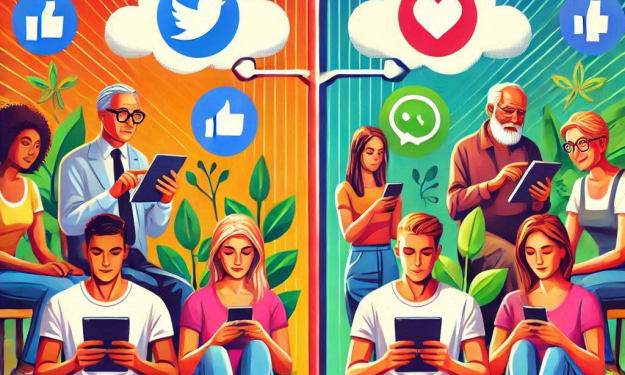
Social Media Advantages And Disadvantages || Advantages And Disadvantages Of Social Media
Social media has revolutionized communication, networking, and information sharing in the digital age. Platforms like Facebook, Twitter, Instagram, and LinkedIn provide individuals and businesses with endless opportunities.
By The Content Crafterabout a year ago in Humans
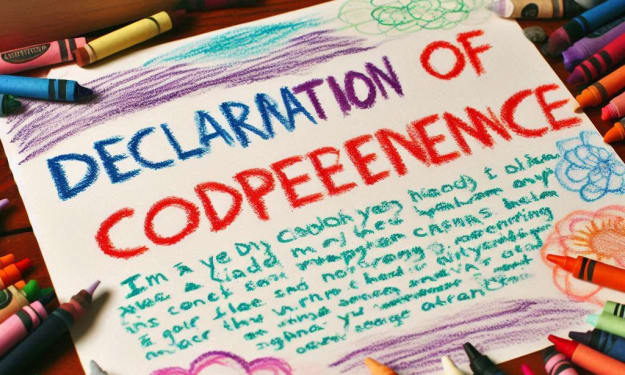
A Historic Declaration
We the People of the Husbands of the United States of America, in Order to form a more perfect Union, and I mean you...with me...establish Justice, insure domestic Tranquility, provide for the common defence, promote the general Welfare, and secure the Blessings of Liberty to ourselves, after Puberty, do ordain and establish this Declaration of Co-Dependence.
By Gerard DiLeo5 days ago in Humans
This Is What I Do When People Throw Rocks At Me
Rocks have been thrown at me for a greater part of my life. Some have been small and missed hitting me. When people don't get a reaction from me, they throw bigger rocks with a better aim. Many have been hurled at me with precision over the years. For a long time, I thought my only options were to dodge them or be crushed by them.
By Margaret Minnicks6 days ago in Confessions


Comments
There are no comments for this story
Be the first to respond and start the conversation.