
The Cry of Nature
Where will the owls go when the trees are no more?
Cape Horn - the southernmost headland of Tierra del Fuego at the tip of South America just above Antarctica. This was to be the end cap of my next journey in a life spent seeking out high after high of extreme adventures.
I’d just come down from hitting the monster waves at Teahupoʻo at a surfing competition in Tahiti. Renowned as the only known natural wave break in the world, breaking below sea level to form heavy, glassy waves of six to nine feet on up to 23 feet high. After the intensity of that experience, I spent some down time researching my next adventure and noticed an interesting parallel between the wave breaks at Teahupo’o and the treacherous Drake Passage where the Atlantic and Pacific meet. It is here that these great oceans converge as you round Cape Horn.
Discovered by Willem Schouten in 1616, he named the headland “Kaap Höorn” after his Dutch hometown in the Netherlands; however, in Spanish, it was interpreted as “Cabo de Hornos” which means “Cape of Ovens”. This was perhaps a more fitting description for Cape Horn was formed deep within the earth’s crust as a pool of molten magma which cooled and rose up as a giant rock formation. Southwest of the cape, the ocean floor rises sharply from 4,020 meters to 100 meters within just a few kilometers creating waves that could reach as high as ten story buildings – half the way up a cruise ship. This area is infamous for its gale force winds, extremely strong currents and floating icebergs which only add to the treachery.
In 1832, the naturalist, Charles Darwin, was one of the fortunate few to have successfully sailed around Cape Horn on the HMS Beagle. He had said of his journey, "One sight of such a coast is enough to make a landsman dream for a week about shipwrecks, peril and death." What a risk for Dawin to take to ultimately present the world with his theory of evolution by natural selection.
When the Covid pandemic hit, the shutdown of international borders forced my fiancée and I to look for alternative means of travel. To stay mobile, we embraced “van life” with a vengeance and spent those first few months in quarantine building out our new Sprinter van equipping it with a kitchen, shower, solar panels, Wi-Fi, and the comfort of a full-sized bed.
Our journey began in Alaska at Prudhoe Bay, the beginning of our 18,640 mile drive down The Pan-American highway, the longest motorable highway in the world. Venturing south through Canada, we re-entered the United States parking overnight for free on federal lands or we’d hit the state parks or other less picturesque spots which included some very sketchy truck stops and the occasional discount store parking lot. Along the way, we hiked, biked, surfed, and swam as we continued deep into Mexico. The one break in the Pan American Highway comes as you cross from Central into South America via the Darién Gap. We avoided the northern end of the Darién which even the Panamanians admit is rife with various gangs, drug smugglers, human traffickers, illegal migrants, hostile indigenous tribes, and paramilitary groups hiding out in the remote jungle.
We ended in Ushuaia, the capital city of Tierra del Fuego, “land of fire”. It was the week before the December Solstice when the days are longest. Splurging on a hotel room, we went out for dinner enjoying a simple feast of steaming king crab legs, the tender pieces of pink lump crab meat made even more sumptuous with a dip into hot drawn butter.
The next day we explored Tierra del Fuego National Park and saw firsthand what happens when man tampers with the execution of Darwin’s theory of evolution thinking he can outwit natural selection. In 1946, Beavers from Canada were introduced in a misguided attempt to start a fur trade. With no bears, wolves or other natural predators to control the invasive population, the beavers felled the trees weaving the limbs and trunks into makeshift dams which blocked the flow of freshwater streams creating stagnant pools which we learned from our guide would often flood the land. The remaining pale dead beech trees stood there like remnants of a ghostly forest.
On the third day, we set out before daybreak and took a small zodiac boat to Cape Horn. Appearing out of the fog and the mist, the first sight of it convinced me there was some sinister energy emanating from that rock. Was this because it held the tales of many a sailor’s doom? With the opening of the Panama Canal in 1914, commercial ships found safe passage and no longer charted their courses here, but in the past 400 years, 800 ships went down here drowning some 10,000 souls. A monument was erected in their honor and with deep reverence, I walked up the hill to touch the cold metal artwork with the cut-out image of a soaring albatross.
In “The Rime of the Ancient Mariner”, Samuel Taylor Coleridge’s poem tells the story of a young man who shot an albatross that had visited his sailing ship. The crew believed the bird had saved them by bringing the south wind that helped free the ship from the death grip of the icy Antarctic. For fear of bad luck, they forced him to wear the albatross as a noose around his neck. Since then, the albatross has been a metaphor for a burden so great, it feels like a curse.
That night I was startled out of a frightful dream by a sound so alarming it reminded me of that famous painting, “The Scream”. Who could forget the image of that tortured soul standing on a bridge against a fiery sunset, his hands framing his twisted face, eyes bulging with horror at what he saw? Oddly, the original German title of Munch’s painting wasn’t “The Scream”. It was “Der Schrei der Natur”. The Cry of Nature.
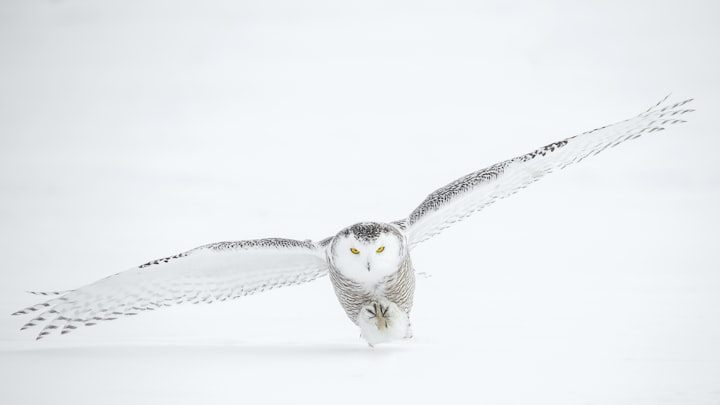
I grabbed my jacket and went outside. Though near midnight, it was still daylight in what is known as a “white night”. I heard it again, the scream, and looked up to see a pale white barn owl, his eyes glaring at me as he stood sentinel at the top of a tall fir tree. In the war between the beavers and the forests of Tierra del Fuego, where will the owls go when the trees are no more?
Slipping back into bed, I wrestled with my thoughts till dawn wondering when man would meet his own evolutionary end. Would we become extinct through natural forces or by the force of our own arrogance? Was this the true albatross hanging around our necks?
Like the wave breaks at Teahupoʻo and Drake Passage, perhaps the danger lies just below the surface of our own human consciousness. Once understood, we could catch the momentum and ride this great evolutionary wave forward, but is we who must adapt to nature so that we continue to evolve.
All we have to do is listen to the cry of nature and of man’s own silent scream.
About the Creator
Keep reading
More stories from writers in Humans and other communities.
Whiskey At Dusk
Guess the whiskey was more important to you in the end, wasn’t it? It was more than the well-being of your friends; more vital than showing up to the places you promised you would and could come to; more critical of a matter than fulfilling your damn responsibilities and getting the press off your back.
By Snarky Lisa4 days ago in Humans
Why Some People Detach From Fear-Driven Thinking.
Fear-driven thinking dominates the mind when uncertainty, danger, or perceived threats arise. It triggers reactive responses, heightens stress, and narrows decision-making. Yet, some individuals navigate life without being controlled by fear, detaching from automatic anxiety-driven thought patterns. This detachment is not denial or avoidance; it is a conscious or developed capacity to observe, regulate, and respond to fear without being dominated by it. Understanding why some people detach from fear-driven thinking reveals key cognitive, emotional, and behavioral strategies that promote resilience, clarity, and purposeful action.
By Wilson Igbasi3 days ago in Humans
The Blue Ridge Stalker
Tom had left the Ford down the way, its spark plugs finally exhausted and no mechanics for a dozen miles back through the foothills to Strossburg. No matter, he had worn his boots—almost as if he planned for this to happen. The puzzle he sought to solve emanated from the woods clinging to the slopes above; the valley behind held no mysteries.
By Stephen A. Roddewig7 days ago in Fiction
Seattle Nightlife Report: Pony
Mid-winter Friday night. Early but already so dark. The days are getting longer but 6 PM is still pitch black. “Firepit!” You declare things after just a few seconds of solemn thought – not a request or suggestion, not a demand. Last week you walked around saying, “Hot tub?” to anyone who would listen. Or one afternoon you pointed at two men holding hands as they crossed 12th Avenue, looked me in the eyes and said, “Boyfriends.”
By Joe Nasta | Seattle foodie poet6 days ago in Wander


Comments
There are no comments for this story
Be the first to respond and start the conversation.