
THE COST OF ARROGANCE!...
Arrogance can hamper personal development or devastate a thriving business. Lesson from the biggest business decision mistake in the history of United States!


Can you describe your personality? You can easily do that by listing those personal traits which you believe are easily associated with you. For example, you are kind, you are honest, you are humble, you are generous, etc., etc. Unfortunately, there are so many personality traits and some are seriously negative. Negative personality traits can hamper your personal development as well cause serious damage to business.
One of these negative traits is arrogance. Arrogance is described as a personality trait characterized by an inflated sense of self-importance, superiority, and entitlement. It hampers healthy social interactions and relationships by belittling or dismissing others, dominating conversations, refusing alternative viewpoints, displaying a sense of entitlement, boasting or exaggerating accomplishments, ignoring constructive criticism, and acting condescendingly. The effects of arrogance include strained relationships, communication barriers, limited personal growth, and a negative impact on reputation.
Unfortunately, when you are arrogant you can make decisions that can seriously impact on others negatively. This is the case for many corporate leaders who through bad decisions brought about by their arrogance, have caused their companies to miss out on big opportunities or make timely changes needed to make their companies secure and continue on the growth path. When this happens workers, shareholders and even the government is negatively impacted. Workers might be affected by layoffs; shareholders miss out on dividends and the government lose tax revenue in multiple ways.
Let us consider the case of Western Union. During a time when Western Union held the position of the world's largest company, Alexander Bell invented the desktop telephone, recognizing its groundbreaking impact on global communication. However, he soon realized that substantial investment was essential to turn this innovation into a reality.


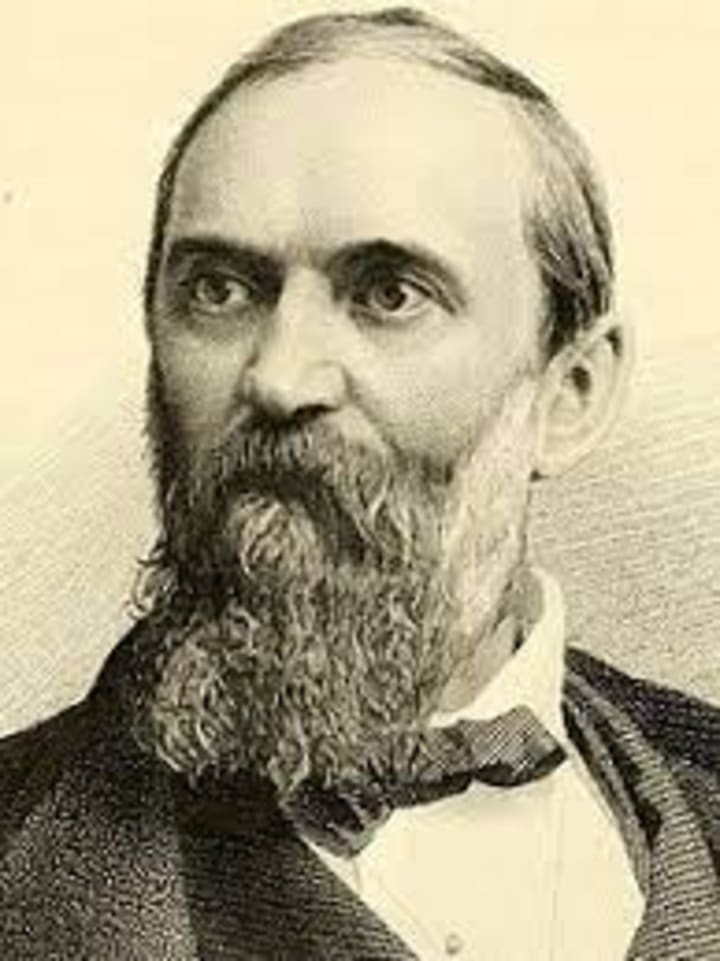
Unfortunately, Bell lacked the necessary funds. Determined, he decided to approach financially robust corporations for potential investment. His first stop was Western Union, back in 1876. Bell proposed that Western Union acquire the patent rights to his invention for $100,000.00. Regrettably, the President of Western Union at the time, William Orton, dismissed Bell's invention, likening it to a mere toy. Orton's decision has since been regarded as one of the most ill-advised in American history, as no patent has ever commanded such immense value as Bell's.

Undeterred, Bell established the Bell Telephone Company in 1877 with the assistance of his father-in-law, Gardner Green Hubbard. In 1885, Bell and his father-in-law founded the American Telephone and Telegraph Company, which eventually acquired Bell Telephone Company. Subsequently, the American Telephone and Telegraph Company underwent a name change, becoming AT&T Inc. To this day, AT&T Inc. stands as the largest telecommunications company globally in terms of income. The company's revenues from its telephone operations alone averaged around $118.2 billion per year as of January 2023.
In contrast, Western Union's revenues until January 2023 amounted to a modest average of $4.48 billion per year. This stark contrast in financial performance showcases the enduring success and prominence of AT&T Inc. within the communications industry.
There might be other factors that could lead to Western Union’s dismal performance today, but it is difficult to avoid pointing a finger to that William Orton’s fateful decision when you look at the overall picture. Orton’s description of Bell’s invention as a toy can only be described as one born out of arrogance. It is clear that Orton suffered from the following aspects of arrogance:
Closed-mindedness: He thought he had all the answers and as such he was not receptive to new ideas, perspectives, or feedback from others. This closed-mindedness prevented him from considering alternative viewpoints or gaining new insights, which are essential for company growth.
Lack of self-awareness: It is also very possible that Orton was struggling with self-awareness. Most likely he was blind to his own weaknesses, flaws, or areas where improvement was needed. Without recognizing and acknowledging these aspects, personal development becomes stunted because there is no motivation or willingness to address them. If you make decisions for an organization those decisions might reflect this weakness too.
Ineffective communication and collaboration: The word ‘toy’ used by Orton referring to Bell’s invention shows that Orton was not an effective communicator. Arrogant people are not effective communicators. They are dismissive. They don’t care. Effective communicators chose words very careful because they care. Most of the time they want to build or mend things. They know that to achieve that they need the cooperation and collaboration of others. For that reason, they cannot use words that will simply close doors.
Limited growth mindset: It is also very likely that Orton had a fixed mindset. Had he a growth mindset he would have been a believer in potential for growth and improvement, which is vital for personal as well as organizational development. Because of his fixed mindset he was unwilling to take on new challenges, learn from failures, or push beyond his comfort zone.
Missed learning opportunities: It is highly likely that Orton did not care about personal development. His arrogance might have prevented him from seeking out new knowledge, skills, or experiences because he believed that he already possesses superior knowledge or abilities. Consequently, he missed out on valuable learning opportunities that could contribute to his personal and his company’s
About the Creator
Juma Killaghai
Juma Killaghai is a research chemist with over 30 years of experience in the field of research and development. He has a Master’s degree - Organic chemistry, from the University of Dar es Salaam. He resides in Dar es Salaam, Tanzania
Keep reading
More stories from Juma Killaghai and writers in Humans and other communities.
Sacrificing Common Sense and Lives in the Pursuit of Commercial Interests
Introduction In various situations, common sense and even lives are disregarded to serve commercial interests. The field of health is particularly susceptible to this, where unethical practices are driven by the pursuit of financial gain. This article, the second in a series, sheds light on the cholesterol myth, highlighting the dangerous treatments imposed on patients and the suppression of effective approaches due to their lack of commercial value. While not exhaustive, the information presented here supports the argument that common sense and patient well-being are often sacrificed for profit.
By Juma Killaghai3 years ago in Humans
Guard Your Battery
Why are some people so attractive just by standing there? It’s not because they are "likable," but because they don’t need everyone to like them. I realized later that truly charismatic people allow themselves to be criticized, but they never criticize themselves. They never try to please the world; instead, the world stops to watch them.
By Emily Chan - Life and love sharing6 days ago in Poets



Comments
There are no comments for this story
Be the first to respond and start the conversation.