
The Closed Door of Bakshi Sahib
Sometimes life itself teaches the lessons pride refuses to learn.

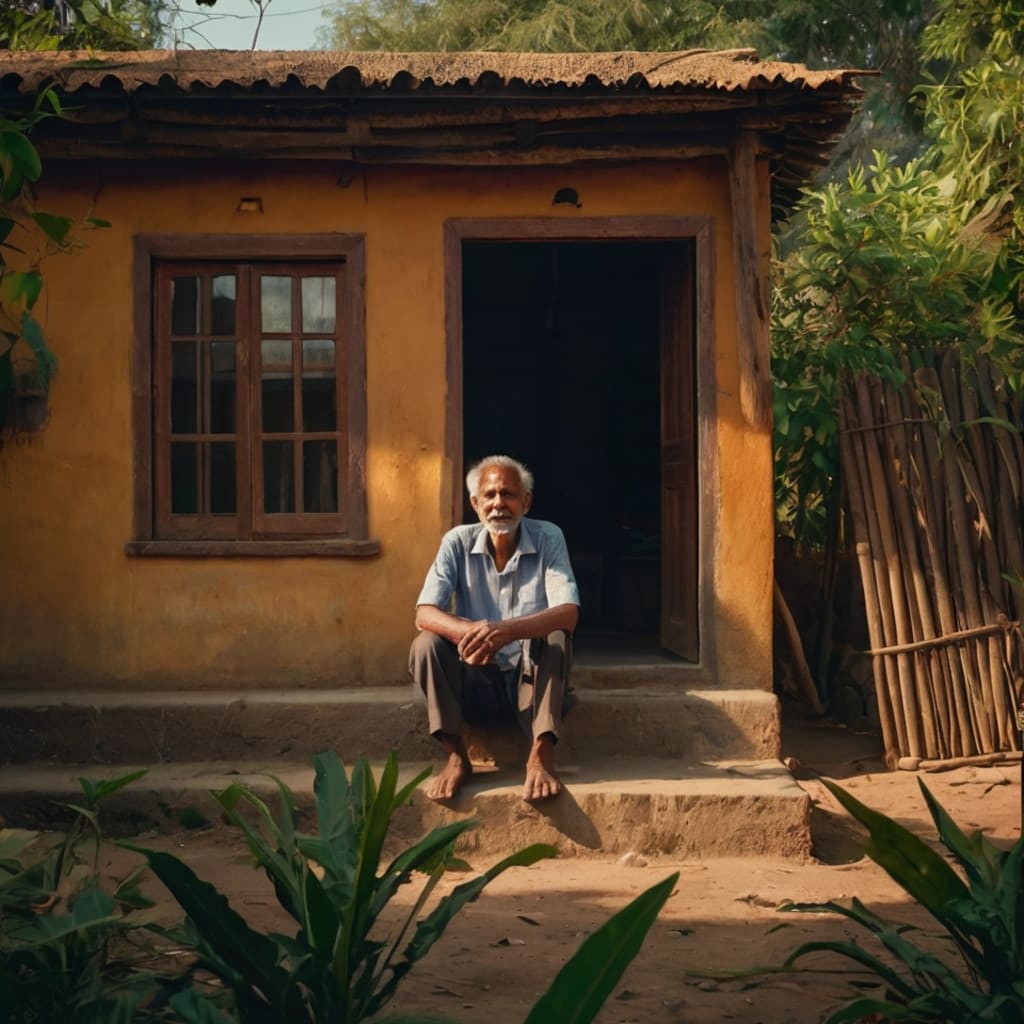
Bakshi Sahib’s Closed Door
Bakshi Sahib’s door was almost always shut.
The only time his window opened was when he had to toss out fruit peels—or to scold the neighborhood children.
His sharp voice would echo through the narrow street:
“Can’t you sit quietly in your own homes? You’ve turned the whole street into a circus! Were you born just to break windows? Get lost—all of you! I don’t want to see a single one of you out here again!”
The children would scatter, hiding behind doors and walls until his angry face disappeared from the window. Then, moments later, they’d be back—laughing, running, and playing as though nothing had happened.
Bakshi Sahib never liked children. In fact, he never allowed even his own sons to play outside. If they ever dared step out, he’d drag them back by the arm.
And afterward, his wife would have to endure a long lecture.
To him, no one in the neighborhood was worth his respect.
He believed himself above them all—too dignified to mingle with ordinary people.
As the years passed, his sons grew up and left home, one by one. They had to.
There was no room in that suffocating house for dreams—or laughter.
But even then, Bakshi Sahib blamed his wife.
“If you had raised them properly,” he would say bitterly, “they wouldn’t have left their father’s house!”
His poor wife never argued. She would silently listen, and when he went out, she would quietly pray to God—for peace, for forgiveness, for her children.
She missed her sons terribly. Sometimes she would sit alone, remembering the days when they were small, their laughter echoing through the house.
She could still see them—Bilal, Daniyal, and Nahal—sitting cross-legged around her one evening, their eyes full of dreams.
“Ammi,” Bilal had said, his face glowing with ambition, “one day I’ll earn enough money to buy a palace for you and Abba!”
“And I’ll buy a huge garden,” said Daniyal, his eyes lighting up. “It’ll have every kind of fruit tree, bright flowers, swings, and fountains!”
The youngest, little Nahal, clapped his hands.
“And I’ll buy an airplane! Then I’ll take Ammi on a trip around the world!”
Their mother had smiled, her heart full of love.
“And my wish,” she said softly, “is that my three sons always stay with me—like the light of my eyes.”
Nahal giggled, “Then we’ll all live in Bilal’s palace, play in Daniyal’s garden, and travel in my airplane!”
They all burst out laughing, the sound filling the house with warmth.
Now, years later, those memories made her both laugh and cry.
Meanwhile, Bakshi Sahib remained the same—proud, harsh, and full of himself.
One afternoon, he sat among a few acquaintances, boasting as usual.
“You know,” he began, puffing his chest, “that city officer—he might hold a high post now, but he’s nothing more than a baker’s son!”
His friends looked uneasy.
“Bakshi Bhai, be careful what you say,” one whispered. “Walls have ears, you know.”
But Bakshi Sahib smirked.
“Ha! Why should I care? Truth is truth! His father used to polish shoes in the streets. People should never forget their true place!”
That “truth,” however, reached the wrong ears.
Within days, a few government men arrived at Bakshi Sahib’s door.
They took him away for questioning on orders of that very officer—Nawaz Khan.
What happened next became the talk of the town.
After several days in custody, Bakshi Sahib returned home—a different man.
His arrogance was gone, his loud tongue silenced.
The man who once roared like a lion now spoke in whispers.
For the first time in his life, his wife knew peace.
There were no more insults, no more shouting.
It seemed that reality had finally humbled him.
As they say, when a mountain rises before the camel, it finally learns its true height.
When his sons heard of their father’s change, they came back home.
Time had softened their resentment; they wanted to rebuild what was lost.
Together, with their father’s advice and blessing, they bought a large, beautiful house surrounded by a lush green garden.
Their mother, overjoyed, searched for three kind-hearted, graceful brides—each one like a princess in her eyes.
Soon, her sons were married, and laughter once again filled their lives.
The new house echoed with joy, the fragrance of fresh flowers, and the voices of grandchildren playing in the garden—the same sound Bakshi Sahib once hated so much.
Now, when he looked out of the window, he didn’t shout anymore.
He smiled.
Sometimes, he would sit quietly under a tree in the garden, watching his sons and their families together—the life he once thought he didn’t need.
And in those quiet moments, he finally understood what true wealth was:
Not palaces, nor gardens, nor airplanes—
But love, forgiveness, and family.
---
Moral:
Arrogance isolates a man, but humility brings him back home.
About the Creator
My First Time Skiing and I Got Lost, Alone, in the French Alps
Looking back, I can trace some of my life’s biggest adventures to a simple action from my sister. She’d introduced me to Tommy (a very long time ago), a colleague of hers, who had overshared his penchant for Italian-looking women, and I ticked that box.
By Chantal Christie Weiss3 days ago in Humans
Jessica Alba: Fame, Struggles, and the Life Beyond Hollywood
Fame often looks glamorous from a distance. Bright lights, red carpets, and smiling photographs can make celebrity life appear effortless. But behind many success stories are years of struggle, uncertainty, and quiet determination. Jessica Alba’s journey is one of those stories. Long before she became a familiar face in Hollywood, she was a young girl dealing with health challenges, frequent moves, and the pressure of chasing a dream that seemed distant. Over time, Jessica Alba built a career that moved beyond acting into business and family life. Her path reflects resilience, ambition, and personal growth. The story of Jessica Alba is not only about movies and fame. It is about persistence, identity, and finding purpose beyond the spotlight.
By Muqadas khan6 days ago in Humans


Comments
There are no comments for this story
Be the first to respond and start the conversation.