
The Clock maker's Gift
Finding Peace in the Rhythm of Life.

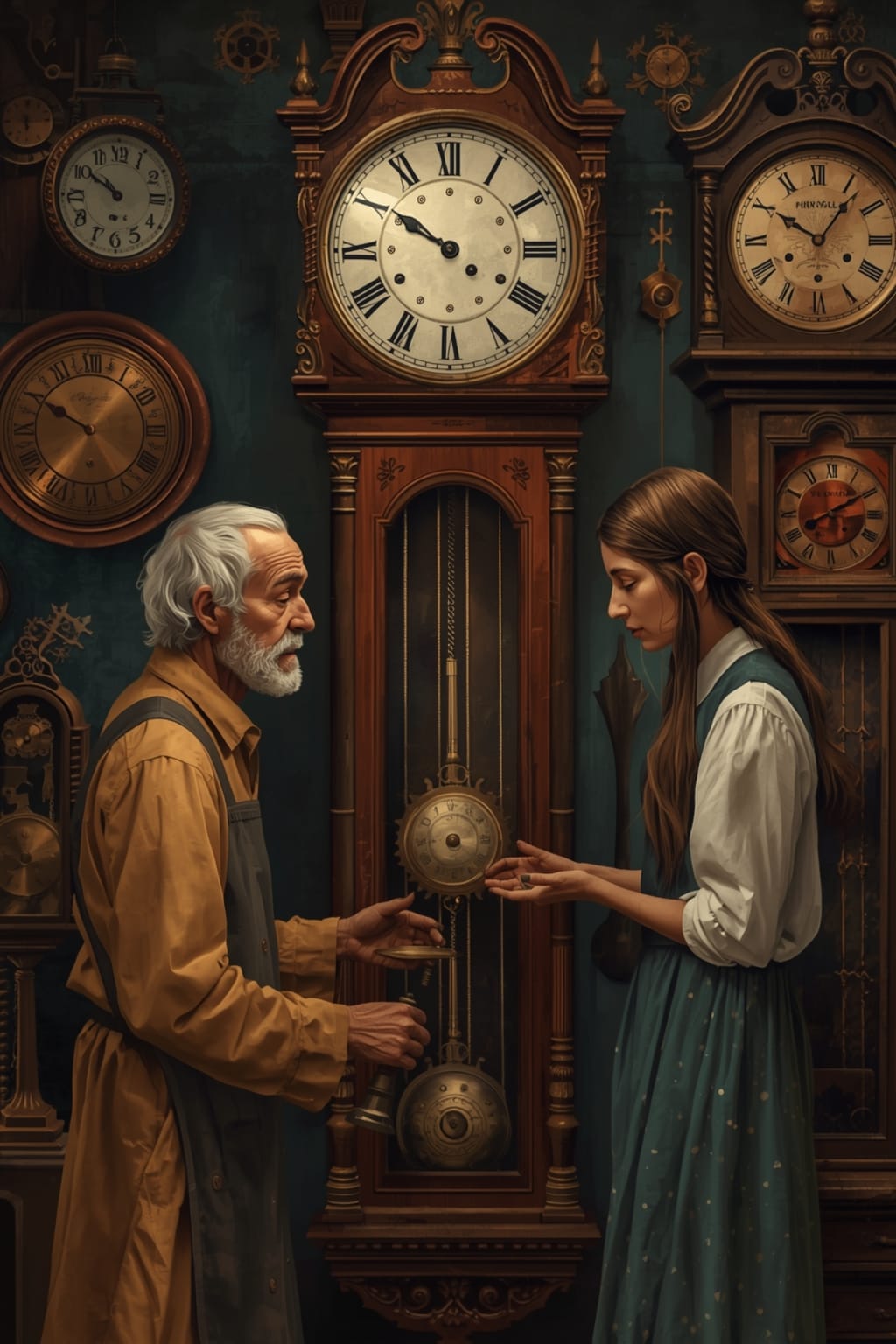
In the heart of a small, bustling town, there stood a clock shop that had been passed down through generations. Its white-painted windows were streaked with the dust and rain of many years, and the faint chime of clocks inside created a gentle, steady rhythm that seemed to slow the world outside. The owner, Khalid, had lived all his life among ticking gears, spinning pendulums, and the quiet melody of measured time. He was a man of sixty-five, with silvering hair, calm eyes, and hands that moved with unwavering precision.
Khalid’s life had been simple, devoted to his craft. He never married, believing that his work and his shop were his true companions. The clocks in his store weren’t just tools to tell time—they were living reminders of patience, precision, and the careful balance that life demanded.
Across the street lived Areeba, a woman in her late twenties with a spirited energy that often bordered on impatience. She ran a stationery shop and had little patience for small delays or mistakes. Over the years, her sharp tongue had clashed repeatedly with Khalid’s calm demeanor. Minor disagreements—about deliveries, parking spots, and even the occasional noise from Khalid’s repair work—had escalated into a years-long feud. The neighbors often whispered about them, wondering if reconciliation was even possible.
One particularly stormy afternoon, Khalid was struggling to move a massive grandfather clock into the back of his shop. Rain slicked the cobblestones, and the wooden clock threatened to slip from his grasp. As he wrestled with it, Areeba appeared, umbrella in hand. For a moment, they simply stared at each other, the years of tension heavy in the wet air.
“I… I can help,” Areeba said cautiously.
Khalid hesitated, surprised by the gesture, but nodded. Together, they managed to carry the grandfather clock inside. Their hands brushed briefly, and for the first time in years, the anger that had defined their interactions melted into quiet cooperation.
“Thank you,” Khalid said quietly. “It’s been a long time since we worked together like this.”
Areeba shrugged, smiling faintly. “Some things are bigger than our arguments, I guess.”
That evening, as the rain pattered softly against the shop windows, Khalid and Areeba began an unexpected conversation. It started with clocks—the delicate balance of gears, the careful winding of springs—but gradually moved into reflections on life itself. Khalid spoke of patience, the beauty in careful work, and how even the smallest misalignment could cause chaos. Areeba listened, fascinated, and slowly realized that her own frustration in life often mirrored the chaos of a misaligned clock.
Days turned into weeks. Areeba began visiting the shop more often, initially under the pretext of curiosity about clock mechanisms, but soon she stayed to help Khalid repair old watches and clocks. She learned to oil gears, polish clock faces, and understand the intricate relationship between each part of a timepiece. More importantly, she learned patience.
Khalid shared stories of his past—the struggles of running the family shop, the losses he had endured, and the mistakes he had made. Areeba began to reflect on her own life: the restlessness, the anger, the impatience. She realized that she had been rushing through life, carrying tension and resentment like unbalanced gears in a clockwork machine.
One afternoon, Khalid handed her a delicate antique pocket watch. “This is special,” he said. “It was my father’s. It’s fragile, but with care, it will last another hundred years.”
Areeba held it gently, feeling the weight of both metal and legacy. “I… I think I understand now. Peace… is like this. You have to handle it carefully, every day, to keep it alive.”
Khalid smiled. “Exactly. And sometimes, you help others care for it too. That’s the true gift.”
As the months passed, the clock shop became more than a place of work. It became a sanctuary, not just for Khalid and Areeba, but for the town. Children came to marvel at the ticking clocks, neighbors stopped by to ask questions, and slowly, the shop radiated a warmth it hadn’t known in decades.
One evening, a particularly large storm swept through the town. The wind howled, and the rain battered the shop windows. Khalid and Areeba worked side by side, carefully securing the clocks, making sure none were damaged. For hours, they labored in silence, punctuated only by the chime of a grandfather clock that had stood in the shop for over a century. When the storm finally passed, they stood together, drenched but calm, realizing that they had weathered more than just rain—they had weathered years of unspoken anger, misunderstanding, and pride.
By winter, Areeba had changed. Her energy was tempered with calm, her laughter gentler, her actions thoughtful. Khalid, too, had softened further, appreciating companionship after years of solitude. The two of them had discovered a profound truth: peace doesn’t arrive suddenly, nor does it come from avoiding conflict. It is cultivated, nurtured, and tended, much like the delicate inner workings of a clock.
The following spring, the shop celebrated a small anniversary. The town gathered, marveling at the restored clocks, the ticking harmonies filling the air. Khalid and Areeba stood together, smiling quietly. Each repaired clock, each carefully adjusted gear, each patient hour spent together had become a testament to what patience, understanding, and kindness could achieve.
That evening, as the sun dipped behind the rooftops, Khalid wound the oldest grandfather clock one final time, its hands pointing precisely to midnight. He looked at Areeba and said softly, “Time doesn’t rush. Neither should we. Peace, like these clocks, is built one careful moment at a time.”
Areeba nodded, her eyes reflecting the glow of the lamps. “I understand now. Peace isn’t something you find. It’s something you choose, every day, with care.”
And so, amidst the rhythmic tick-tock of clocks and the warmth of a shared purpose, Khalid and Areeba found a lasting peace. The shop became more than a business—it became a place of learning, of patience, and of quiet, enduring friendship.
In the end, every clock in the shop, every chime and tick, was a reminder: peace is not sudden, but a gift we nurture patiently, a harmony built through care, understanding, and shared moments of presence.
About the Creator
M.Farooq
Through every word, seeks to build bridges — one story, one voice, one moment of peace at a time.
Signs You Already Met Your Soul Tribe Without Noticing.
We often search far and wide for our soul tribe, the group of people who resonate deeply with our energy, values, and purpose. Yet sometimes, they are already around us, unnoticed in the midst of everyday interactions. Your soul tribe is not necessarily your closest friends or family, but those who uplift, challenge, and support your growth at a soul level. Recognizing them requires awareness, intuition, and understanding subtle signs that go beyond ordinary connection.
By Wilson Igbasi3 days ago in Humans




Comments
There are no comments for this story
Be the first to respond and start the conversation.