
The Chicken on Our Plates
A Deeper Look at the Lifecycle and Ethics Behind Our Food

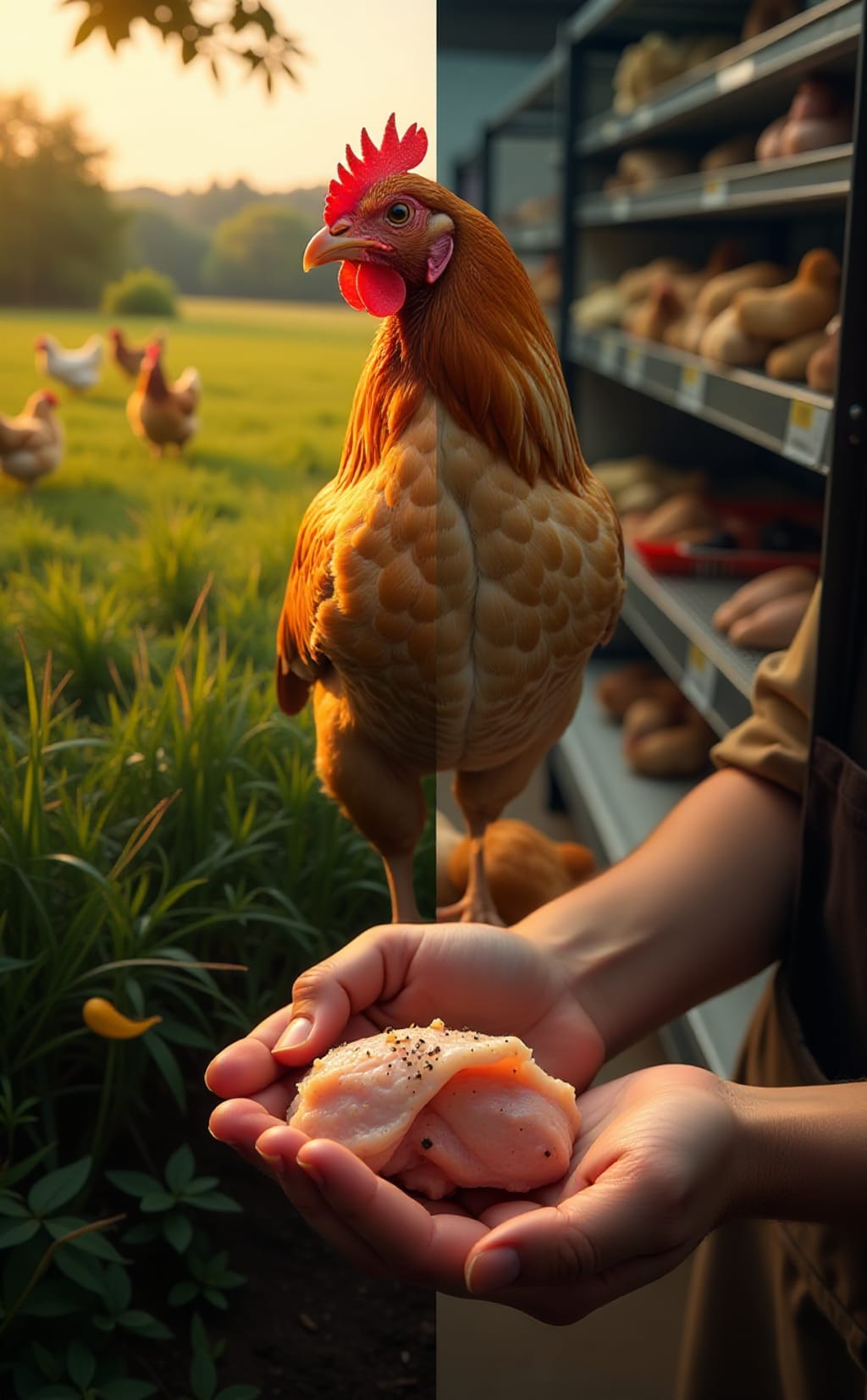
The chicken has become a staple of diets around the world, gracing our tables in countless forms—from fried and grilled to roasted and stewed. In fact, it’s one of the most widely consumed meats globally. Yet, how often do we stop to think about where the chicken on our plates comes from? What is the story behind this food that sustains us, and what are the ethical implications that surround its production?
In this article, we will explore the journey of the chicken—from farm to table—while examining the lifecycle of the bird and the ethical dilemmas that arise from industrial farming practices. By understanding the full picture, we can make more informed choices about the food we consume and its broader impact on the world.
From Egg to Chick: The Early Stages of the Chicken's Life
The life of a chicken begins much like any other: as an egg. The egg, which is laid by a hen, is incubated in warm, controlled conditions for 21 days. In industrial settings, eggs are often collected and placed into large incubation machines. These machines regulate temperature and humidity, ensuring that the eggs hatch at the right time.
Once the chicks hatch, they are sorted according to gender—female chicks (which are typically kept for egg production) are separated from males (who are often culled in large-scale operations). The male chicks, unfortunately, have little value in the commercial egg industry because they do not lay eggs and are not typically bred for meat production. As a result, they are often discarded shortly after hatching, a practice that many find deeply troubling from an ethical standpoint.
In more humane farming practices, male chicks are raised alongside females, but in the industrial egg production industry, culling is common. This raises significant concerns about animal welfare and the value we place on the lives of animals that are not directly useful for profit.
The Growth and Conditions of Industrial Farming
Once hatched, chicks are typically raised in large, crowded environments known as broiler houses. In industrial farming, broiler houses can house thousands of birds at once, with minimal space for each chicken to move. This method of farming is designed for efficiency, allowing companies to produce large quantities of meat at a relatively low cost. However, it comes at the expense of animal welfare.
Chickens raised in industrial farms often spend their entire lives in confined spaces with little to no natural light. The overcrowded conditions can lead to stress, disease, and behavioral problems, such as feather-pecking and cannibalism, which often result in further culling. Moreover, the use of antibiotics and other chemicals to prevent disease and promote growth is a common practice in industrial farming. While this increases the efficiency of meat production, it has raised concerns about the long-term impact on human health and the environment.
In more humane and ethical farming systems, such as free-range or pasture-raised operations, chickens are allowed to roam in open spaces, foraging and interacting with their environment. These systems aim to provide a more natural and stress-free living experience for the animals. However, they are typically more expensive to maintain, which makes ethically raised chicken a less accessible option for many consumers.
The Harvest: Slaughter and Processing
Once the chickens have reached their market weight—typically between 6 and 7 weeks of age for broiler chickens—they are slaughtered and processed. The slaughtering process is highly regulated in many countries, with laws in place to ensure that animals are treated as humanely as possible during the process. However, even under the best conditions, slaughtering is inherently traumatic for the animal.
In industrial farming, chickens are often slaughtered in automated systems that involve stunning the birds before they are killed. The process usually involves electrical stunning, followed by slaughtering the birds by cutting their necks. While the intention is to minimize suffering, the reality is that not all animals are stunned properly, and mistakes in the process can lead to unnecessary pain and distress.
The ethical concerns surrounding the slaughtering process are vast. While many argue that the death of any animal raised for food is inherently problematic, others focus on the manner in which the animal is treated during its life and the method of its death. In the industrial food system, speed and efficiency are the driving forces, which can sometimes compromise animal welfare in the process.
The Environmental Impact of Chicken Production
Aside from the ethical concerns surrounding the treatment of animals, chicken production also has significant environmental implications. Like all forms of animal agriculture, chicken farming requires vast amounts of resources—water, grain, land, and energy. While chicken is generally considered to have a smaller carbon footprint compared to beef or pork, its production still contributes to deforestation, water pollution, and greenhouse gas emissions.
In industrial farming, the concentration of chickens in large facilities creates enormous amounts of waste, which often ends up in nearby rivers and waterways. This pollution can harm ecosystems and pose health risks to surrounding communities. Additionally, the high demand for feed—typically made from soy and corn—contributes to monoculture farming practices, which degrade the soil and reduce biodiversity.
For consumers concerned about the environmental impact of their food choices, opting for chicken produced through sustainable, organic, or pasture-raised farming methods can make a difference. These systems prioritize soil health, water conservation, and biodiversity, although they are often more expensive and harder to find in mainstream supermarkets.
The Ethical Dilemma: What Can We Do?
As consumers, we are faced with a dilemma when it comes to the chicken on our plates. On one hand, industrial farming practices provide a cheap and accessible source of protein for millions of people around the world. On the other hand, these practices raise serious concerns about animal welfare, environmental sustainability, and the ethics of food production.
For those who want to make more ethical choices, there are several options. Purchasing chicken from humane, free-range, or pasture-raised farms is one way to ensure that the animals were treated with respect during their lives. Choosing organic or sustainably sourced chicken can also reduce the environmental impact of your food choices.
Alternatively, some people may choose to reduce or eliminate meat from their diets altogether. As plant-based protein sources continue to improve in taste and nutritional content, many individuals are turning to alternatives like tofu, tempeh, and legumes as a way to avoid contributing to the ethical and environmental problems of meat production.
Conclusion: A Call for Awareness and Responsibility
The chicken on our plates is the product of a long and complex process—one that involves the lives of the animals, the resources of the land, and the choices we make as consumers. By understanding the lifecycle of the chicken and the ethical concerns that surround its production, we can make more informed decisions about the food we eat.
As we move forward, it’s important to remember that every choice we make has consequences—not just for our health, but for the health of the planet and the animals we share it with. Through conscious consumption and an awareness of where our food comes from, we can help create a more sustainable and ethical food system for future generations.
About the Creator
Keep reading
More stories from Habibullah khan and writers in Humans and other communities.
When Caring Costs Too Much
There’s a moment, quiet and almost invisible, when love begins to drain instead of nourish. It doesn’t announce itself with thunder or fireworks. It shows up quietly—missed meals, unread messages, sleep disturbed by worry, a mind too full of someone else’s pain to hear your own. You look up one day and realize: you’re tired in a way that rest alone can’t fix.
By Habibullah khan 10 months ago in Humans



Comments
There are no comments for this story
Be the first to respond and start the conversation.