
The Call That Saved a Life
One Phone Call. One Life. A Reminder That Connection Still Matters.

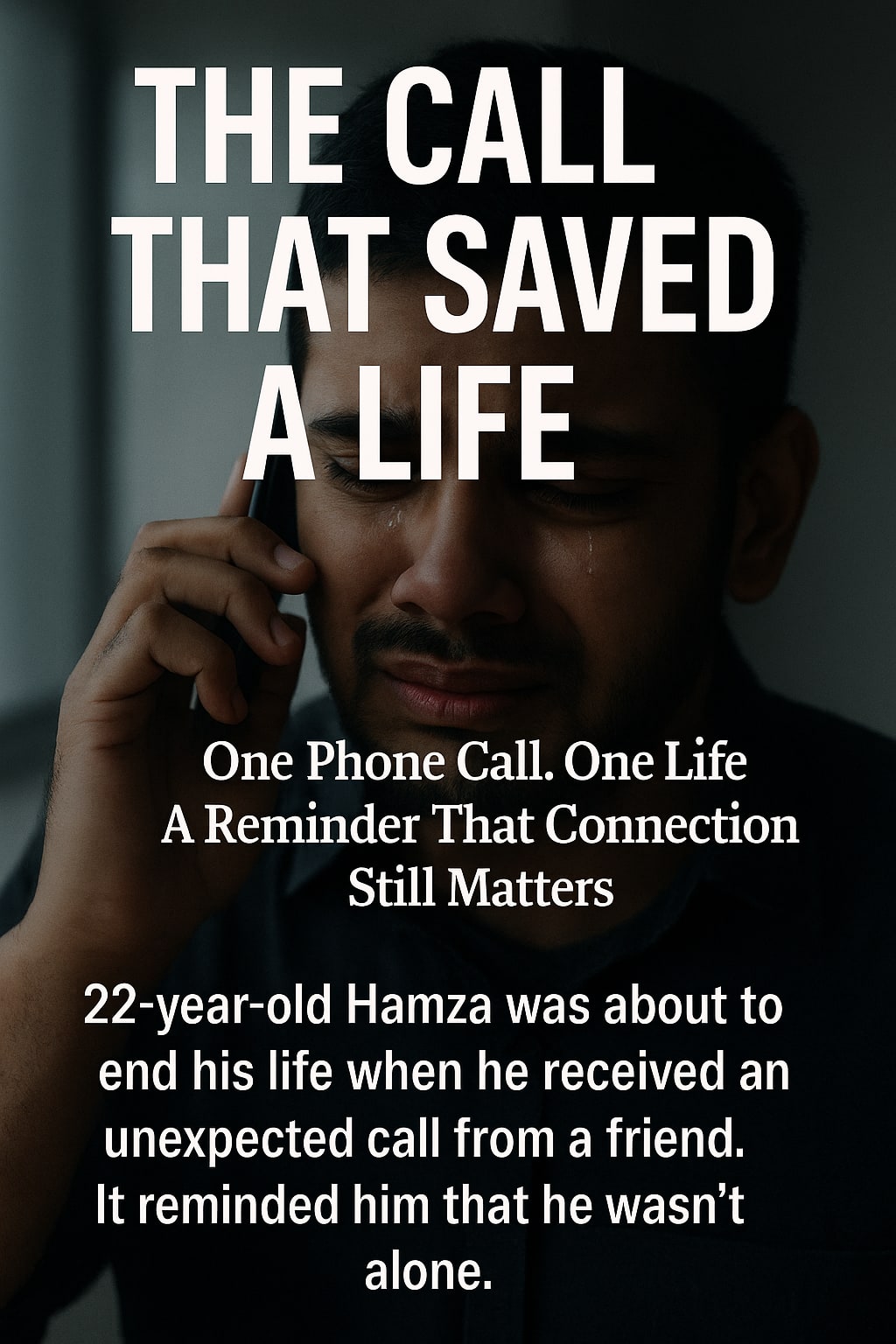
It was a cold Sunday evening in November 2023. The streets of a small town on the outskirts of Lahore, Pakistan, were unusually quiet. The day had faded into night, and a chilling silence had settled in the air. Streetlights flickered. Dogs barked in the distance. Inside a dimly lit room, 22-year-old Hamza sat still on the edge of his bed, lost in a storm of thoughts that no one else could hear.
On the outside, Hamza looked like any ordinary young man—average height, calm face, neatly combed black hair. But inside, he was a battlefield of despair.
A few months earlier, Hamza had been working at a small textile company. It wasn’t a fancy job, but it helped keep his family afloat. He was the eldest of four siblings and the only breadwinner after his father suffered a paralyzing stroke. His mother, though strong-willed, could only do so much by sewing clothes from home. Life wasn’t easy—but Hamza tried. He really did.
Then came the layoff.
The factory cut down staff due to budget issues, and Hamza was let go. At first, he told himself it was temporary. “Allah will make a way,” he repeated to his mother. But days turned into weeks. Weeks into months. Every job hunt ended in rejection. The little savings they had were used to buy medicines for his father. Soon, even electricity bills went unpaid.
With each passing day, Hamza started sinking deeper into hopelessness. His self-worth diminished. He avoided friends, ignored calls, and started spending entire days locked inside his room. He wasn’t lazy—he was simply tired. Tired of fighting a battle alone that no one could see.
One day, after returning from yet another failed job interview, something broke inside him. That night, Hamza quietly tore a page from his notebook and wrote a short letter.
> “I tried. I really did. But I’ve become a burden. I’m sorry, Ammi. Tell Abbu I love him.”
He folded the note, placed it under his pillow, and left the house quietly while everyone slept. He knew a shortcut that led to the railway tracks. It wasn’t far. Just ten minutes away. The cold wind pierced his skin as he walked. His heart pounded, but his mind was numb.
He was almost there.
And then… his phone rang.
Hamza paused.
He looked down. It was Bilal—an old school friend. They hadn’t spoken in months. The call stopped. Then rang again. And again.
Hamza was about to silence it when something made him pick up.
“Hello?” he said, his voice hollow.
“Yaar, Hamza! Where’ve you been?” Bilal’s cheerful voice came through. “I was just thinking about you. It’s been ages.”
Hamza didn’t reply. He stared blankly at the ground.
“Hello? You there?” Bilal asked again, sensing the stillness.
“Yeah…” Hamza finally muttered. “I’m here.”
“You sound… off. Are you okay?”
Something cracked in Hamza. His lips trembled, and tears filled his eyes. And then—he broke. He cried, uncontrollably. Loud, painful sobs that echoed into the night.
Bilal, stunned, fell silent—but didn’t hang up.
“Hamza… what’s going on? Tell me.”
And Hamza did. For the first time in months, he poured everything out. The layoffs. The pain. The shame. The fear of becoming a failure. The note. The plan.
“I was going to end it tonight,” he whispered.
There was a long pause.
And then Bilal said the words Hamza didn’t know he needed:
“Don’t. I don’t care about your job. I care about you. You’re not a burden, bro. You’re human. You’re my friend. Let’s figure this out—together.”
They stayed on the call for over two hours. Bilal talked. Listened. Reminded Hamza of who he used to be—the boy who once dreamed of becoming an engineer, the one who stood up to a bully in 9th grade, the one who once gave his own lunch to a classmate because he forgot his.
By the end of the call, Hamza had turned back home. He tore the note into pieces and flushed it.
---
A Silent Epidemic
Hamza’s story is heartbreakingly common.
Mental health, especially in South Asian societies, is still brushed under the rug. Depression is called laziness. Anxiety is seen as weakness. And suicidal thoughts? They’re labeled as un-Islamic, shameful, or attention-seeking.
But none of that is true.
According to the World Health Organization, more than 700,000 people die by suicide each year—that’s one person every 40 seconds. In Pakistan alone, estimates suggest over 19,000 suicides annually, with countless more attempts that go unreported due to social stigma.
Most people who think about suicide don’t want to die. They just want the pain to stop.
They feel trapped. And when no one checks in, no one listens, and no one notices—they start to believe the world is better off without them.
But here’s the truth: connection saves lives.
---
What You Can Learn From This
You don’t need to be a psychologist to save someone. You don’t need money or solutions. Sometimes, all you need to do is show up. Listen. Call. Send a message. Let them know they’re not alone.
If someone around you:
Suddenly withdraws from social life
Gives away personal belongings
Talks about feeling hopeless or useless
Mentions death or jokes about dying
Has extreme mood swings or changes in sleep patterns
Don’t ignore it. Ask. Listen. Be there.
It might feel uncomfortable—but asking someone, “Are you okay?” can change the course of their life.
---
Where Is Hamza Now?
It’s been eight months since that night.
Hamza is still healing, but he’s alive—and that’s what matters. Bilal helped him find an online freelancing opportunity. It wasn’t much, but it gave him hope. Later, Hamza joined a local delivery company part-time. With time, he began contributing again at home. He also connected with a small mental health awareness group that provides anonymous support to youth dealing with depression.
He now volunteers, often taking late-night calls from strangers—hoping to be their Bilal.
---
Final Thought:
Be someone’s call. Be someone’s reason to hold on.
You never know how close someone is to giving up. Your one message, one check-in, one "I'm here if you need to talk"—can make all the difference.
Let Hamza’s story remind you:
You don’t need to fix the world.
Just don’t ignore the ones in it.
About the Creator
Muhammad Usama
Welcome 😊
Keep reading
More stories from Muhammad Usama and writers in Humans and other communities.
How Cultivating Emotional Awareness Improves Trust In Dating And Relationships
Emotional awareness refers to the skill of identifying, knowing and correctly naming your emotions at the moment. This ability is the basis of true trust in the relationships and dating process. When people know how they emotionally respond, they will not fail to perceive situations and assign their personal insecurities to their partners. Emotionally aware people will stop their thoughts and consider their internal reactions rather than making assumptions about the negative intentions of others. This self-conscience lowers precipitant allegation and self-defense. They create a steady emotional climate by developing the clarity in themselves first and after that the trust may slowly settle and develop with the help of constant clarity.
By Kellee Bernier6 days ago in Humans



Comments
There are no comments for this story
Be the first to respond and start the conversation.