
"The Bridge Between Us: A Tale of Friendship and Compassion"
"When kindness becomes a language, and friendship crosses every boundary."
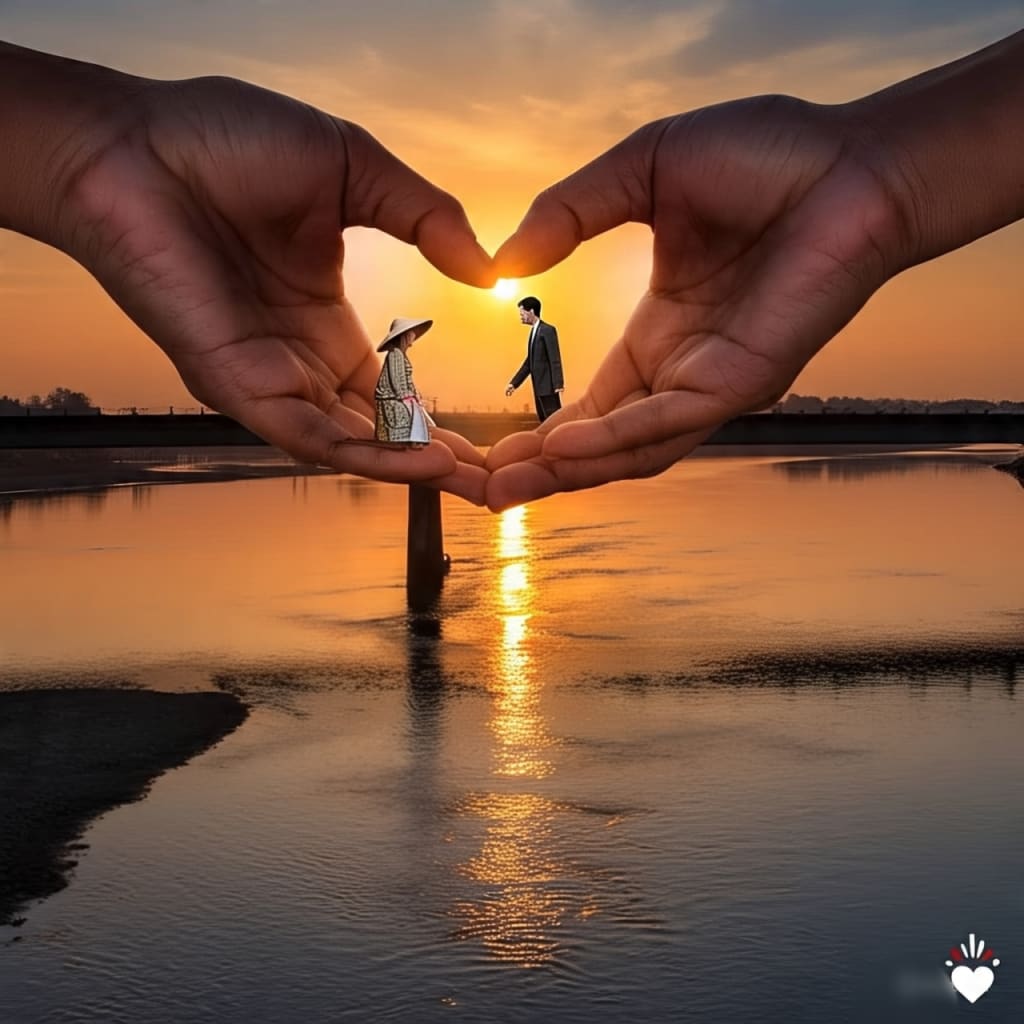
The river divided two worlds.
On one side stood the village of Noorabad—peaceful, green, and rooted in tradition. On the other was Shamsherpur—busier, more modern, and always in motion. Though a narrow bridge connected the two towns, it might as well have been a wall. Years of rivalry, political differences, and unspoken prejudice kept people apart.
But fate, as it often does, had its own plans.
A boy named Zayan lived in Noorabad. The son of a local schoolteacher, he was quiet, curious, and often lost in thought. He loved books, especially ones about far-off lands and unlikely friendships. His father taught him, “True humanity begins when you see others not as strangers, but as stories waiting to be read.”
Across the bridge, in Shamsherpur, lived Areeb, a lively boy with an adventurous spirit and a mischievous smile. His father owned a workshop, and Areeb had grown up fixing things—bicycles, radios, even the broken hearts of his friends with his jokes. He often stood at the edge of the bridge, tossing pebbles into the water, dreaming of what lay beyond.
Their worlds collided on a rainy afternoon.
Zayan had wandered close to the bridge, sketching birds in his notebook when he slipped on the wet stones and fell. His cries for help were muffled by the rain—until Areeb, on his way home from the workshop, heard them. Without a second thought, he ran across the bridge and pulled Zayan to safety.
“You okay?” Areeb asked, breathing hard.
Zayan looked up, surprised. “You’re from… the other side.”
“And you’re bleeding,” Areeb replied, tearing part of his shirt to wrap Zayan’s cut. “That matters more.”
It was a simple act of kindness—but it changed everything.
The two began meeting at the bridge every week. They’d talk about life, school, and dreams. Zayan taught Areeb how to draw, and Areeb taught Zayan how to fix a cycle chain. They shared food, stories, and laughter. The bridge was no longer a boundary—it became their meeting place, their secret world.
But not everyone was ready for change.
One morning, Zayan’s father found his sketches—drawings of the bridge, of two boys, and notes about Areeb. He looked worried. “Son, things are not simple. People on both sides… they carry old wounds.”
“I know,” Zayan replied. “But if we keep passing them on, they never heal.”
In Shamsherpur, Areeb’s uncle noticed the same. “You’re spending time with people who don’t care for us,” he warned.
“They cared when I fell,” Areeb shot back. “He did.”
Tensions began to rise between the towns again. An old land dispute resurfaced, and politicians on both sides used it to stir fear. The bridge was suddenly guarded, and a curfew was announced. People began to avoid the river again, as if the past had come alive to pull them backward.
Still, Zayan and Areeb didn’t give up.
One evening, they met secretly under the bridge. They brought lanterns and painted signs with one message: “We are more alike than different.”
The next morning, villagers woke up to a surprise. The bridge, once dull and lifeless, was covered in color. Messages of hope, drawings of unity, and paper birds hung from ropes. At the center was a large canvas with a painting—two boys standing together, holding hands, with the river reflecting their smiles.
It caused a stir.
Some were angry, shouting about tradition and boundaries. But others—especially the young—felt something shift. They saw the truth in the drawings. They saw the future, not the past.
Then came the flood.
Heavy rains swelled the river, and water threatened both towns. Roads were blocked. The bridge, once ignored, became the only way to safety and aid.
And who stepped forward first?
Zayan and Areeb, carrying supplies, guiding villagers, helping the elderly across. Side by side, they worked day and night. People followed their lead. Noorabad and Shamsherpur helped each other like never before.
The river no longer divided—it united.
When the floodwaters finally receded, the elders of both towns met on the bridge. Looking at the boys, one old man said, “Perhaps it took the flood to wash away our fear.”
From that day, things began to change. The bridge was repaired and renamed “Pul-e-Dosti”—The Bridge of Friendship. Schools from both towns began joint events. Families visited across the river. And every year, on the day the flood came, the two towns celebrated Unity Day, led by Zayan and Areeb.
They grew up, but never grew apart. One became a teacher, the other an engineer. But their greatest work was something invisible—a bond between people that healed generations.
---
Because sometimes, the greatest bridges are not built from stone or steel… but from hearts that choose to understand.
About the Creator
Keep reading
More stories from Arjumand Said and writers in Humans and other communities.
"Together Through Time: The Journey of Two Friends"
In a quiet village nestled between hills and fields, two boys grew up side by side. Azaan and Saif were as different as the sun and the moon, yet their bond was unbreakable. Azaan, curious and impulsive, always seeking adventure. Saif, thoughtful and calm, the voice of reason in every wild plan Azaan cooked up.
By Arjumand Said8 months ago in Humans


Comments
There are no comments for this story
Be the first to respond and start the conversation.