
The Black Death: The Plague That Changed the World
"In the shadow of despair, humanity fought to survive the unseen terror."

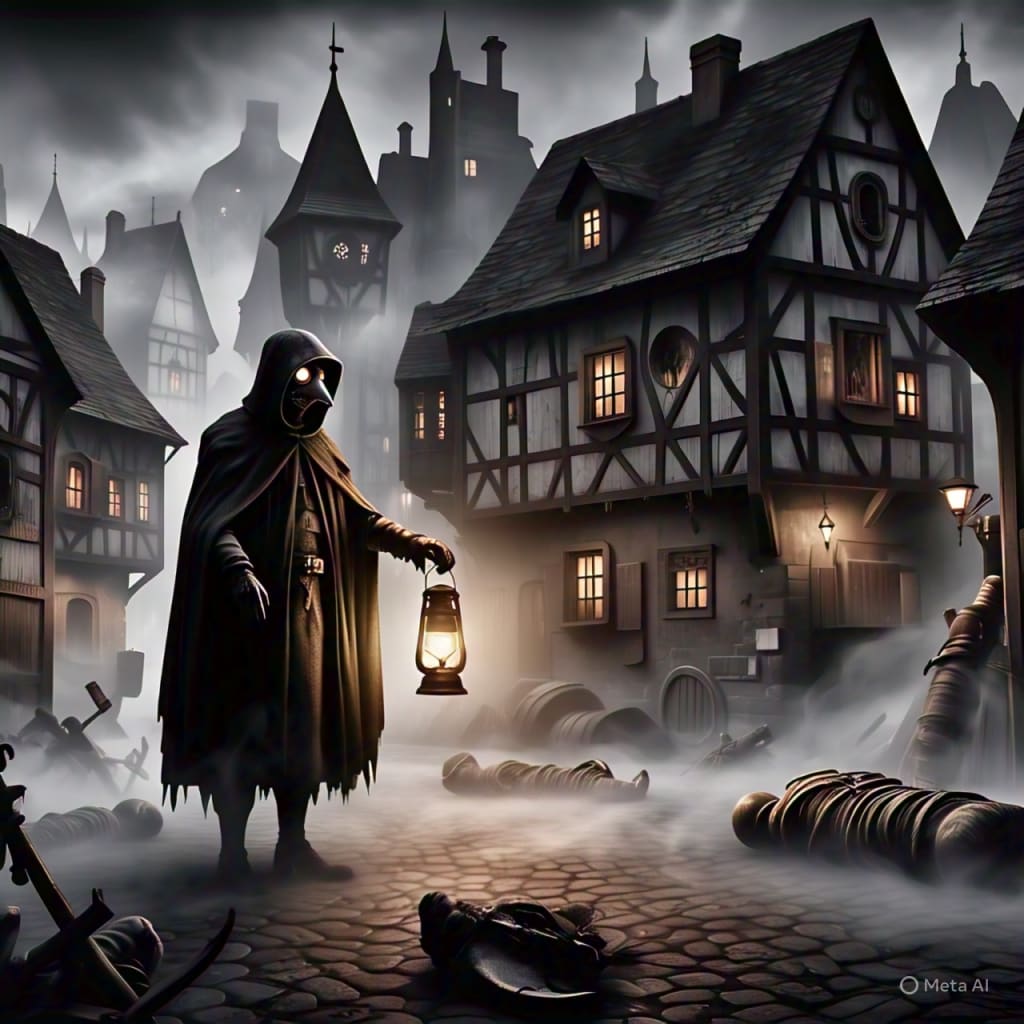
The Black Death: The Plague That Changed the World
In the early 14th century, Europe was thriving. Trade routes flourished, cities expanded, and cultural life blossomed. People believed they were on the edge of a golden age. No one suspected that soon death would sweep across the continent, killing millions and changing the course of human history forever.
The year was 1347 when the first whispers of something terrible began to emerge. Ships coming from the East docked at Sicilian ports carrying a deadly cargo — rats infested with fleas, and fleas carrying a bacterium called Yersinia pestis. No one understood the danger at the time. Merchants and sailors, oblivious to the threat, spread the disease as they moved inland.
It began quietly. A cough here, a strange fever there. People would wake with strange black swellings in their armpits and groin, sometimes the size of an apple or an egg. These were called "buboes," and they were filled with pus and blood. Within days, the infected would die, often in agony, delirium, or terror.
The disease spread like wildfire. It killed not only the poor living in dirty cities but also nobles in their castles. Entire villages vanished, wiped clean as if they had never existed. In some places, the dead lay unburied because there were no survivors left to mourn them.
Panic gripped Europe. People turned on each other, desperate to find someone to blame. Some said it was the wrath of God, punishing mankind for its sins. Others accused minority communities like the Jews, leading to brutal massacres and even more death. Many believed that the air itself was poisoned — the "miasma" theory — and they burned aromatic herbs and spices to cleanse the atmosphere.
Doctors, known as "plague doctors," wore terrifying beaked masks filled with sweet-smelling herbs, thinking it would protect them. But the masks could not save them. Nothing could. Physicians, priests, and nobles fell just as easily as beggars and peasants.
In some towns, it was said you could walk through the streets and hear nothing but the buzzing of flies over the rotting corpses. Mothers abandoned sick children; brothers turned away from sisters. The very fabric of society unraveled. Fear made people cruel, desperate, and isolated.
By 1351, the Black Death had killed an estimated 25 to 50 million people in Europe — about one-third to one-half of the total population. It was the single deadliest pandemic in recorded history.
But the story does not end there.
The world that emerged from the Black Death was not the same. Labor became scarce, giving surviving workers more power to demand better wages and conditions. Traditional systems of feudalism weakened. The Church, unable to save the masses despite its promises, lost much of its spiritual authority. Science and medicine began to shift, as people realized old ideas had failed them.
Strangely, the horror of the Black Death also planted seeds of renewal. Art changed dramatically, moving from the strictly religious to the deeply human. Paintings became darker, more emotional, filled with images of death and suffering, but also hope and rebirth. Literature, too, shifted. Writers like Boccaccio, who survived the plague, wrote stories reflecting the human condition's fragility and strength.
The psychological scars ran deep. Whole generations grew up believing the world was unstable, fleeting, and cruel. The term "memento mori" — remember you must die — became a popular philosophical theme. Yet with that grim reminder came also a greater appreciation for life, beauty, and human achievement.
Some whispered that the Black Death was not a punishment, but a terrible opportunity — a cleansing fire that destroyed the old, stagnant ways and made room for something new.
Of course, the plague did not vanish in 1351. Outbreaks would return again and again in smaller waves, haunting Europe for centuries. But none would be as devastating as that first, apocalyptic strike.
Even today, scientists study the Black Death, not only to understand history but to prepare for future pandemics. The bacterium that caused it still exists in some parts of the world. It serves as a chilling reminder: humanity is never entirely safe. Disease, invisible and indifferent, can change everything in the blink of an eye.
And perhaps that is the greatest lesson of the Black Death — that life is fragile, history is unpredictable, and survival often demands not just strength, but adaptation, wisdom, and above all, hope.
As you walk through the grand cities of Europe today — Paris, Florence, London — know that beneath your feet lie the bones of millions who once lived, loved, and feared. The Black Death is gone, but the echoes of their suffering, courage, and humanity remain, whispering to us across the centuries.
About the Creator
FKG
Keeper of Forgotten Stories
Breathing life into lost histories. Exploring hidden stories that challenge, inspire, and awaken the soul. Join me on a timeless journey through the echoes of the past.
Valentine’s Day and the Quiet Meanings We Often Overlook
Valentine’s Day arrives every year with familiar symbols. Red hearts. Flowers wrapped in paper. Cards that promise love in neat sentences. Yet beneath the surface, this day carries emotions far more complex than its decorations suggest. For some, Valentine’s Day brings warmth and connection. For others, it brings silence, memory, or longing. It can remind people of love found, love lost, or love still hoped for. This is why Valentine’s Day continues to matter, even when people claim to dislike it. It reflects how we relate to love itself, not just romance. To understand Valentine’s Day, we need to look beyond gifts and expectations and into the quiet feelings it awakens.
By Muqadas khan5 days ago in Humans


Comments (1)
The Black Death: The Plague That Changed the World