
The Battle for America's Soul: Georgia on Edge
Increased tensions around Georgia, a crucial swing state

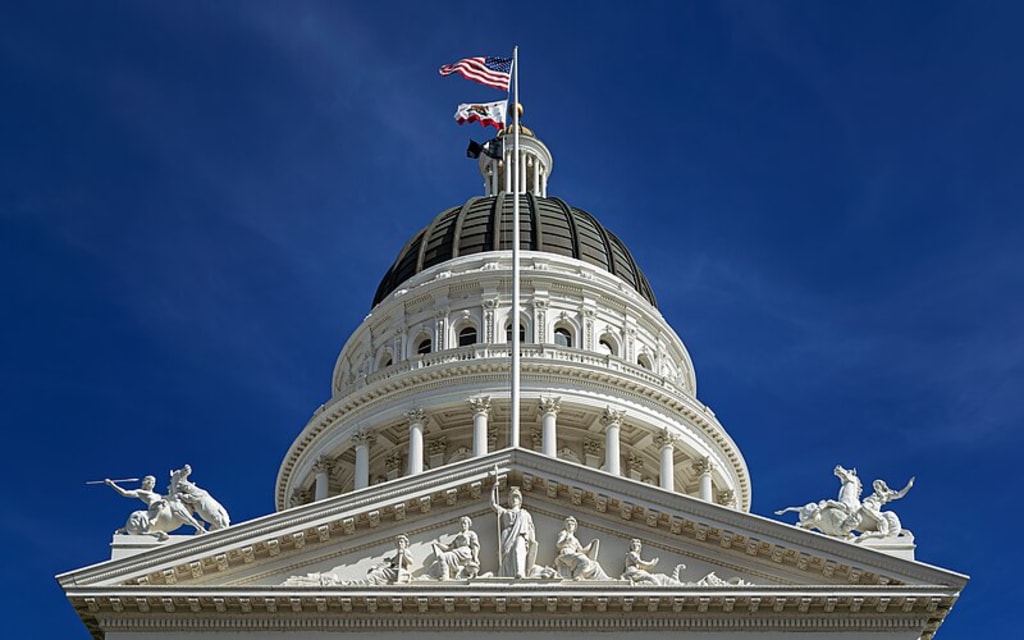
The upcoming US election has now shaped up as a defining moment in American history, and both camps are readying for one of the most contentious and critical elections in recent memory.
Of course, wrapped up in that is the possibility of an intense conflict and strategic manipulation at the hands of Donald Trump and his supporters. With Georgia, one of the most important swing states, right at the center of the action, with Kamala Harris in the final sprint of her campaign, this indeed sets the stage for a face-off between two radically opposed visions for America.
Georgia, a Swing State Under Siege
Among the politically most important states, Georgia again finds itself in the limelight.
Trump challenged the result here in 2020, triggering a national controversy over election integrity and unleashing a wave of lawsuits, allegations, and conspiracy theories.
Gabriel Sterling is the Chief Operating Officer for the Georgia Secretary of State's office and got firsthand experience of the fall-out from the president's attempt to alter the election result. He recalls for me the pressure, the threats, and the violence that nearly broke out and says, "We've done everything we can legally and administratively to ensure a fair election, but individual chaos agents could still provoke violence."
Sterling and colleagues, such as Secretary of State Brad Raffensperger, resisted the pressure from Trump in 2020, holding firm against calls to change the outcome in his favor.
The Trump campaign's focus on Georgia did not wane in 2024; the tactics this time promise to be even more aggressive. Democrats and Republican election officials pledged to the rule of law confront a more disciplined and better bankrolled phalanx of Trump acolytes.
Emboldened by Trump's words and extensive networks, these supporters worked systematically to undermine public confidence in Georgia's voting process. According to Allegra Lawrence-Hardy, one of the top legal advisors to Fair Fight Action, a nonprofit founded by Abrams after her loss in 2018 to create what she described at the time as a "voter protection" operation, "2020 was a dress rehearsal. This time, Republicans are better organized and strategic." And indeed, the legal fights have begun: more than 187 lawsuits, more than have ever been filed in any prior U.S. election, almost all of them aimed at limiting voter access or challenging voter eligibility.
Legal Maneuvers and the Erosion of Democratic Norms
The Trump camp has embarked on a spate of legal challenges designed to obfuscate and alter the dynamics of voting in Georgia, apparently as an angry pre-emptive strike against what they perceive as Democratic manipulation.
The plan is to run out the court's clock while mobilizing public distrust, where figures like Elon Musk and Steve Bannon fan baseless theories about immigrants and fraudulent voters hijacking the election for the Democrats. These charges, though repeatedly disproven, add to a climate where just 57% of Trump supporters believe it is possible for the election to be conducted fairly and nearly a fifth support Trump declaring victory even if he loses.
These tactics resonate with voters on both sides, but they are particularly potent within Trump's base, who have been primed for years to distrust the electoral process.
The cries of "election fraud" have taken hold, and to many of Trump's supporters, this election has become a fight for America's soul. The erosion of faith in the electoral process here risks spilling into civil unrest with implications far beyond Georgia.
The organization Fair Fight Action cited over 63,000 names legally challenged in Georgia's voter rolls this year alone-three times the usual number. The astonishing figure underlines the length to which the Trump campaign would go in the effort of disqualifying probable voters and casting doubt on the legitimacy of the election.
Kamala Harris: A Voice of the Alternative Vision
When Vice President Kamala Harris mounts the platform in Washington, she knows that the nation stands at an inflection point.
The speech is a carefully crafted counter-narrative to the division and doubt sowed by Trump-an appeal to unity undergirded by hope. In this "closing argument," Harris defines this election as a choice between "freedom and chaos," underscoring the degree to which the stakes in this election transcend partisan divides to strike at the heart of America's democratic identity.
Her speech, in front of towering banners reading "Liberty" and panes of protective glass, feels like a grim echo of riots on the Capitol just down the street in 2021. The former president's rhetoric-things that fueled an insurrection-have morphed into a campaign playbook normalizing calls for vigilance against the "enemy within." Harris responds by casting herself as a resilience-and-optimism candidate. She reassures the disenchanted that "the American dream is alive and worth fighting for."
Harris's speech sums up much of the contrast between herself and Trump. Harris's speech spoke of "consensus and compromise," whereas Trump energizes his supporters with the claims of "draining the swamp" and with drastic actions to take back "his" America.
The contrast is striking: Harris' message is about healing a fractured nation, while Trump's game-plan runs along deepening battle lines. She allows, "I am not perfect, and I make mistakes," but promises transparency and a commitment to the truth-an implied contrast with Trump's own campaign built upon mistrust and divisiveness.
The Uncertain Road Ahead
The 2024 election is a uniquely complicated moment for American democracy.
Among Trump's supporters, the storyline that leading the charge is one of lost rights and elites-driven conspiracy, while for Harris and her supporters, the campaign is essentially about preserving democratic institutions and resisting the normalization of political violence. The stakes are undeniable, the consequences for the future of American governance profound.
It could devolve into a protracted fight, with Trump continuing his legal and rhetorical challenges across the nation. The strategy in Georgia-a state particularly important to the Republicans as they now control local election boards-reveals a plan to muddy the results enough to create delay and discreditation grounds.
Should no clear winner emerge, or should Trump challenge the results enough, the election could end up in the U.S. House of Representatives. Given the current Republican majority, that is a specter looming large.
He will have won, even if the election result is not wholly going his way, since the objective of undermining public confidence in the process has already been accomplished. According to polls, close to half of his supporters do not trust mail-in voting and a big number think the election is rigged. These perceptions have consequences in the real world-to wit, the security details at the polling locations-and election workers are on high alert.
A Nation Divided: The Battle for the American Heart
Ultimately, the 2024 election is being contested for the soul of America.
Trump's approach is not about winning the vote as such but setting a precedent whereby the results of an election can be cast aside if they stand in the way of what he wants.
It is doubtful that there will be a peaceful transition of power for the first time in modern American history, with a legal and social crisis of unprecedented proportions clearly looming ahead.
Kamala Harris, in contrast, exudes an appeal for unity and democratic integrity. Her pledge to reduce the cost of living, protect reproductive rights, and protect middle-class families was underpinned by a vision of governance as service-remarkably juxtaposed with Trump's framing of government as a battlefront. Still, optimistic and resilient as she is, the Harris appeal doesn't have that visceral resonance that Trump's rhetoric elicits from an already very suspicious electorate.
Her promises are hopeful, but almost too small set against a narrative which insists on division and distrust.
The American Experiment, Tested
The United States is approaching election day more divided than ever, with the very foundations of its democracy at stake.
In this battle, with Georgia as the epicenter, the election will not be just a question of who wins but can maybe set a precedence for the viability of democratic processes in the times to come.
People like Gabriel Sterling and Brad Raffensperger have fought to preserve the integrity of the election process, and it's a hope that the system can bear up against the attempts of Trump to use the weaknesses in it.
Not only do Georgia, Harris, and Trump have much at stake, so does the world. An experiment in democracy that has survived centuries of ebbs and flows sees one of the most critical tests of its resilience.
Will the institutions stand resilient to bear the brunt, or is this election going to usher in a new era where democratic norms are sacrificed as an altar to partisanship and power? With November 5th looming, Americans and an anxious world are watching and waiting to read the next chapter of this story.
The voters will decide, but the reverberations could be felt far beyond the ballot boxes into the very future of the American experiment itself.
(reuters)
About the Creator
Tanguy Besson
Tanguy Besson, Freelance Journalist.
https://tanguybessonjournaliste.com/about/
Keep reading
More stories from Tanguy Besson and writers in Humans and other communities.
Iran's Nuclear Gamble
Iran and Israel have emerged as the most adversarial in the Middle Eastern geopolitical theatre. Iran, a Shia-majority state with regional influence pretensions, has supported a wide range of proxies across the region for decades in a bid to create a counterbalance to Israel with strategic footholds.
By Tanguy Bessonabout a year ago in Humans
Cabin Fever Because of Snow, Sleet, and Freezing Rain That Turned to Icy Roads
What Is Cabin Fever? The short answer is that cabin fever is restlessness from being in a confined area. Cabin fever is the distressing irritability or restlessness experienced when a person or group is stuck at an isolated location or in confined quarters for an extended time. Research shows that prolonged cold, gray skies, and being stuck indoors can trigger mood shifts similar to “winter blues.”
By Margaret Minnicks6 days ago in Humans
~ Fired ~
— Ai Intrusion ~ Are you Next ~ Is Ai Evolution after your job? — Few workplaces haven't been affected. Ai is in supermarkets, at doctors' offices, and even monitoring farms. I just can't think of anything this machine is not getting into, can you? For instance: Education ~ Law and Tech jobs will one day have a major influence or be taken over by these inanimate machines, with accuracy and vigor. From mechanics' diagnoses to a wide variety of everyday jobs, including fast food workers, with this input having the ability to cut their unnecessary work hours. I'm certain all of us have been touched by this with our short stories and colorful headings, have you? Even comments are very questionable 'Non-Robot' insertions.
By Jay Kantor6 days ago in Journal



Comments
There are no comments for this story
Be the first to respond and start the conversation.