
The Attention Economy: Why Our Focus Became the World's Most Valuable Currency
Why embracing intentional solitude can strengthen your mind, deepen self-awareness, and enrich your life.

Introduction: Every Swipe Counts
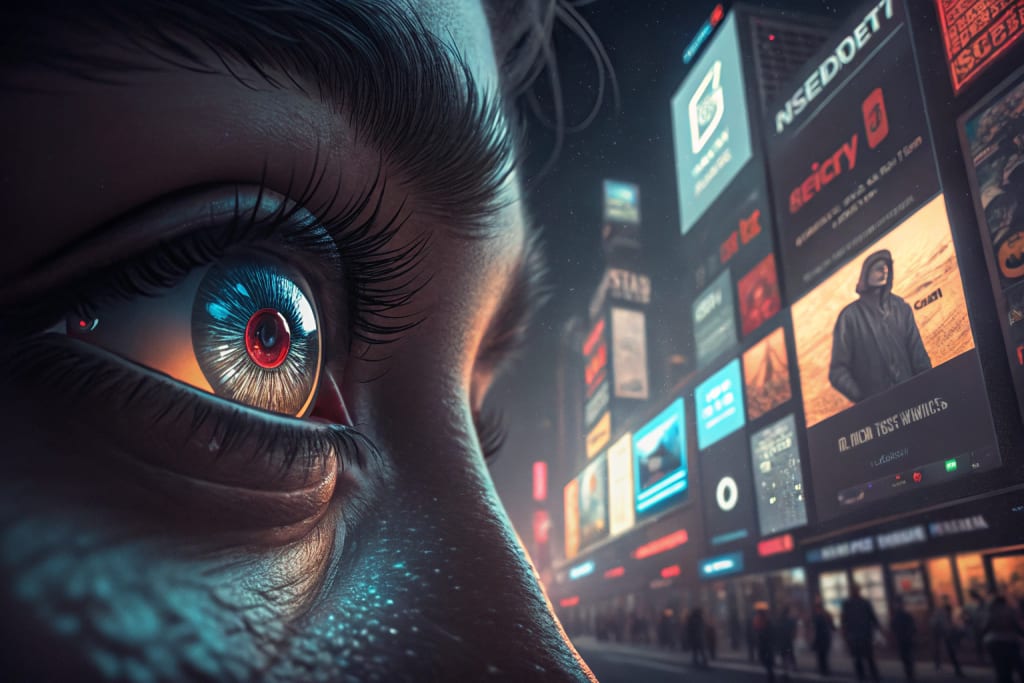
Every morning, you wake up, reach for your phone, and swipe. You've already "spent" some of the most valuable resource of the new world—your attention—before you even take breakfast. Every click, every swipe, every deliberation over a video is monitored, measured, and monetized. Your attention has turned into currency, power that fuels Silicon Valley's machines, the world's ad titans, and the media giants.
It wasn't always thus. Businesses once competed for your dollars. These days, they compete for your seconds. Your attention—ephoric, scarce, fleeting—has been commodified into the oil of the digital age. Trillion-dollar platforms have been enabled because they had mastered the game of capturing and selling it. While they enjoy the spoils, we pay in distraction, shattered concentration, and endless tug-of-war between what we want to do and what machines demand.
How did we arrive here? And what does it bode for our civilization when human attention itself is the most competed-for real estate on the planet?
From Selling Products to Selling Attention
The attention economy is a tale beginning with advertising. In the 19th century, newspapers rented out space to companies seeking to speak to mass markets. As companies grew larger, so did the art of advertisements—slogans, visuals, and psychology dedicated to making products impossible to resist.
But the true transformation came in the 20th century with the arrival of radio and television. Media could now address millions simultaneously. Advertisers realized they were not selling soap or cigarettes at all; they were buying human attention. The product was ad space; the commodity was the audience.
This model thrived, but it remained subject to schedules and scarcity. You could only broadcast so many television commercials during primetime. Then the internet came along. And all of a sudden, ads weren't tied to a time slot or geography. They could come along with you anywhere, just like they were designed specifically to your browsing patterns.
By the 2000s, Google and Facebook had perfected this reasoning. They weren't just middlemen; they were factories for attention. They didn't sell you the product—you got search results or social connections "gratis." They sold what you did on their sites—namely, you. Or more precisely, the bits of attention you lavished upon their sites. The old economy sold objects for dollars; the new economy sells attention for dollars.
How Platforms Capture and Monetize Attention
So how do platforms actually capture attention? The mechanics are subtle, sophisticated, and relentless.
First, they create interfaces that keep you around. Infinite scroll ensures there's never a natural stopping point. Notifications play on the reward system of the brain, dangling the promise of novelty. Likes, shares, and comments satiate our craving for social proof. Each one is calibrated to bring you back, again and again.
Second, every second of attention is tracked. Algorithms measure how much you click on, how long you linger, what you skip. All of it builds profiles—intimate psychological portraits that don't just predict what you'll buy, but what will make you scroll.
Third, attention is bought via targeted advertising. The advertiser isn't buying a billboard hoping the right person will walk by. They're buying you—your view at 8:32 p.m., your thumb scrolling at work, your moment of weakness after a crazy day.
Lastly, the attention attracts more attention. The longer you remain, the larger the amount of data created, the better the projections, and the more lucrative the system becomes. A self-reinforcing process, a feedback loop engineered to maximize interaction at near any expense.
In economic terms, attention is a scarce resource. Each of us only has 24 hours a day. Platforms compete in a zero-sum game: if you’re watching Netflix, you’re not on TikTok; if you’re reading an article, you’re not scrolling Instagram. The stakes are enormous, and the strategies to capture focus increasingly resemble psychological warfare.
The Psychological Costs of Distraction
But at what price to us? The attention economy is not an indifferent trade-off; it reconfigures the very nature of our minds.
Psychologists sound the alarm that perpetual distraction diminishes our capacity to focus intensely. The typical office worker is interrupted every 11 minutes and takes 25 minutes to return to focus. This wears down what some researchers refer to as our "attention span economy"—the internal capacity to control focus without external pressure.
There is a steep neurological cost. Each notification ping triggers the release of dopamine, which reinforces the action of looking at our phone. Overuse reconditions reward circuits in the brain so distraction is rewarding and concentration is effort. It's not unlike addiction, except attention is the drug.
Beyond cognition, there are emotional costs. Social media encourages comparison, envy, and stress. News streams full of outrage and crisis foster chronic stress. Sleep is sacrificed as devices invade the late-night hours. Even relationships are damaged when partners or parents are physically present but mentally absent.
As psychologist Gloria Mark comments, "We've commodified attention as a resource to be extracted, but unlike oil, our supply is not infinite. We're burning through concentration in ways that leave us poorer intellectually."

Algorithms as Architects of Choice
Inside the attention economy, algorithms are at the center—these hidden systems deciding what we see, when we see it, and how often we see it.
Algorithms aren't political. Algorithms are designed to drive engagement as high as possible. If outrage, sensationalism, or conspiracy theories keep users on the platform longer, the algorithm learns to bring them up first. This doesn't mean platforms want to spread disinformation, but the economic logic makes it all but inevitable.
The result is a cycle of feedback between human psychology and machine learning. We like conflict, novelty, and praise. Machines learn these preferences and exaggerate them, leading to echo chambers and polarization. Our choices feel free, but are steered by unseen curators.
Economist Herbert Simon once warned, "A wealth of information creates a poverty of attention." Today, algorithms govern that poverty by rationing attention in manners that maximize profit, not truth, wisdom, or well-being.
Ethical and Societal Implications
The commodification of human attention raises profound ethical questions.
And first of all among them is the issue of consent. Users are not actually aware how their attention is being tracked and commodified. Conditions of service obscure the details in jargon, but the real expenses—distraction, manipulation, diminished mental health—are offshored to society.
Second, there is inequality. Those who are better resourced can pay to regain attention through digital detoxes, ad-free premium services, or mindfulness retreats. Those who are less resourced are more susceptible to being exploited, spending disproportionate amounts of time in digital spaces engineered to monetize every second.
Third, democracy itself is put at risk. With attention as commodity, public discourse becomes a war ground for manipulation. Political campaigns, disinformation networks, and extremists employ the same attention-grabbing tools as advertisers. The difference between persuasion and coercion erodes.
Media scholar Shoshana Zuboff calls this "surveillance capitalism"—an economy in which human existence is raw material for control and prediction. The consequence is not merely distracted people but societies propelled toward division, outrage, and instability.

Possible Futures: Losing or Regaining Focus
Where does the attention economy go from here? There are several futures possible.
One path is regulation. Governments could make algorithms transparent, restrict data collection, or treat attention as a regulated resource. Europe's GDPR had been moving along this road, although enforcement remains spotty. Attention taxes or regulation of manipulative design practices are spotted by some policymakers.
Innovation is another avenue. New platforms could have new business models—subscriptions, cooperatives, or public-interest social networks that value well-being over engagement. Already, some startups present themselves as "ethical tech" with less exploitation of user attention.
There is also the possibility of agency on an individual level. Wellness movements in the digital realm encourage mindfulness, limitations on screen time, and deliberate "attention diets." Just as the environmental movement has reshaped consumer practices, the attention movement can reshape digital life as one of communal survival.
Finally, technology itself may be able to offer solutions. AI can be taught not to command attention but to preserve it—personal filters that deflect distraction, immersion-fostering software, systems optimized for human thriving rather than profitability. Whether or not technology of that sort will take hold—or get co-opted by the same incentive they resist—is unclear.
Expert Voices: Warnings and Hopes
Economist Tim Wu, coiner of the term "attention merchants," argues that attention wars are not new but have attained unprecedented scale: "What was a sideshow in our lives has become the main event. Attention merchants have colonized not only our recreation but our politics, our friendships, our sense of self."
Psychologist Adam Gazzaley, author of The Distracted Mind, emphasizes the neurological cost: “Our brains were not built for the constant barrage of novelty. The mismatch between ancient circuitry and modern demands leaves us overstimulated, yet underfulfilled.”
Media scholar Douglas Rushkoff offers a glimmer of optimism: “The very fact we’re naming the attention economy means we’re gaining awareness. And awareness is the first step to reclaiming agency.”
Conclusion: The Radical Act of Attention
In the 21st century, maybe the most radical thing one can do is not protest in the streets or vote at the polls—though these are important—but simply to reclaim one's attention. To attend intensely to what is important, to defy the scroll of endless distraction, to select presence over distraction is to challenge an economy designed to commodify every flicker of consciousness.
Attention is not currency. It's the foundation of thought, creativity, and relationship. Whatever we pay attention to, it makes us who we are. If platforms capture our attention, they capture our future. But when we take it back, no matter how small the increments, we reclaim control over our own minds.
Attention economy has taught us a paradox: the more we put a premium on attention in the marketplace, the more important it is to save some for ourselves. At a point where everyone wants our attention, perhaps the most vital liberty is learning to say no—to save the fragile flame of attention, and direct it towards the life we truly want to live.
About the Creator
The Chaos Cabinet
A collection of fragments—stories, essays, and ideas stitched together like constellations. A little of everything, for the curious mind.
Keep reading
More stories from The Chaos Cabinet and writers in Humans and other communities.
The Art of Solitude: Why Being Alone Can Improve Your Life
In an era where constant connectivity is the norm, loneliness has become a novel and even uncomfortable phenomenon. Notifications bleep incessantly, social media feeds flow endlessly, and the compulsion to remain "connected" 24/7 may feel like a noose too tight on the neck. For most, isolation brings on an aura of discomfort—what shall we do if we are left alone with ourselves? Society has always linked loneliness or failure with solitude, along with the stigma that it would take a disconnected, or even worse, weak individual to seek solitude.
By The Chaos Cabinet2 months ago in Humans
Island Girl Coping Mechanism For When It’s Too Damn Winter. Runner-Up in The Ritual of Winter Challenge.
Growing up without Icelandic temperatures shapes you into a different being. And this particular being put on a valiant front until climate change upped the ante in my current location with a well-timed sucker punch some years back that became standard.
By The Dani Writer25 days ago in Humans
Anthropology of the Group Chat: The Unspoken Rules That Govern Our Digital Tribes.
Group chats are everywhere. From WhatsApp and Telegram to Slack and Discord, digital communication has created new social spaces where friendships, work relationships, and communities thrive. On the surface, group chats might seem casual or trivial, but if you look closely, they reveal complex social structures and unspoken rules that govern human behavior. Understanding these patterns is the key to thriving in our modern “digital tribes.”
By Wilson Igbasi6 days ago in Humans
'20/20'
"Do It Again" the track that would ultimately open the Beach Boys final album on Capitol Records which was released on February 10th 1969 had originally been released as a single in August of 1968. The track was the first of many post-Pet Sounds era throwbacks to the early Beach Boys sound which would become continually more cliched and eventually lead the Beach Boys to the level of self-parody they would eventually succumb to in the 1980s while their closest contemporaries The Beatles nearing the end of their run in 1969 would go on to be viewed as the most influential band of all time. However, the song itself is not bad on its surface, and it opens with a futuristic sounding (for 1969) drumbeat captured by then-Beach Boys engineer Stephen Desper using tape delays on the drums performed by Dennis Wilson and John Guerin. The song has been re-recorded numerous times over the years on various Beach Boys-related projects most notably the 2011 re-recording at Capitol studios featuring the five surviving Beach Boys at the time backed instrumentally by various members of both the Brian Wilson Band and Mike Loves touring "Beach Boys" to promote the then upcoming Beach Boys 50th Anniversary reunion tour in 2012. The hammering and power drill sound at the end of the song was an excerpt from a track called "Workshop" that was to be a part of the uncompleted "SMiLE" album.
By Sean Callaghan6 days ago in Beat




Comments
There are no comments for this story
Be the first to respond and start the conversation.