
The Art of Time: Navigating Human Value in an AI-Driven World
As artificial intelligence takes on creative tasks, what remains uniquely human in our work?
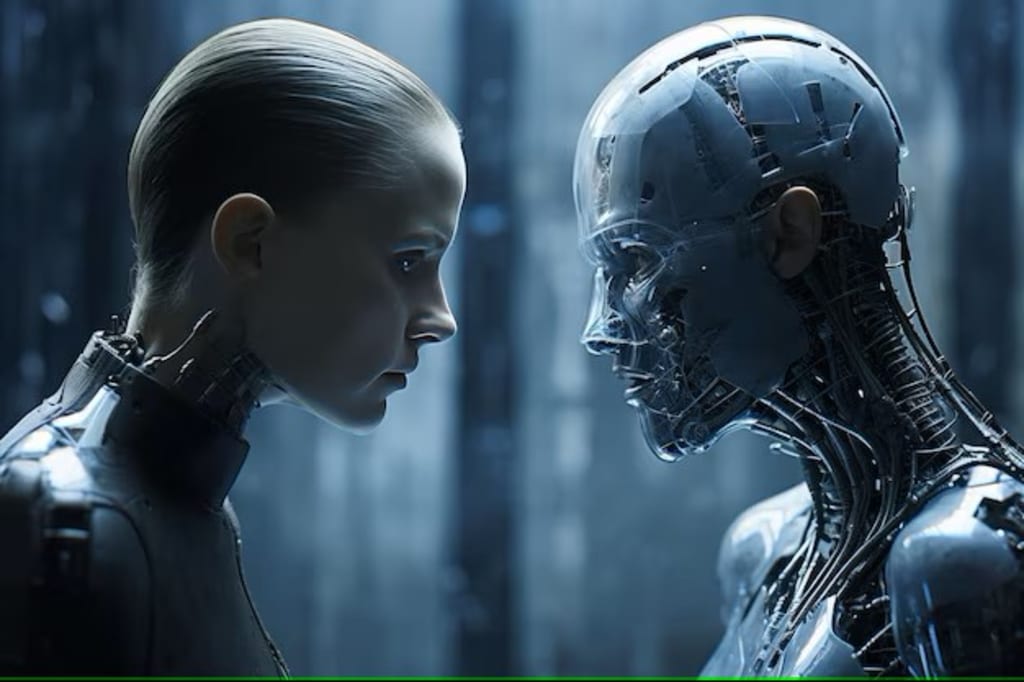
It’s undeniable—artificial intelligence is reshaping the world, and it’s not stopping anytime soon. For some, this surge of technological advancement brings excitement, an era of convenience and infinite possibility. For others, AI stirs anxiety and uncertainty, particularly for those in creative fields where the boundary between human expression and machine-generated content grows blurrier by the day.
In this whirlwind of change, a larger question lingers: What happens to our time, our value, and our sense of purpose in a world where machines can do so much of what we once did? Can we still find meaning when we’re constantly being outpaced by the algorithms we've created?
A New Era of Creation
A few months ago, I stumbled upon an online discussion that stopped me in my tracks. A fellow writer, one with a successful series of mystery novels, shared how she’d used AI to generate a cover for her latest release. The reaction? Utter chaos. Hundreds of furious replies condemned her for “cheating” and “devaluing real art.” The loudest voices seemed to believe that by opting for AI, she had somehow diminished the value of not only her own work but of all creators.
Her response was simple: "I didn’t have the time or money to commission a custom cover, and I needed something fast. Does the time I spent learning to use AI count for nothing?"
In that moment, I realized we were on the cusp of a new debate. Is the time we spend creating something still valuable if a machine could do it faster? And even more importantly, does the outcome of that time—whether it’s a novel, a painting, or a digital image—hold the same worth if AI played a role in bringing it to life?
The Age of Automation
Technology, and AI in particular, is rapidly altering the landscape of work. No longer confined to factories and rote tasks, AI is now a tool used by writers, artists, musicians, and designers. It’s capable of crafting symphonies, drafting legal documents, and generating visual art—all within minutes. Many welcome these advancements, seeing AI as a way to expedite the less enjoyable aspects of creative work, freeing up time for more personal, meaningful endeavors.
But not everyone is so eager. For many in the creative world, the increasing use of AI in artistry feels like an existential threat. We’ve long been told that human creativity is something machines could never replicate. Yet here we are, living in a time when algorithms produce artworks and novels that, at a glance, are indistinguishable from human creations. This begs the question: what value do we place on our work when machines can do it just as well?
Time Isn’t Always Money
The debate over AI often leads us back to a fundamental aspect of human existence: time. We invest our time into projects, whether it’s writing a book, painting a canvas, or designing a logo. For centuries, this time investment has been a core part of how we define value. The more time and effort spent, the more valuable the final product. Or so we’ve believed.
But here’s the hard truth: spending time on something doesn’t automatically entitle us to a reward. Not every novel written becomes a bestseller, and not every painting earns a spot in a gallery. Yet we persist, because the act of creation—the time we spend bringing something new into the world—has always been valuable in its own right.
AI complicates this. If an algorithm can create the same product in a fraction of the time, does that devalue the effort we’ve put in? And if time is no longer a factor in determining the worth of our creations, what does that mean for how we value our work?
The Human Touch
There’s a reason we gravitate toward handmade goods, whether it’s a beautifully crafted piece of furniture or a bespoke jacket. We place a premium on things created by human hands, not just because they’re unique, but because they carry with them the weight of time and personal investment. That’s something no AI can replicate.
But is this preference for human-made art a fleeting sentiment? As AI continues to evolve, will we become indifferent to the human touch, content to consume creations that, while devoid of human experience, fulfill our needs just as well?
Perhaps the value of human creativity lies not in the time spent, but in the irreplaceable nuance of experience, emotion, and perspective that no machine can ever truly grasp. AI can replicate a brushstroke or mimic a plotline, but it cannot understand the joy, pain, or wonder that fuels those creations. It can’t experience the thrill of discovery when a writer finds just the right word, or the catharsis a painter feels as they finish their masterpiece.
What AI Can’t Take
In this age of artificial intelligence, we need to redefine what we mean by value. Our time is still valuable, but not because it produces something faster or more efficiently than a machine. Our value as creators, as workers, as people, is rooted in our ability to experience the world and translate that experience into something meaningful. It’s about the stories we tell, the emotions we capture, and the connections we forge with others through our work.
As AI becomes more integrated into our daily lives, we’re left with a choice. We can either lament its presence, fearing it will render our efforts meaningless, or we can use it as a tool to enhance our creativity, to free us from the mundane and give us more time to focus on what truly matters.
At the end of the day, the machines may help us create, but they cannot replace the value of our unique human experiences. AI might accelerate our work, but the heart behind that work will always be ours alone.
Conclusion: Embracing the Future
Artificial intelligence is not going away, and neither is human creativity. The two are not mutually exclusive. Instead of resisting the changes AI brings, perhaps we should embrace them, using these tools not to diminish our humanity but to highlight the aspects of it that machines will never touch.
In the end, it’s not about how much time we spend or how fast we work. It’s about how we use our time to create things that reflect the world as only we see it.
And that, I believe, is something no machine can ever truly replicate.
About the Creator
Raymond Oliphant
Step into a world of stories where imagination meets inspiration. From heartwarming tales to thought-provoking adventures, my words are crafted to entertain, connect, and spark wonder. Let's explore the magic of storytelling together!
Keep reading
More stories from Raymond Oliphant and writers in Humans and other communities.
The Day The School Burned Down: A "True" Account by Mrs. Clarke
Let me set the record straight from the start: I’m not some doddering, easy-to-fool teacher. If you think that, you don’t know me. Thirty-five years in education has left me with a nose for lies so sharp it could slice through a steel beam. Which is why, when this “incident” happened last Wednesday, I wasn’t exactly surprised—just, well, mildly amused.
By Raymond Oliphantabout a year ago in Criminal
Why Didn't Anyone Tell Us
Men, move along. This is not for you. This is for the women. I was forty-five when I began menopause. It is pretty young for that to be going on in a woman’s life, but I had undiagnosed PCOS, my entire life. Thank you to all the gynecologists I had seen my entire life. That in itself should encourage women to keep seeking second opinions, especially when you are not getting correct answers or any at all.
By Alexandra Grant3 days ago in Humans
How To Overcome Dating App Burnout And Stay Hopeful Finding Love
The burnout of dating apps is an everyday experience of a modern single person. Infinite swipes, shallow communication and unmet expectations may bring frustration, burnout, and demotivation. Such experiences may over time diminish confidence and lead to cynicism in regard to dating.
By Robert Smitha day ago in Humans
Worth the Wait: Puerto Viejo, Costa Rica
Beach bumming in a small Caribbean beach town sounded like a perfect way to end our 6-month trip through Mexico and Central America. Or so we thought. The foul, fishy stench of rotten seaweed hit our nostrils as we stepped from the cramped bus and looked out at a rather depressing, empty, and underwhelming black sand beach. It was pouring with rain, and we had to quickly fish out our ponchos. We thought, this couldn’t be it, could it?
By Sh*t Happens - Lost Girl Travel7 days ago in Wander



Comments
There are no comments for this story
Be the first to respond and start the conversation.