
The Art of Self-Sabotage
Why People Destroy What They Secretly Want


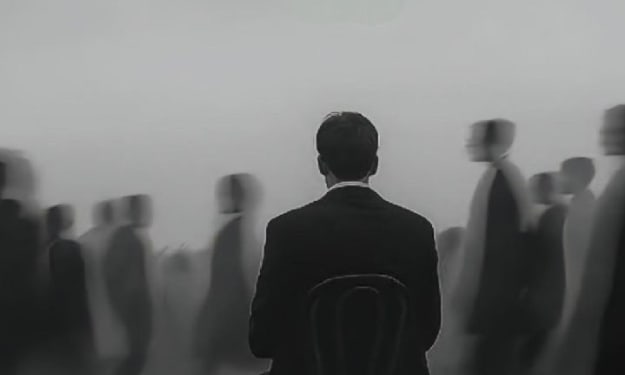
Self-sabotage rarely looks like a dramatic decision. It doesn’t usually show up as a conscious choice to ruin your own life. It shows up quietly. You procrastinate on something important. You push away people who treat you well. You quit when things start getting serious. You convince yourself you’re not ready even when you’ve been ready for a long time. From the outside, it looks like inconsistency. From the inside, it feels like confusion. But underneath both sits something deeper: fear.
Not fear of failure.
Fear of change.
Because success changes things. Healing changes things. Growth changes things. And change threatens the version of reality you’ve learned how to survive in.
Many people grow up in environments where chaos is normal. Unpredictability becomes familiar. Emotional instability becomes baseline. When you spend years adapting to dysfunction, stability can feel foreign. Even dangerous. Your nervous system associates familiarity with safety, not health. So when something good enters your life, your body doesn’t interpret it as relief. It interprets it as uncertainty.
And uncertainty triggers fear.
Self-sabotage is often the nervous system trying to return to what it knows.
Not what’s good.
What’s familiar.
Another layer of self-sabotage comes from identity. People don’t just get attached to who they are. They get attached to who they believe they are. If you’ve spent years seeing yourself as “the one who always struggles,” “the one who never catches a break,” or “the one who messes things up,” success threatens that identity. It forces you to become someone new. And becoming someone new feels like losing yourself, even when the new version is healthier.
So you unconsciously recreate situations that confirm your old story.
Not because you want to suffer.
But because your mind prefers a painful certainty over an unfamiliar possibility.
Self-sabotage also hides inside perfectionism. You tell yourself you won’t start until you’re ready. You won’t release until it’s perfect. You won’t try until you feel confident. On the surface, it sounds responsible. In reality, it’s avoidance dressed as standards. If you never begin, you never fail. If you never finish, you never face judgment. Perfectionism isn’t about excellence.
It’s about fear.
Another uncomfortable truth is that some people sabotage themselves because they don’t believe they deserve good things. This belief rarely comes from nowhere. It’s usually built through criticism, neglect, rejection, or repeated disappointment. Over time, these experiences turn into internal narratives.
“I’m too much.”
“I’m not enough.”
“Nothing good lasts.”
“I always ruin things.”
When these beliefs go unchallenged, they become filters. You interpret life through them. Even positive experiences get distorted. Compliments feel suspicious. Opportunities feel like traps. Love feels temporary.
So you leave first.
You quit first.
You destroy first.
Because controlling the ending feels safer than waiting for it.
Breaking the cycle of self-sabotage doesn’t start with willpower. It starts with awareness. You begin noticing patterns. When do I pull back? When do I procrastinate? When do I suddenly lose interest? What am I afraid would happen if this actually worked?
Those answers are uncomfortable.
But they are honest.
You don’t heal self-sabotage by hating yourself into change.
You heal it by understanding yourself into change.
You learn to sit with discomfort instead of escaping it.
You learn to tolerate good things without immediately looking for flaws.
You learn to question the stories you tell about yourself.
You learn to act even when fear is present.
Not because fear disappears.
But because fear no longer decides.
You are not broken because you self-sabotage.
You are human.
You adapted.
At some point, these behaviors protected you.
They kept you emotionally safe.
They helped you survive.
But survival strategies are not meant to become life strategies.
You don’t have to become a completely different person overnight.
You don’t have to fix everything.
You just have to start interrupting the pattern.
One small choice at a time.
Stay when you want to run.
Try when you want to quit.
Speak when you want to hide.
Let yourself receive what you’ve been denying.
You don’t sabotage because you hate yourself.
You sabotage because a part of you is scared.
That part doesn’t need punishment.
It needs reassurance.
It needs patience.
It needs proof that a better life is not a threat.
It’s an invitation.
About the Creator
Cabin Fever Because of Snow, Sleet, and Freezing Rain That Turned to Icy Roads
What Is Cabin Fever? The short answer is that cabin fever is restlessness from being in a confined area. Cabin fever is the distressing irritability or restlessness experienced when a person or group is stuck at an isolated location or in confined quarters for an extended time. Research shows that prolonged cold, gray skies, and being stuck indoors can trigger mood shifts similar to “winter blues.”
By Margaret Minnicks3 days ago in Humans
Across the Ages of the Self: How the Soul Learns Through Time
There are ideas that arrive softly, like a whisper brushing the edge of consciousness, and others that land with the weight of recognition—as though they were always known, waiting only for language to catch up. The understanding that our incarnations on Earth unfold across vast arcs of time, spanning roughly 2,500 years of experiential learning, belongs to the latter category. It is not a doctrine, not a dogma, not a rigid metaphysical map. It is a framework that resonates across mystical traditions, ancient cosmologies, and modern spiritual inquiry. It is a way of understanding the soul’s long journey through matter, time, and choice.
By Julie O'Hara - Author, Poet and Spiritual Warrior4 days ago in Humans


Comments
There are no comments for this story
Be the first to respond and start the conversation.