
The Art of Being Seen: The Vulnerable Truth About Acting With Michael Ocean
Why the courage to open your heart is an actor’s most powerful tool.

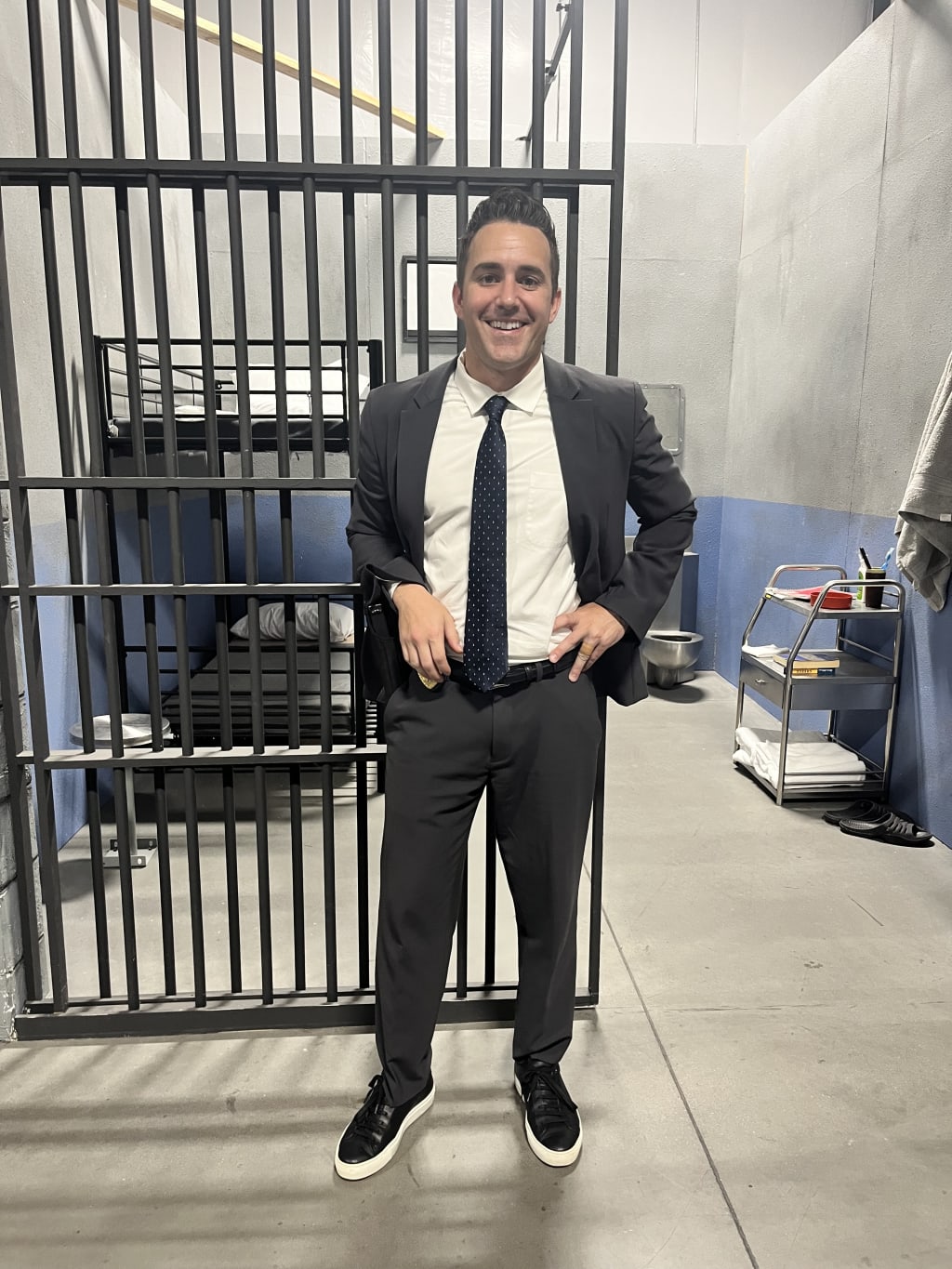
By Kathryn Monroe
In an industry that celebrates glamour and polish, the most powerful performances are born from something raw, fragile, and unguarded: vulnerability.
For Michael Ocean, a rising actor known for his work on 9‑1‑1: Nashville and Discovery+, stepping in front of a camera is never just about hitting marks or remembering lines. It’s about exposure — not of the body, but of the self.
“Every time you act, you’re offering a piece of yourself,” Ocean says. “It’s like leaving the door open to your soul and hoping the audience steps inside.”
That kind of openness comes with risk. The risk of rejection. The risk of being misunderstood. The risk of baring your emotional truth and watching it be met with indifference. And yet, for actors like Ocean, it’s not optional. Vulnerability isn’t a technique; it’s the work itself.
Acting demands an emotional honesty most people spend their lives avoiding. Great actors strip away the protective layers they’ve built in everyday life — the polite smiles, the practiced small talk — and dive headfirst into the messy, unfiltered parts of the human experience. They relive heartbreaks. They reopen old wounds. They sit in fear, rage, and grief until it feels real enough for the audience to believe.
On set, that means surrendering to the moment in ways that are deeply personal. A single glance can reveal an unspoken backstory. A pause in dialogue can hold the weight of a lifetime. These subtleties — invisible to most but felt by the audience — are born from an actor’s willingness to stand emotionally exposed.
It’s why some performances haunt us long after the credits roll. Vulnerability is what turns a role into a living, breathing human being. It’s why we believe the love, the loss, the triumph. Without it, acting is just reciting lines.
But there’s another side to that openness. The moments between jobs can be the hardest. When the auditions dry up, when a callback doesn’t come, when the silence between phone calls stretches for weeks — actors are left alone with their doubts. For Ocean, those moments test his resilience as much as any role.
“You have to learn to sit in the uncertainty,” he reflects. “The same openness that lets you create magic on set also means you feel the setbacks more deeply. You can’t turn it off. But that’s what makes the victories sweeter.”
The truth is, every role is an act of bravery. It requires an actor to step into unfamiliar skin, to take on pain or joy that may not be their own, and to do it with the same intensity as if it were happening in real life. This kind of immersion is exhausting — physically, emotionally, and even spiritually. Yet it’s also intoxicating. It’s why actors keep returning to the work, even when it hurts.
For Ocean, vulnerability is not just a skill; it’s the foundation of connection. “When you’re real with your emotions,” he says, “it gives other people permission to feel theirs. That’s when you stop just entertaining — and start making an impact.”
Audiences rarely see the hours of emotional preparation, the self‑doubt, the sacrifices behind the scenes. They see the finished product, polished and projected larger than life. But for those who live inside the work, the reward isn’t just in applause or recognition — it’s in knowing that for a moment, someone out there truly saw them.
Vulnerability, then, is a paradox. It’s the actor’s greatest risk and their greatest strength. It’s what allows a performance to crack open the heart of a stranger watching from a darkened theater. It’s what bridges the gap between performer and audience.
For Michael Ocean, it’s also a quiet promise: that he will keep showing up, keep opening the door, keep being seen. Because the truth is, the audience doesn’t just watch the actor. In the most unforgettable moments, they recognize themselves.
Ai-assistance for grammar checking purposes.
About the Creator
Kathryn Monroe
I document the rise of Nashvilles local talent. I am the publicist for Michael Ocean
Keep reading
More stories from Kathryn Monroe and writers in Humans and other communities.
Michael Ocean: Rising Star Redefining Strength Through Resilience
Michael Ocean: Weakness is Resilience is Strength By Kathryn Monroe Life has a way of testing us when we least expect it. For actor Michael Ocean, resilience isn’t just a word — it’s a way of living. Through personal battles, career challenges, and the responsibilities of being a husband and new father, he’s discovered that true strength is not in weathering the storm, but in standing tall once the clouds have passed. His journey blends hardship, ambition, and unwavering commitment to family.
By Kathryn Monroe4 months ago in Humans
Why I No Longer Sell on Amazon
When I published my first book in 2011, I used Lulu. At the time, it was one of the few print-on-demand options that allowed authors to retain control over content, pricing, and distribution. Over the years, I explored other publishing routes, including limited digital placement on Amazon Kindle, but I remained consistent with Lulu for physical books. As of this writing, I am still evaluating whether those remaining Kindle titles will stay available.
By Dr. Mozelle Martin4 days ago in Humans



Comments
There are no comments for this story
Be the first to respond and start the conversation.