science
The Science Behind Relationships; Humans Media explores the basis of our attraction, contempt, why we do what we do and to whom we do it.
Heroes
In today’s society like in the past, kids have heroes. This is a good thing. However, in modern society it seems the process of selecting heroes has become rather muddled or confused. Fame should not necessarily make a person a hero. We have experienced this from both sides: first as parents of two sons who chose heroes while growing up, and now with two sons who have distinguished themselves as outstanding athletes who are often the object of hero worship.
By Imeth Githsara3 years ago in Humans
Organizing Of Web Pages
Each websites vary on the rut each lacework pages are organized — from a picnic web page with paragraphs and headings to a further entangled lacework page that uses a newsletter-style beget approach. You itch forget crafty one which has no sunshiny burden or you leave suffer in the colossal run.
By Imeth Githsara3 years ago in Humans
Are Cell Phones Mutating the Shape of Our Bones?
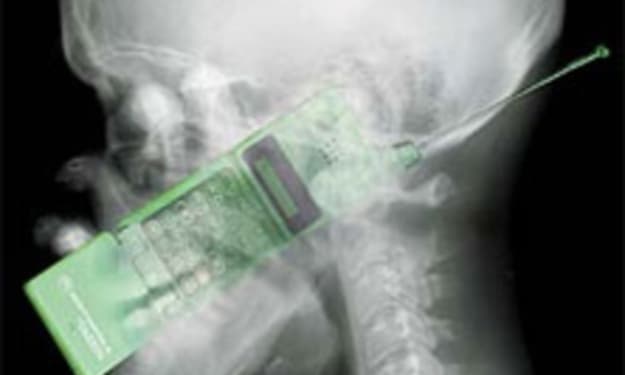
what if cell phones were so powerful that they could mutate the shape of our bones. this is a surprisingly new topic that's recently been popping up all over the media it stems from a scientific report that suggests using phones and tablets can cause serious and long-lasting changes to our bodies and not in a way that you might think in the past few years a study has been carried out by David Shahar and mark sayers who specialized in biomechanics at Australia's University of the Sunshine Coast biomechanics looks at how mechanical laws apply to living. organisms from how humans run to how insects beat their wings. Shahar and Sayers's study also involves osteo biography is used to work out what someone's life was like from their bones it's been known for some time that skeletons adapt to a person's lifestyle every set of bones tells a story for example some unusually large skeletons were found on the Pacific island of Tinian in 1924 stone structures in the vicinity of the skeletons explained the substantial nature of the bones of the island by working with heavy stones they had naturally developed bigger arms legs and collarbones and over in Australia Shaw heart and sayers believe that modern tech is shaping young people's skeletons so how is it doing this it's all to do with something called an EOP or external occipital protuberance some experts and commentators have been more colorful and described it as a foam ball or a devil like horn in reality the EOP is a growth of bone found in the back of the skull it's connected to the nuchal ligament this is an important ligament that plays a role in connecting Nick's muscles to the skull the EOP creates an effect a lot like an anchor at the top of the nuchal ligament now let's go back to what the researchers were actually doing with the study in the first place by looking at Chiropractor X-rays of people aged between 18 to 86, they wanted to get an an up-to-date insight into how skeletons change because a lot of these X-rays were investigating things like neck pains there are also elements of what consequences these changes may have on our health Shahar has sayers noticed that in young people the EOP appeared to be more widespread from this they hypothesized that young people's posture while constantly checking their phones and tablets were a major factor during the screen time the neck instinctively cranks forward the theory is that by craning forward extra pressure is put on the area where sculpt me muzzle to compensate the EOP gets gradually longer growing to around several milliliters the effect has also referred to as text neck the funding also revealed that it was mostly found in men in 2016 Shah Harden sayers reported a bigger Yi Opie and 67% of men compared to 20% of women based on a test group of 218 people by 2018 they had looked at 1200 people with males appearing to be 5 times more likely to get these large texts necks but what is the potential impact on humanity we hear a lot about the radiation from phones potentially linked to cancer but can using a mobile device actually creates significant health problems in the body this new report has opened up the debates on this topic since it's the the first case where experts are explicitly pointing out how tech is affecting our bodies Shahar & Sayers described the elongated yo PS as a degenerative process implying things are only gonna get much worse for young people if they keep using their devices there is also something called text thumb or thumb arthritis where the thumb can develop serious problems similar to the dreaded carpal tunnel syndrome however the study of EOPS and referring to them as horns where spikes have been criticized by others in the press experts point out that the report is not conclusive and like any scientific paper, it makes assumptions archeologists will tell you that longer skull bones are nothing new and that there are especially common in males the general view according to the studies critics are that there simply isn't enough hard evidence to back up the claim that you are actually turning into Hellboy by using your cell phones so are Shahar and Sayers on to something or have they simply taken along established facts and fitted them into their own explanation either way there's no denying the dramatic impact that technology has on our lives the idea that upcoming generations are changing due to constant interaction with their devices is really a serious issue that needs to be addressed ultimately it will be the archaeologists of the future that makes that call maybe don't even have big spikes sticking out of the back of their necks in the future who knows so yeah maybe a little more walk in the park and a little less Angry Birds you what if cell phones were so powerful that they could mutate the shape of our bones this is a surprisingly new topic that's recently been popping up all over the media it stems from a scientific report that suggests using phones and tablets can cause serious and long-lasting changes to our bodies and not in a way that you might think in the past few years a study has been carried out by David Shahar and mark sayers who specialized in biomechanics at Australia's University of the Sunshine Coast biomechanics looks at how mechanical laws apply to living organisms from how humans run to how insects beat their wings Shahar and Sayers's study also involves osteo biography is used to work out what someone's life was like from their bones it's been known for some time that skeletons adapt to a person's lifestyle every set of bones tells a story for example some unusually large skeletons were found on the Pacific island of Tinian in 1924 stone structures in the vicinity of the skeletons explained the substantial nature of the bones of the island by working with heavy stones they had naturally developed bigger arms legs and collarbones and over in Australia Shaw heart and sayers believe that modern tech is shaping young people's skeletons so how is it doing this it's all to do with something called an EOP or external occipital protuberance some experts and commentators have been more colorful and described it as a foam ball or a devil like horn in reality the EOP is a growth of bone found in the back of the skull it's connected to the nuchal ligament this is an important ligament that plays a role in connecting Nick's muscles to the skull the EOP creates an effect a lot like an anchor at the top of the nuchal ligament now let's go back to what the researchers were actually doing with the study in the first place by looking at Chiropractor X-rays of people aged between 18 to 86, they wanted to get an an up-to-date insight into how skeletons change because a lot of these X-rays were investigating things like neck pains there are also elements of what consequences these changes may have on our health Shahar has sayers noticed that in young people the EOP appeared to be more widespread from this they hypothesized that young people's posture while constantly checking their phones and tablets were a major factor during the screen time the neck instinctively cranks forward the theory is that by craning forward extra pressure is put on the area where sculpt me muzzle to compensate the EOP gets gradually longer growing to around several milliliters the effect has also referred to as text neck the funding also revealed that it was mostly found in men in 2016 Shah Harden sayers reported a bigger Yi Opie and 67% of men compared to 20% of women based on a test group of 218 people by 2018 they had looked at 1200 people with males appearing to be 5 times more likely to get these large texts necks but what is the potential impact on humanity we hear a lot about the radiation from phones potentially linked to cancer but can using a mobile device actually creates significant health problems in the body this new report has opened up the debates on this topic since it's the the first case where experts are explicitly pointing out how tech is affecting our bodies Shahar & Sayers described the elongated yo PS as a degenerative process implying things are only gonna get much worse for young people if they keep using their devices there is also something called text thumb or thumb arthritis where the thumb can develop serious problems similar to the dreaded carpal tunnel syndrome however the study of EOPS and referring to them as horns where spikes have been criticized by others in the press experts point out that the report is not conclusive and like any scientific paper, it makes assumptions archeologists will tell you that longer skull bones are nothing new and that there are especially common in males the general view according to the studies critics are that there simply isn't enough hard evidence to back up the claim that you are actually turning into Hellboy by using your cell phones so are Shahar and Sayers on to something or have they simply taken along established facts and fitted them into their own explanation either way there's no denying the dramatic impact that technology has on our lives the idea that upcoming generations are changing due to constant interaction with their devices is really a serious issue that needs to be addressed ultimately it will be the archaeologists of the future that makes that call maybe don't even have big spikes sticking out of the back of their necks in the future who knows so yeah maybe a little more walk in the park and a little less Angry Birds you.
By Michaella Anthoo3 years ago in Humans
How to Get Your Brain to Focus on What Matters
How to Get Your Brain to Focus on What Matters Improving your ability to focus on what matters can greatly enhance your productivity and effectiveness. Here are some strategies to help you train your brain to focus on the most important tasks:
By Motivational Bucks3 years ago in Humans
Man With a Unique Brain
We are all familiar with the fact that Albert Einstein was an exceptional genius, whose intellectual capacity surpassed that of a thousand scientists combined. He delved into realms of knowledge that were previously inconceivable, making profound concepts accessible to the entire world. As a renowned physicist, Einstein revolutionized science by introducing the theory of special relativity (E = mc²) and formulating the laws of photoelectricity, leaving the global community awe-struck. His remarkable thinking abilities and profound understanding earned him the esteemed Nobel Prize. People widely believe that Einstein possessed an extraordinary brain, vastly distinct from that of an ordinary individual. This notion was so deeply ingrained in Einstein's own consciousness that he specifically expressed his desire for his body, particularly his brain, to be cremated and not subjected to scientific examination following his demise.
By DIVINEFAVOUR REMIGIUS3 years ago in Humans
From Synthesis to Dependence:
Buried inside our genome right now are molecular fossils, bits of DNA that are so broken that they no longer work. Over 90% of our genome doesn’t code for anything. And embedded in all this non-coding DNA, like bones in rock, are fossilized pseudogenes.
By Pearl E. White3 years ago in Humans