science
The Science Behind Relationships; Humans Media explores the basis of our attraction, contempt, why we do what we do and to whom we do it.
The danger of knowledge
In the primordial garden of Eden, the first man and woman, Adam and Eve, dwelled in blissful ignorance. They reveled in the bounties of nature and the uncomplicated beauty of their surroundings. Yet, amidst the paradise, lay a solitary tree—the Tree of Knowledge of Good and Evil—a stark reminder of the boundaries set by the Creator.
By Kayan Andrew2 years ago in Humans
The Sugar Saga
Introduction: Nestled in a realm far beyond the naked eye exists the sprawling, bustling city of Cellville. It's a vast expanse stretching across every inch of what we humbly call the 'human body.' A marvel of nature's architecture, Cellville is an intricate tapestry of rivers, highways, factories, and homes. The beauty of this city lies not just in its complexity but in its fluid harmony. Its towering skyscrapers are cells that form organs, its busy streets are blood vessels, and its countless citizens are cellular structures, each with a unique purpose. Together, they create a symphony of life, and every part of this metropolis thrives on intricate processes, delicate balances, and seamless coordination.
By Kaycee Godwin2 years ago in Humans
Chandrayaan-3 Space Exploration
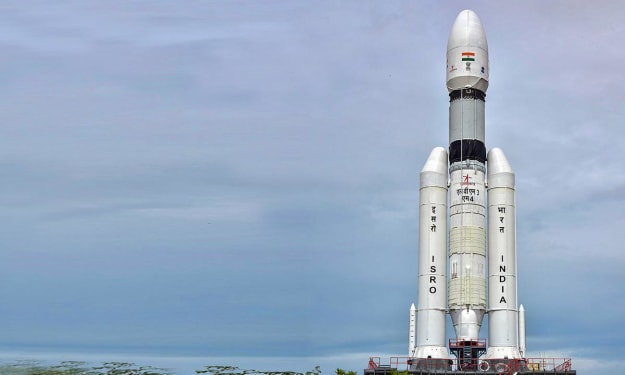
A lunar exploration vehicle gracefully descended a slope from India's spacecraft shortly after its triumphant touchdown near the moon's southern pole, as announced by Indian space officials on Thursday. This achievement was met with celebration across the nation, marking a significant step in scientific progress.
By Majid khan2 years ago in Humans
Investigating the Link Between Blood Clotting and Perfume Ingredient
Introduction: The Intricacies of Blood Clotting and Trauma Bleeding from a major injury is undoubtedly a serious concern, with the potential loss of blood posing immediate danger. However, recent research has shed light on a lesser-known danger associated with massive blood loss: the risk of blood clotting occurring in unexpected places within blood vessels. This phenomenon, known as coagulopathy, can complicate the efforts of medical professionals striving to save lives in cases of severe injury. Remarkably, a solution to this challenge might come from an unexpected source – a key ingredient used in perfumes.
By Japneet Kaur2 years ago in Humans
“Unlocking the Hidden Powers of the Human Mind: The Science Behind Extraordinary Abilities”
Unlocking the Hidden Powers of the Human Mind: The Science Behind Extraordinary Abilities. In a world where superheroes dominate the silver screen, there's a growing fascination with the idea of unlocking superhuman abilities. While we may not be leaping tall buildings in a single bound, recent scientific discoveries suggest that the human mind might possess untapped potential that could rival even the most fantastical powers.
By Deja Lindsey2 years ago in Humans
HeartSync: Navigating the Ethical Labyrinth of AI-Powered Healthcare
In the not-so-distant future, where AI-powered healthcare was as common as smartphones, Lily found herself in the crossroads of medical innovation and ethical dilemmas. She had been diagnosed with a rare heart condition that required constant monitoring, and her doctor recommended an AI implant to manage her health more effectively.
By Isaac Godo2 years ago in Humans
Does human history affect their Immune response?
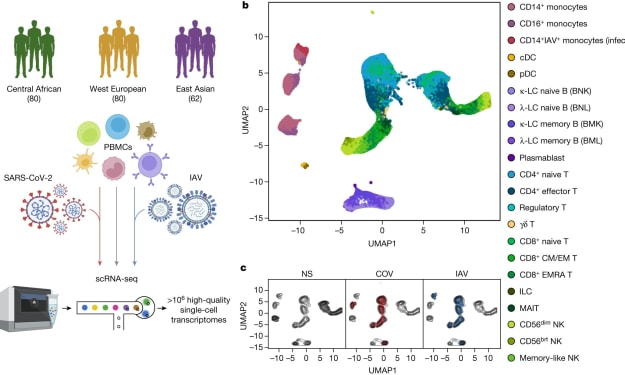
During the Coronavirus pandemic, the clinical range seen among individuals tainted with SARS-CoV-2 went from asymptomatic carriage to death. Specialists at the Institut Pasteur, the CNRS, and the Collège de France, in a joint effort with scientists all over the planet, have researched the degree and drivers of contrasts in safe reactions to SARS-CoV-2 across populaces from Central Africa, Western Europe, and East Asia.
By Wyckliffe Ayoma 2 years ago in Humans
WHAT WILL WE MISS?
Hello, this is KRISH, and let's take a fascinating journey into the future. In the year 6009, a peculiar quirk of our numeral system will occur – the first time since 1961 that a year, when written in Hindu-Arabic numerals, can be inverted and still look the same. It's a curious observation, but sadly, you and I might not be around to witness this numerical anomaly. The brevity of human life limits our experiences, and there's a myriad of captivating events we'll likely miss out on.
By Krishna Singh2 years ago in Humans
TIME TRAVEL
Hello, friends! The universe's immense size is both astonishing and disappointing. Its vastness, as revealed by powerful telescopes, is incredible, yet the distance between celestial bodies is disheartening. Imagine finding an Earth-like planet suitable for human habitation in another galaxy through our telescopes today – reaching it would take centuries. Traveling beyond our galaxy is virtually impossible for individuals. Our home, Earth, resides in the Milky Way Galaxy, with the nearest neighbor being the Andromeda Galaxy, a staggering 2.5 million light-years away. Using conventional spacecraft speeds of 28,000 km per hour, it would take an incomprehensible 94.5 billion years to reach Andromeda. Even if we could travel at the speed of light, the journey would still take 2.5 million years. This realization is truly disappointing.
By Krishna Singh2 years ago in Humans