science
The Science Behind Relationships; Humans Media explores the basis of our attraction, contempt, why we do what we do and to whom we do it.
"The World's Hottest Pepper: Inside the Fiery World of Capsaicin Obsession"
Introduction Ed Currie, an unassuming yet passionate man, has dedicated his life to peppers that pack a punch. His creation, the Carolina Reaper, holds the Guinness World Record for being the spiciest pepper on Earth. This is the story of a man whose life revolves around capsaicin, the compound responsible for the fiery sensation in hot peppers.
By Anu Preethi Danila D2 years ago in Humans
Guardians of the Rainforest: The Brazil Nut Harvesters of the Amazon
In the heart of the Amazon rainforest, a remarkable tradition unfolds – the collection of Brazil nuts. These prized nuts are not only a source of livelihood for indigenous communities but also vital for the health of the rainforest. This is the story of how these guardians of the rainforest saved their industry in the past and the new threat they now face.
By Anu Preethi Danila D2 years ago in Humans
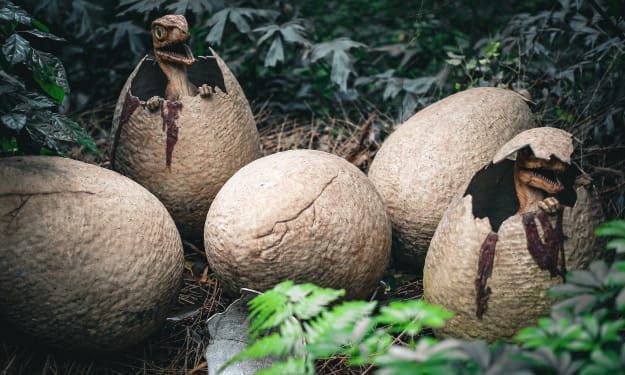
Preserving Tradition: The Story of "A Synthip Walk" Salt in the Philippines
In a world where modernization and convenience often overshadow age-old traditions, the Philippines stands as a testament to the resilience of cultural heritage. Here, a remarkable story unfolds - that of "a synthip walk," a salt variety known as the "dinosaur egg." This rare artisanal salt has not only managed to defy the odds but also carve a niche for itself in a rapidly changing world.
By Anu Preethi Danila D2 years ago in Humans
THE MAXIMUM SPEED HUMANS CAN SURVIVE
The fastest individual on Earth effortlessly makes rapid movement appear effortless. The current speed record for humans is just over 27 miles per hour, achieved briefly by Sprinter Hussein Bolt during the halfway point of his world record 100-meter dash. Humans have the potential to reach even higher speeds, limited only by the quickness of our muscle movements. In theory, our muscles could reach speeds up to 40 miles per hour. However, the reason we cannot achieve this is due to the amount of time we spend in the air, which restricts the force our limbs can exert upon impact with the ground. This is why someone on skates can outpace a runner, as gliding allows for increased traction and therefore greater speed. If humans had longer legs, wider hips, or additional limbs like insects, we could potentially achieve even faster speeds, especially if we were able to run on all fours. In 2016, speed records were not only broken on the running track, but also on the ski slopes in France. The world record for downhill skiing belongs to an Italian ski instructor and mountain guide who, assisted solely by gravity, achieved a speed of approximately 158 miles per hour while skiing across the Zone near the bottom of a course in just over two seconds. Personally, I struggle to maintain balance on skis, let alone move at half that speed. To put it into perspective, the fastest a tiger beetle can sprint is up to five miles per hour, which may not initially seem impressive. However, when considering that it covers 120 of its body lengths in a single second, it becomes quite remarkable. In comparison, Bolt covers about six body lengths per second. To match the speed of the beetle, Bolt would have to run at approximately 480 miles per hour, which is twice as fast as a peregrine falcon. Tiger beetles have incredibly sharp eyesight for insects, but while running, their surroundings become a blurry smudge. This means that the beetle must periodically stop to assess its path and determine where it is going. Despite this, they remain remarkably fast. The speed of a mite is equivalent to a human running at approximately 1300 miles per hour at its fastest. This tiny mite, comparable in size to a sesame seed, can cover 322 body lengths per second. Have you ever contemplated how quickly a light bulb illuminates? Well, you couldn't possibly catch it in time—it appears instantaneous. Consider, for a moment, attempting to click a stopwatch at the exact moment a finger snap occurs. It happens within the blink of an eye. Oops, I misspoke—can you provide the sound of a finger snap? Light travels at an astonishing speed. For example, during a storm, you will see lightning before hearing the crack of thunder. The light from the bolt races towards your eyes and swiftly reaches your brain for you to process, all while the sound wave from the thunder is still making its way to your ears. It will eventually arrive, but it requires time. By the way, thunder is not the result of storm clouds colliding; it stems from the same lightning bolt as it hurtles towards the ground, creating a rip in its path. The Earth's rotation is increasing. Scientists are unsure why. If the Earth sped up by one mile per hour, the day would only shorten by about a minute and a half. We wouldn't really notice the change. the human bodies are adjusted to a 24-hour timing hence a struggle to adapt to the faster spin. The Earth's rotation keeps the weather consistent.
By sandra kamila2 years ago in Humans
Crafting the Perfect Chess Set: The Artisans Behind the World Chess Championship Pieces
In the world of chess, not all pieces are created equal. While you can easily find a plastic chess set for a mere $20, the world chess championship-certified wooden sets come with a hefty price tag of $500. So, what makes these chess sets so expensive? The answer lies in the meticulous craftsmanship of each individual piece, particularly the knights.
By Anu Preethi Danila D2 years ago in Humans
Acai: The Amazonian Superfood's True Cost
Amidst the lush wilderness of the Amazon rainforest, the act of harvesting acai berries has become a perilous and, at times, unrewarding task. The berries, now celebrated as one of the most sought-after superfoods in the United States, carry a hefty price tag, yet the small-scale farmers who have cultivated them for generations struggle to reap the benefits.
By Anu Preethi Danila D2 years ago in Humans
What is DEJA VU? Ever had it?. Content Warning.
The term déjà vu, which means "already seen" in French, may seem self-explanatory, but it piqued the interest of a parapsychologist, someone who investigates psychic phenomena, in the past. At the time, déjà vu was considered so unusual that it was often associated with the supernatural, much like clairvoyance or mediumship. Many regarded it as a phenomenon related to reincarnation or even alien encounters. The scientific community has only recently started taking déjà vu seriously, although public perception hasn't necessarily followed suit. A 1991 Gallup poll placed déjà vu alongside astrology, paranormal activity, and ghosts in the realm of superstitious beliefs.
By Daud Mahmood2 years ago in Humans
The benefits of magnesium for your health
Magnesium is involved in more than 300 biochemical reactions. It plays a role in maintaining muscle and nerve functions, in regulating the heart rhythm, in maintaining a healthy immune system. It is also necessary to maintain strong zilchis and control blood sugar and blood pressure.
By benhiba abdelhak2 years ago in Humans
Psychological Effects of Stress:
Once upon a time in a bustling city, there lived a young woman named Sarah. She was an ambitious professional with a demanding job, always striving for perfection in her work. Sarah's dedication to her career was admirable, but it came at a cost – stress was slowly creeping into her life, affecting her mental health.
By David Sada2 years ago in Humans
RSV Vaccines for Pregnant Individuals and Infants: Ensuring Informed Decision-Making. Content Warning.
The recent guidelines issued by the Centers for Disease Control and Prevention (CDC) pertaining to RSV vaccines have garnered significant attention, shedding light on the criticality of safeguarding newborns and infants against respiratory syncytial virus (RSV). The advent of novel vaccines has revolutionized the realm of RSV prevention. The objective of this article is to offer lucidity on the eligible recipients and optimal timing for administering these vaccines, while also presenting pertinent factors for parents and caregivers to contemplate.
By Md. Ruhullah Siddiqy 2 years ago in Humans
The Priceless World of Bonsai: Unraveling the Enigmatic Allure of Miniature Trees
The captivating world of bonsai stands as an art form like no other, where miniature trees are sculpted into perfect replicas of nature, housed within petite pots. Yet, while these diminutive marvels command astronomical prices, they are also a testament to centuries-old tradition and the meticulous craftsmanship of dedicated artisans. The question looms: what makes bonsai so remarkably expensive?
By Anu Preethi Danila D2 years ago in Humans