science
The Science Behind Relationships; Humans Media explores the basis of our attraction, contempt, why we do what we do and to whom we do it.
"Childhood Wonders:experiments and fun again!
Ah, my dear, let me take you back to the days of my childhood, when the world seemed full of mysteries waiting to be unraveled. It was a time of curiosity and discovery, where every day held a new adventure in the realm of science, albeit often mistaken for magic.
By Aiman Javed2 years ago in Humans
The Silent Killer
In the quiet moments of my life, when the world slows and reflection takes hold, I often think about the subtle forces that shape our life. Among these, stress stands out as a silent saboteur, influencing our bodies and minds in deep and subtle ways. Understanding stress started off as something deeply personal to me, shaped by both experiences and the insights from scientific research.
By Waleed Mahmud Tariq2 years ago in Humans
Refreshing the Human Mind: Techniques and Strategies for Mental Renewal. Content Warning.
In our fast-paced, technology-driven world, the human mind is often subject to constant stress, information overload, and fatigue. Refreshing the mind is crucial for maintaining mental health, enhancing productivity, and fostering creativity. This article explores various techniques and strategies to help rejuvenate the human mind, providing a holistic approach to mental renewal.
By afrin jahan2 years ago in Humans
Clinical Oncology Next-Generation Sequencing Market Size & Share to Surpass USD 35.42 Billion by 2030
Clinical Oncology Next-Generation Sequencing Market Overview Maximise Market Research is a business consultancy firm that has provided a comprehensive analysis of the "Clinical Oncology Next-Generation Sequencing Market". The research covers essential business insights, demand analysis, pricing analysis, and the competitive landscape. The research thoroughly analyses the current condition of the Clinical Oncology Next-Generation Sequencing market and makes estimates for 2030.
By MaximizePuja 122 years ago in Humans
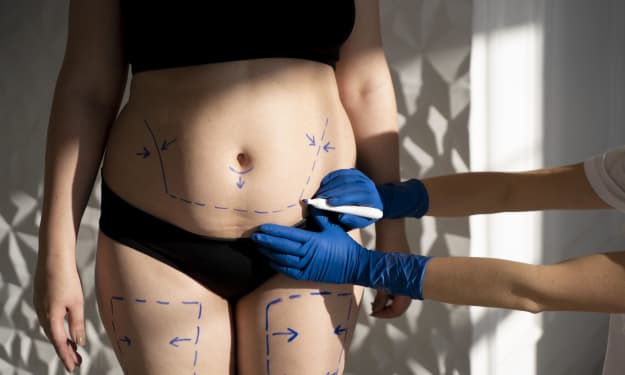
Learn about the procedure, benefits, and why Dr. Gawri is a top choice for achieving your desired body contours.
Understanding Liposuction Surgery in Punjab When considering liposuction surgery in Punjab, it's crucial to understand what the procedure entails. Liposuction, also known as lipoplasty, is a cosmetic surgery designed to remove excess fat deposits, sculpting and contouring various parts of the body. This procedure is particularly popular in Punjab, where both men and women seek to enhance their appearance and boost their confidence. With advancements in medical technology, liposuction has become safer and more effective, providing natural-looking results with minimal downtime.
By Dr. Jaskirat2 years ago in Humans
*What Does It Feel Like to Die?*
The question of what it feels like to die is one that many are interested in, if not a little terrified about. Researchers are now closer than ever to understanding what really happens while you're dying. Recently, specialists studied the brains and bodies of dying individuals to gain new insights into the experience of death. ### Stage One: The Beginning of Active Dying A new meta-analysis found that most people in the Western world will die in clinical settings, where the first sign of death is a loss of appetite and thirst. Doctors call this the beginning of active dying, characterized by an intense feeling of relaxation. During this stage, individuals can typically only manage small spoonfuls of food and water. This physical decline marks the transition from life to death, initiating a process that many medical professionals observe closely to provide comfort and care. ### Stage Two: Extreme Fatigue and Unconsciousness As the dying process progresses, extreme fatigue and unconsciousness become prevalent. One study found that 72% of patients in this phase reported pre-death dreams, including reuniting with people who had already died. Additionally, 59% dreamed about preparing to travel somewhere, and 28% dreamed of significant past experiences. These pre-death dreams occur because individuals are mostly asleep or even slipping into unconsciousness. At this stage, if someone tries to wake you, nothing will happen. Studies of unconscious patients show that when they do eventually wake up, they often believe they were just sleeping. The fatigue during this phase is consistent, and sleep is no longer refreshing. The body's energy reserves are nearly depleted, leading to a continuous state of exhaustion. ### Stage Three: Seeing Light During this stage, your heart will beat less strongly, your blood pressure will fall, and your organs, including your brain, will function less efficiently. Essentially, your brain is trying to conserve energy as it slowly dies, losing its inhibitory power. This loss of inhibition can lead to the phenomenon of seeing light, often reported by individuals who have had near-death experiences. Studies on rats and some human studies suggest that this light is caused by the brain's visual system firing as it loses control. This stage is marked by a significant decrease in physiological function, as the body begins to shut down systematically. ### Stage Four: The Last Breath An unconscious person's breathing follows the automatic patterns produced by the brain's respiratory system, but without proper control over their mouth and throat, saliva builds up. The mixture of saliva and automatic rapid breaths creates loud breathing noises that many find unsettling. However, the dying person does not feel discomfort because they are deeply relaxed. This phenomenon, known as the "death rattle," signifies that the body is no longer able to clear secretions effectively. Despite the disturbing sound, it's important to understand that the person dying is not in distress. ### Stage Five: Brain Flooding A recent study on rats dying from heart failure found that specific brain regions flooded with synchronized low gamma waves more coherent than when the rats were alive and healthy. These brain waves are similar to those seen during high-level cognitive activity. This discovery intrigued researchers about what happens in human brains as we die. A study of 567 dying individuals who had their brains monitored during CPR found that, like the rats, their brains fired intensely. Survivors reported clear experiences such as feeling separated from their body, observing events without pain, evaluating their lives, and reflecting on their choices. Some patients reported knowing they were dying but felt they were heading towards a place that felt like home. Another study observed that the brain activity of a dying man was similar to those on the hallucinogenic drug DMT. However, revived individuals reported that their experiences felt different from hallucinations or dreams. This stage illustrates that even as the body shuts down, the brain may still engage in profound and vivid experiences, possibly providing a sense of closure or understanding. ### Conclusion What goes through people's minds as they die? Are there common regrets or emotions? The dying process, as understood through scientific study, involves several stages that blend physiological decline with unique psychological experiences. If you know someone who has had such experiences, please leave a comment. I've put a lot of work into this article, which is part of my thesis, so please let me know how you find it. Understanding the process of dying not only demystifies it but also helps us approach it with compassion and care, both for ourselves and for those we love. The more we learn about what it feels like to die, the better we can prepare for it and support those who are facing it. If you know someone who has had such experiences, please leave a comment. I’ve put a lot of work into this article, which is part of my thesis, so please let me know how you find it. Thank you very much for reading this article.
By Written by Jonathan Leuthold2 years ago in Humans
The Man Who Lived with a Bear for Years. AI-Generated.
In the remote wilderness of Siberia, an extraordinary story of friendship and survival unfolded between a man and a bear. This is the tale of Anatoly Tupolev, a solitary forest ranger, who formed a unique and enduring bond with a wild bear named Pasha. Their relationship, spanning several years, defied conventional boundaries and captured the hearts of many, illustrating the profound connection that can exist between humans and animals.
By Julio Javier2 years ago in Humans
From Farm to Table: Rediscovering Family Bonds
Once upon a time in a bustling city, the Martins were a typical modern family. Their lives were a whirlwind of activities, schedules, and electronic devices. Susan and John Martin both worked demanding jobs, and their two children, Lily and Ben, were busy with school and extracurricular activities. Despite living under the same roof, the Martins felt disconnected, rarely sharing meals or quality time together. The family dinners that once brought them together were now a distant memory, replaced by quick, unhealthy meals eaten in front of screens.
By Susan Muthoni2 years ago in Humans
Building Strenght. AI-Generated.
The Importance of Muscle Care The human body has over 600 muscles, which make up a significant portion of our body weight. These muscles, along with connective tissue, play a crucial role in supporting our structure and facilitating movement. Regardless of your interest in bodybuilding, it is important to regularly care for your muscles as they require attention to either grow or weaken based on how they are treated daily. Proper muscle care includes a combination of physical activity, nutrition, rest, and understanding the biological factors that influence muscle development. Neglecting these aspects can lead to muscle deterioration and a decrease in overall physical health, while attentive care can promote muscle growth, strength, and endurance.
By Asen Djidjev2 years ago in Humans