family
Family unites us; but it's also a challenge. All about fighting to stay together, and loving every moment of it.
Leo Woman and Libra Man Compatibility Score. AI-Generated.
When a Leo woman and a Libra man come together, it’s a love story written in golden ink — passionate, elegant, and full of admiration. Both signs are ruled by elements that crave connection: Leo by the Sun, the planet of identity and warmth, and Libra by Venus, the planet of love and beauty. This combination makes their bond not only magnetic but also artistically harmonious.
By Inspire and Fun4 months ago in Humans
Christmas Eve is Magic
For many who celebrate the Holidays, "Christmas" feels synonymous with "tradition". You dust off the good Winterberry plates; test the light strands you bought at K-Mart fifteen years ago to make sure they still work (and surprisingly they do); pilfer mom's old recipe box for that recipe you make only once a year, and hope you can still read the writing on it. Then there's the shopping, and the giftwrapping, and the baking, and the carols. All these little rituals - large and small - are meaningful in their own way, and some have more meaning than others. One in particular, however, has a special place in my heart every Christmas... and it happens before the blessed day ever kicks off.
By Natalie Gray4 months ago in Humans
The Last Cup of Tea
The steam rose slowly from the chipped porcelain cup, curling into the morning light like a soft whisper. My grandmother always said tea was not just for drinking — it was for listening. “If you’re quiet enough,” she told me once, “you can hear the world telling you its secrets.”
By Asghar ali awan4 months ago in Humans
The Power of Authentic Living: The Importance of Honesty in a Deceitful World
We are living in a moment where the lines often feel blurred, where noise seems to drown out the clear, steady hum of truth. It can feel exhausting just trying to navigate the constant barrage of information, the half-truths, and the carefully crafted narratives that swirl around us every single day. Yet, at the heart of this complexity lies a simple, profound choice that we, as individuals, have the power to make. That choice is to anchor ourselves in authenticity, to insist on the quiet, unyielding strength of our own integrity.
By Aymes Humprey4 months ago in Humans
The Hard Truth of Being Disbelieved
There's a pain that cuts deeper than most: the sting of speaking your truth only to have your words met with silence, skepticism, or outright rejection. You stand there, heart open, offering a clean, unvarnished piece of your reality, and yet, they simply don't believe you. It makes you question everything—not just their judgment, but the very foundation of your own integrity. We have all been there. We have felt that wrenching disconnection. This isn't about the grand deceptions of the world; this is about those quiet, personal moments where honesty should be enough, but somehow, it falls short. It’s a moment that demands a look inward, a moment to understand not what they’re doing, but what’s happening in the delicate dance of communication.
By Aymes Humprey4 months ago in Humans
The Bright Side of the Mind
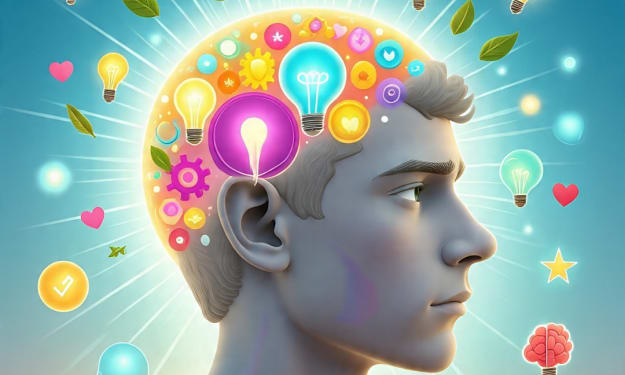
The Bright Side of the Mind Surprising Psychological Facts That Can Boost Your Happiness, Confidence, and Well-Being Emma sat by her window one crisp autumn morning, sipping tea and flipping through a self-help book she’d borrowed from the library. She wasn’t unhappy—just curious. Like many people, she wondered: What actually makes us feel good? Not just fleeting happiness, but the deep, satisfying kind that lingers. Her search led her down a rabbit hole of psychology articles, TED Talks, and studies. What she discovered wasn’t just insightful—it was empowering. The facts weren’t complex theories or clinical advice; they were simple truths backed by science that could make a real difference. She began testing them out in her own life. One of the first things Emma learned was this: Gratitude rewires the brain. Studies from the University of California found that people who wrote down three things they were grateful for every day were not only happier, but physically healthier. Emma started a small journal. At first, it felt awkward. But within weeks, she noticed a shift. She wasn’t ignoring her problems—she was just giving equal attention to the good. Her morning tea tasted better. Her cat’s soft purring felt warmer. Her challenges didn’t disappear, but she faced them with more resilience. Then she came across another gem: Smiling—genuinely or not—can boost mood. It sounded silly, but psychologists at the University of Kansas had proven it. When Emma forced herself to smile during tough tasks, she noticed she felt slightly better—and her posture even straightened. It was as if her body was tricking her mind into feeling stronger. It worked during meetings, chores, even traffic. Her favorite discovery, though, was this: Helping others helps you just as much. It turns out that acts of kindness trigger a release of dopamine—the brain’s natural reward chemical. It’s called the “helper’s high.” Emma started small: holding the door, sending kind messages, complimenting strangers. The effects were almost immediate. People smiled more around her. Her mood lifted. Her social anxiety shrank. She didn’t need grand gestures—just genuine connection. Emma also learned that we become what we think about. Psychologists call it “neuroplasticity”—the brain's ability to reshape itself based on our thoughts and behaviors. Negative thinking strengthens negative pathways. But practicing optimism, mindfulness, and self-compassion actually strengthens the parts of the brain linked to emotional regulation and joy. Emma wasn’t always positive, but she became more aware. When she caught herself spiraling, she paused and replaced the thought. What if this goes right? she’d ask herself. And often, it did. Of course, no journey is perfect. Some days, Emma forgot to be grateful or kind. Some days, she didn’t feel like smiling. But the beauty of these psychological facts was that they didn’t require perfection—just repetition. Bit by bit, she was shaping a new version of herself. One evening, her friend Marcus came over, worn down by work stress and burnout. “You’ve been different lately,” he said, noticing her calm presence. “Happier. How?” Emma smiled. Not the forced kind, but the real kind. “Honestly? I started listening to my brain.” She shared some of what she’d learned—not as advice, but as a story. Her story. Marcus nodded slowly. “I could try that,” he said. And in that moment, another ripple of kindness began. --- Key Takeaways from Emma’s Story (Based on Real Psychological Research): Gratitude practice improves happiness and physical health. Smiling, even when it feels unnatural, can improve mood and reduce stress. Helping others activates the brain’s reward systems, improving emotional well-being. Positive thinking strengthens the brain’s emotional resilience through neuroplasticity. Small, consistent actions are more powerful than dramatic changes. --- In a world filled with noise and pressure, sometimes the most powerful truths are the simplest. Emma didn’t need a life coach or a miracle. She needed only to look inward, understand how her mind worked, and start making tiny shifts in her daily life. And just like that, happiness became less of a mystery—and more of a choice.
By Muhammad Saad 4 months ago in Humans
Studies Show That Predators Target Women Based on One Thing
The myth we’ve been told our whole lives If you’ve ever been told “don’t wear that dress,” “cover up,” or “you’re asking for trouble,” you already know the script society hands women. For decades, the idea has been drilled into us: what you wear determines your risk.
By Awais Qarni 4 months ago in Humans
The Heart of Connection
The Heart of Connection How Love and Friendship Shape Our Lives, Backed by Science and Real Stories When Rosa turned 83, she didn’t want a party. Not because she disliked celebrations, but because her world had become quieter in recent years. Her husband had passed away a decade earlier, her children lived in other cities, and many of her old friends were either gone or fading with time. Most days, she sat by the window, knitting or reading the same dog-eared books, watching the seasons change outside but feeling little change within. Loneliness, scientists say, is more than an emotional ache—it can be as dangerous as smoking 15 cigarettes a day. Harvard’s 80-year Study of Adult Development—one of the longest studies on happiness—found that the quality of our relationships is the biggest predictor of long-term health and fulfillment, even more than income or fame. But Rosa didn’t need a study to tell her she missed connection. She just didn’t know how to find it again. Everything shifted the day Rosa’s neighbor, Malik, knocked on her door. He was 12, tall for his age, with curious eyes and a habit of speaking quickly when he got excited. His mother had just moved into the apartment next door, and Malik had locked himself out while she was at work. “Can I wait here until my mom gets home?” he asked. Rosa hesitated—then opened the door wider. That small moment cracked open something neither of them expected. At first, their conversations were brief. He asked about the books on her shelf. She asked about his drawings. Over time, their afternoons turned into a quiet routine: she’d make tea, and he’d sketch while she told stories about growing up in Havana or working as a nurse in New York. What surprised Rosa most wasn’t just how much she enjoyed his company—it was how much she felt needed again. Science calls this "bi-directional connection”—where both people benefit from the relationship. For Rosa, it meant purpose. For Malik, it meant having a patient adult who listened when the world around him felt too fast. One day, Malik came over with a school project: “Write about a person who changed your life.” “I want to write about you,” he told Rosa shyly. “You make me feel... like I matter.” Her eyes filled with tears. Decades of research show that acts of emotional connection—listening, empathizing, simply being present—can actually rewire the brain, increasing oxytocin (the “bonding hormone”) and decreasing cortisol (the stress hormone). Even brief moments of genuine connection can boost mood and strengthen the immune system. Rosa began to change. She started baking again—coconut cookies like her mother used to make. She ventured into the community center down the block and joined a storytelling circle. She even helped organize a small art show for Malik and his classmates. Her doctor, who had once warned her about rising blood pressure and declining energy, was amazed. “Whatever you’re doing,” he said, “keep doing it.” What she was doing was simple: connecting. Years later, when Rosa passed peacefully in her sleep, Malik—then a high school senior—spoke at her memorial. He described how she taught him more than just history or how to make proper tea. “She showed me that love and friendship don’t have an age limit. That even one person, really seeing you, can change everything.” --- The heart of connection isn’t grand gestures or perfect relationships. It’s found in the everyday: a shared laugh, a warm hand on your shoulder, a moment of being understood. These are the moments that shape us. Love and friendship aren’t extras in life’s story—they are the story. And as science continues to affirm what our hearts already know, one truth becomes clear: We are wired for connection. And when we find it—or offer it to someone else—we come alive.
By Muhammad Saad 4 months ago in Humans
Where Is the Love?
My name is Stefano D'angello. I am a creator, an author, and perhaps most importantly, a traveler. My journey has taken me across countries, through cultures, and into worlds both vibrant and desolate. I have feasted my eyes on wonders and listened to the cacophony of humanity. Yet, the more I see, the more a single, haunting question echoes in my soul: Where is the love?
By Stefano D'angello4 months ago in Humans
Leo Woman and Virgo Man Compatibility Score. AI-Generated.
The relationship between a Leo woman and a Virgo man is a fascinating combination of fire and earth. At first glance, these two personalities might seem worlds apart—the Leo woman is bold, radiant, and expressive, while the Virgo man is thoughtful, analytical, and reserved. Yet, this very contrast can create a powerful balance if both are willing to appreciate each other’s differences. Their journey together can be one of growth, stability, and mutual respect, but it also comes with challenges that demand patience and compromise.
By Inspire and Fun4 months ago in Humans
"Whispers of the Heart: The Power of a Deep Love Message"
Whispers of the Heart: The Power of a Deep Love Message In a quiet village nestled between golden hills and soft rivers, lived a woman named Elara. She ran a small bookshop that smelled of lavender, old paper, and hope. Though content with her life, she often looked out of her window at sunset, her heart silently waiting—for something, or someone, she could not name. One ordinary Tuesday, a stranger walked into her shop. He wore a navy-blue coat and carried an old leather journal. His name was Thomas. He was a writer, passing through town to find inspiration. He asked Elara if she had any books about “letters that changed people’s lives.” Elara smiled. “I think life-changing words don’t always come from books. Sometimes, they come from hearts.” He looked intrigued. That day, he left with a worn-out volume of Rainer Maria Rilke and the seed of something else—a feeling he couldn’t explain. Over the following weeks, Thomas returned again and again. Sometimes to buy books, sometimes just to talk. They discussed everything from poetry to the way the sky changed colors before a storm. Elara would offer tea; Thomas would read her unfinished paragraphs from his journal. Slowly, like dawn creeping over a field, a quiet bond grew between them. But Thomas had to leave. He was a traveler, never staying in one place for too long. On his last evening in the village, Elara and Thomas sat beneath the ivy-covered arch at the back of her shop, sharing the silence only people who understand each other can enjoy. “I don’t know how to say goodbye,” he said softly. Elara looked at him, then down at her hands. “Then maybe don’t.” Thomas reached into his coat and pulled out the leather journal. “I’ve written something. I was going to save it for my book. But I think it’s meant for you.” He handed it to her, gently pressing it into her hands. “Read it when you’re ready.” That night, Elara stayed up under the glow of her reading lamp. Her fingers trembled as she turned to the marked page. The letter began simply: > Dear Elara, In every story I’ve written, I’ve chased meaning, love, or truth. But I didn’t know what any of them truly looked like until I met you. You reminded me that real love isn’t thunderous. It’s quiet. It’s in shared tea, soft glances, and the safety of being fully seen... The letter spoke not of grand declarations, but of depth—the kind of love that grows from understanding, from being present. He wrote about how her voice had become his favorite sound, how her stillness had taught him peace. Elara cried. Not from sadness, but from the warmth of being truly known. And from the ache of someone leaving just as they arrived—in the exact moment you realize their importance. Days passed. Then weeks. The bookshop felt emptier, but the letter stayed by her bed. On the loneliest nights, she would reread it, and feel his presence as if he were reading it aloud. Then, one morning in spring, a small package arrived. No return address, just her name in familiar handwriting. Inside was a new journal. On the first page, written in bold, steady script: > “Let’s write the rest together.” Thomas had returned. This time, not as a wanderer, but as someone who had found his place. --- Epilogue: Years later, that journal sat in the bookshop’s display window. Not for sale, but as a reminder to anyone who passed by: That words, when written with love, can change lives. Elara and Thomas never called their story a fairytale. It was real, filled with quiet mornings, the scent of ink and cinnamon, and a thousand unspoken ways of saying “I’m here.” And sometimes, the deepest love message doesn’t shout from rooftops. It whispers… straight into the heart.
By Muhammad Saad 4 months ago in Humans